
JHDD 3D Modeling Report — 2026.06.06

The pervasive push towards photorealism in interactive media is not a quest for fidelity, but an algorithmic pursuit of predictive behavioral cues embedded within virtual light.
The signal connecting the burgeoning realism in game development, the maturation of real-time rendering engines, and the increasing sophistication of scanned asset libraries is the accelerating commodification of perceptually indistinguishable synthetic environments. This phenomenon, driven by the exponential growth of accessible procedural generation tools and AI-assisted texture synthesis, signifies a transition from manual artistry to data-driven experiential design, where the perceived reality of a virtual space is less about the artist’s hand and more about the engine’s ability to dynamically interpret and project light based on learned environmental physics. This isn’t merely about looking real; it’s about feeling real through a deep understanding of how light interacts with matter to inform our spatial cognition.
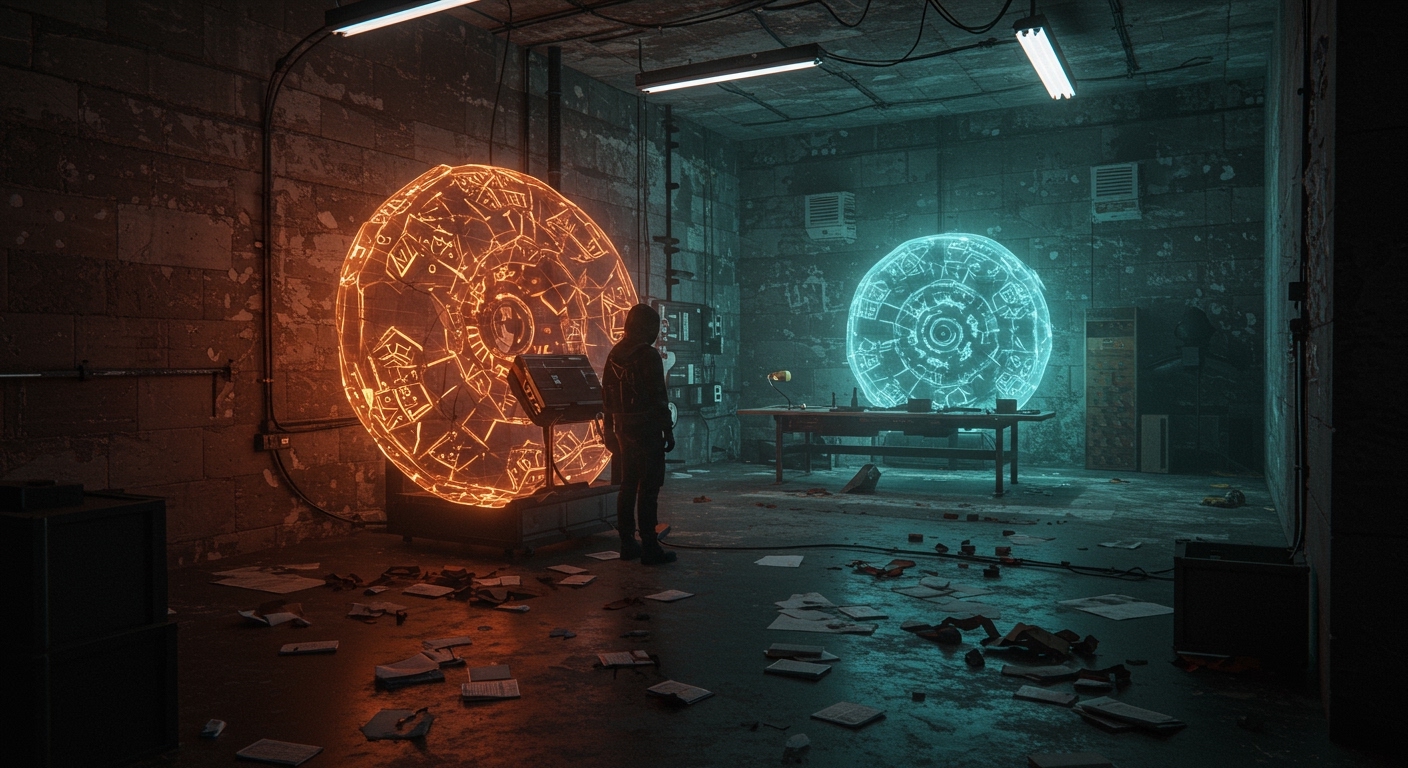
Beneath the surface, the industry is coalescing around a paradigm where the computational cost of hyper-realism is being aggressively offset by intelligent, automated asset creation and distribution pipelines. Consider the implications for a company like Adidas. Traditionally, their product visualization relied on meticulously crafted 3D models and controlled studio lighting setups, a process demanding significant lead times and expense for each new iteration or campaign. However, as procedural generation techniques become more robust and readily available, and as real-time engines mature in their capacity to render complex lighting dynamics with near-photographic accuracy, brands like Adidas can increasingly leverage these technologies to generate vast libraries of hyper-realistic product renders and even interactive virtual showrooms on demand. This shift represents a departure from the prevailing industry focus on individual artistic mastery of a specific medium—say, hand-sculpted meshes or painterly textures—towards an emphasis on the artist’s ability to orchestrate complex, AI-informed procedural systems. The conventional wisdom suggests that true realism requires painstaking manual detail. This overlooks the emergent power of sophisticated algorithmic ecosystems that can, by late 2026, generate bespoke, contextually accurate photorealistic environments and assets with a speed and scalability previously unimaginable, effectively democratizing high-end visualization.
The friction in this transition arises from the inherent inertia of established workflows and the deeply ingrained valuation of traditional artisanal skills. Many established 3D modeling studios and veteran artists find themselves in a precarious position, their expertise in manual modeling and texturing facing an existential challenge from automated solutions. This tension is particularly acute in sectors where bespoke craftsmanship has long been the gold standard, such as high-end architectural visualization or character design for AAA games. The resistance isn’t necessarily malicious; it stems from a legitimate concern that the nuanced control and subjective interpretation that define human artistry will be devalued in favor of purely objective, data-driven output. This creates a chasm between those who champion the relentless pursuit of algorithmic efficiency and those who fear the homogenization of digital aesthetics, revealing a fundamental debate about the future role of the human creator in an increasingly automated artistic landscape.
A working 3D modeling professional should begin actively deconstructing their approach to lighting dynamics within virtual spaces. Instead of solely focusing on manual placement of light sources for aesthetic effect, professionals should start experimenting with node-based material systems and physics-based rendering engines to understand and manipulate how light interacts with various surface properties—translucency, subsurface scattering, and micro-surface imperfections—in a manner that mimics real-world phenomena. This involves actively studying ray-tracing and path-tracing algorithms not just as rendering techniques, but as tools for understanding the underlying principles that govern visual perception of reality.
TL;DR
The future of hyper-realistic 3D lies not in meticulous manual creation, but in the masterful orchestration of AI-driven procedural systems and sophisticated real-time lighting dynamics.
Curated References
About this editorial — This piece was developed using AI-assisted research and curation across multiple industry sources. All analysis, opinions, and predictions represent the editorial perspective of JHDD. Sources are linked in the references section above.