JHDD Interior Report — 2026.07.26
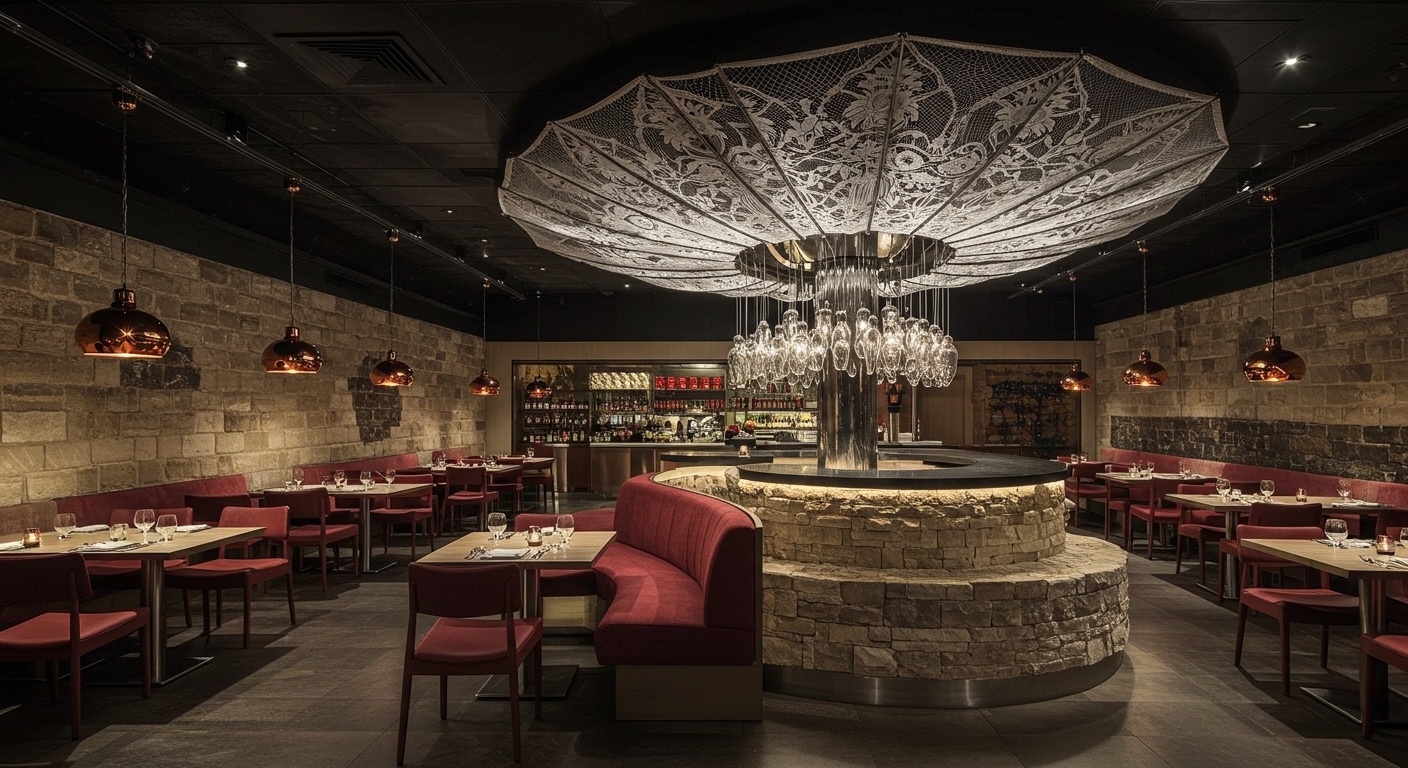
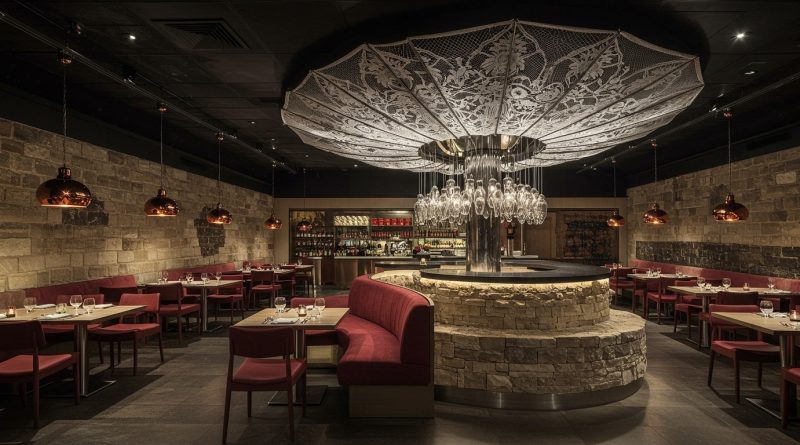
At London restaurant Zylia, Red Deer juxtaposed Gerolakkos stone and handcrafted Lefkara lace with stainless steel within an old factory building. This precise choice exemplifies a pervasive yet often unarticulated pattern: designers are increasingly crafting environments where highly specific, narratively rich materials or spatial references are deliberately placed in friction with their immediate, often contrasting, architectural or cultural surroundings. The goal is to generate a heightened tactile and atmospheric experience.
This approach moves beyond simple thematic inspiration or local contextualism. It represents a sophisticated act of spatial transportation, using materiality and human flow as primary drivers. Whether it is the alley-like walkways referencing Tokyo’s Golden Gai neighborhood at Joyce Wang Studio’s Genso restaurant or the Mojave desert evocation by YSG in a Sydney warehouse conversion, the ambition is to create a layered sense of place. This layering is achieved not through mimicry, but through the strategic insertion of elements that carry their own inherent story, forcing a dialogue with the existing space.
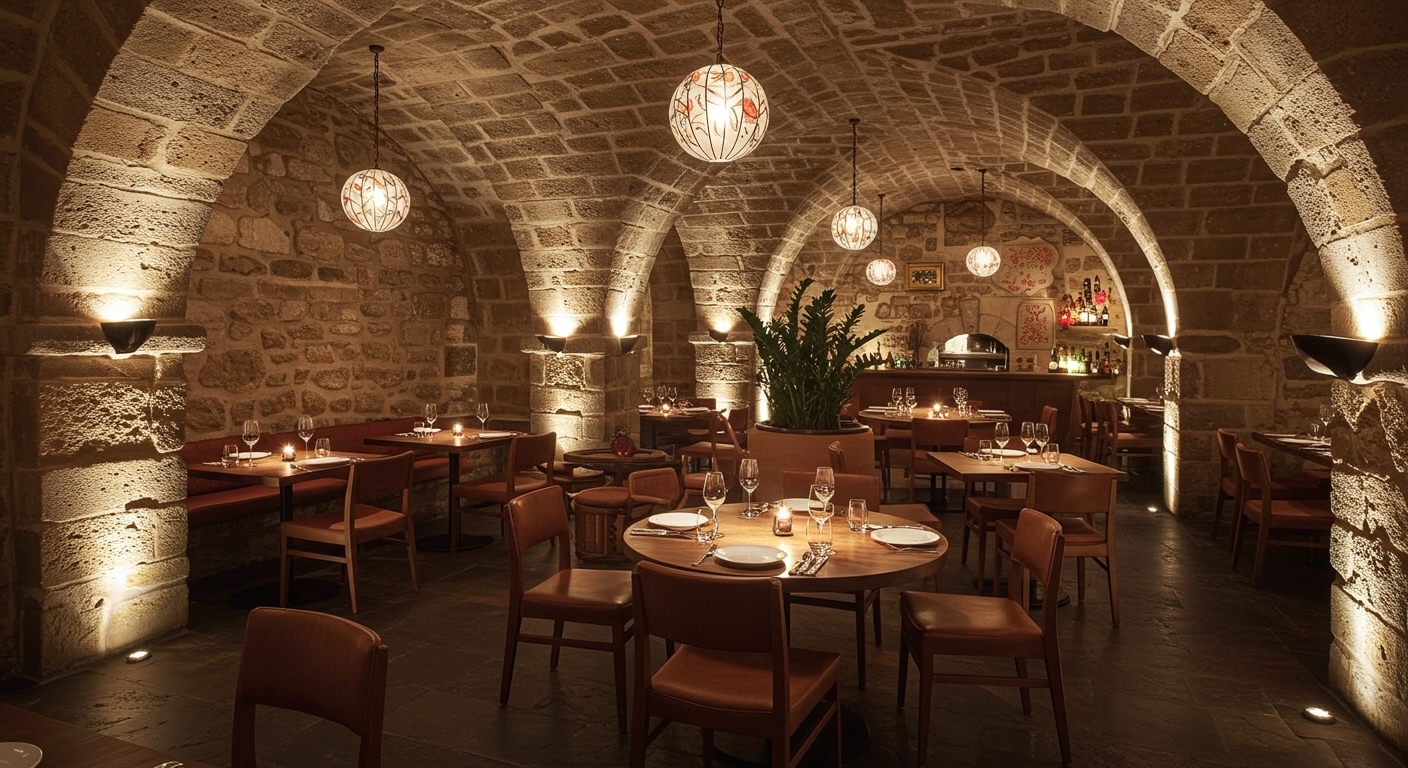
Consider Red Deer’s work at Zylia. The mainstream view might categorize such an interior as merely themed dining. However, the true spatial intelligence lies in the inherent tension and material dialogue generated by bringing Cypriot Gerolakkos stone and Lefkara lace into an industrial London factory. This is not about authenticity of reproduction, but about the authenticity of material presence and its power to evoke. The rough, ancient stone and delicate, intricate lace, when placed against the cold precision of stainless steel, create a potent tactile contrast. This friction prevents the space from becoming a sterile diorama; instead, it becomes a dynamic field of sensory experience. The human flow through such an environment is guided by these material anchors, encouraging a pause and an engagement with the translocated tactility.
This spatial strategy contradicts the conventional wisdom that a successful design must strive for seamless integration or pure contextual harmony. Instead, these projects thrive on deliberate discord. The value is found in the jarring, the unexpected, and the rich narrative inherent in a material like hand-crafted Lefkara lace, which carries centuries of tradition into a contemporary urban setting. This intentional material conflict activates the space, compelling occupants to confront and engage with the layers of meaning. This analytical framework predicts that by late 2027, luxury interiors will increasingly be defined by the inclusion of at least one dramatically contrasting, geographically specific, and narratively dense material or spatial typology that creates intentional friction with its immediate surroundings.
The opposing force to this nuanced design approach is the pervasive demand for logistical ease and cost efficiency. The sourcing of specific Gerolakkos stone or hand-crafted Lefkara lace, as opposed to specifying readily available, mass-produced finishes, introduces complexities in procurement, supply chains, and project timelines. The pressure to standardize and streamline often discourages designers from pursuing materials that carry such distinct provenance and tactile particularity, favoring instead generic solutions that lack this depth of narrative and sensory engagement.
A working interior professional should, for their next three projects, map the provenance and narrative potential of their core material selections. Identify at least one material that can introduce a specific, non-local cultural or geographic story, and then design its placement to create a deliberate spatial tension or tactile dialogue with the existing site character.
TL;DR
Luxury design now intentionally leverages material and spatial friction for heightened sensory experience.
Curated References



About this editorial — This piece was developed using AI-assisted research and curation across multiple industry sources. All analysis, opinions, and predictions represent the editorial perspective of JHDD. Sources are linked in the references section above.