JHDD 3D Modeling Report — 2026.07.26
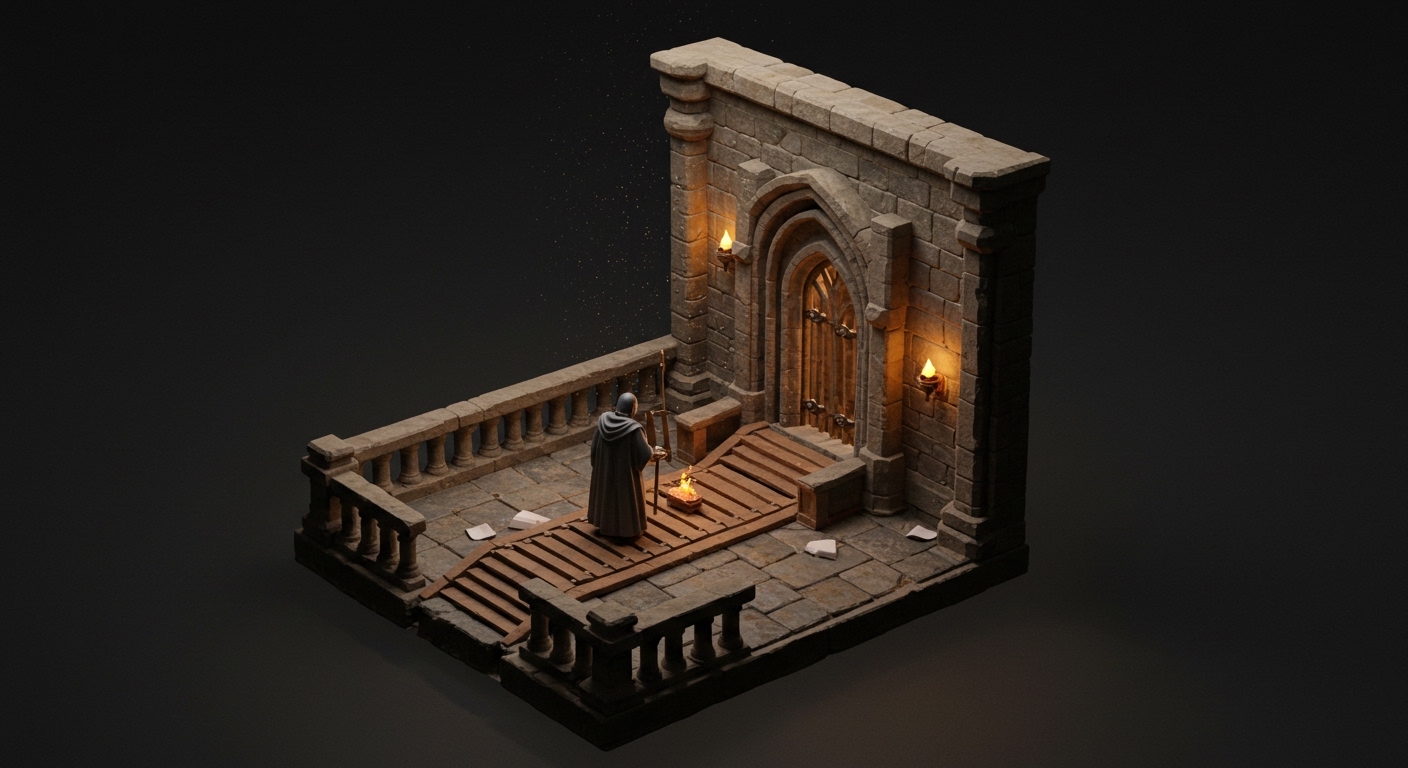
Springloaded’s James Barnard created Let’s Build a Dungeon, a simulator where players explore custom editor tools inspired by real-world development workflows.
The convergence observed in recent developments points to a shifting definition of “fidelity” in virtual spaces, moving beyond mere visual realism towards a fidelity of experience and creation. This includes tools that abstract complex production workflows, such as those demonstrated in Let’s Build a Dungeon, alongside specialized assets that offer specific aesthetic outcomes, like the free Blender tool for drawing hair strands. The distinction between creating a game and simulating game creation is blurring, reflecting a broader trend where the tools themselves become virtual spaces for design and experimentation.

Mainstream industry opinion often champions raw graphical fidelity and hyper-realism as the ultimate goal for virtual spaces, especially in AAA titles like Tomb Raider: Legacy of Atlantis. However, the true innovation lies not in simply replicating reality, but in enabling a procedural realism that allows complex systems and aesthetic choices to be efficiently generated and iterated upon. The focus on hyper-realism often overlooks the computational and artistic overhead it demands, limiting creative scope and accessibility. The approach taken by James Barnard with Let’s Build a Dungeon, where players engage with abstracted development workflows and custom editor tools, indicates a stronger path forward. This shifts the value proposition from static, pre-rendered perfection to dynamic, rule-driven environments where lighting dynamics and asset behavior are intrinsically linked to underlying procedural systems.
By mid-2028, leading virtual space platforms will heavily integrate “meta-creation” tools inspired by these simulator mechanics. These tools will allow users to define the generative rules for entire environments, moving beyond merely populating scenes with assets. This will dynamically adjust everything from material properties to complex lighting scenarios in real-time, thereby democratizing sophisticated scene generation far beyond current asset libraries. Environments will feel real because their internal logic and responsiveness mirror physical reality through procedural means, complementing their visual detail.
The most significant opposing force to this procedural shift comes from established AAA game development pipelines and large architectural visualization studios. Their deep investments in bespoke asset creation, highly optimized manual lighting setups, and fixed rendering techniques create significant inertia. These entities prioritize singular, meticulously crafted visual outcomes over dynamic, rule-driven generation. For instance, the traditional approach to producing a hyper-realistic character in a title like Tomb Raider: Legacy of Atlantis relies on expert sculptors and texture artists, a process that is hard to fully abstract or proceduralize without perceived quality loss from their established metrics. Shawn Layden’s push for “AA games” might inadvertently reinforce this, as a mid-tier market could still heavily lean on slightly less demanding but still custom-made assets rather than fully procedural ones.
A working 3D Modeling professional should immediately begin experimenting with integrating procedural workflows for asset variation and scene assembly, even for projects initially conceived as manual. Utilize existing node-based editors in software like Blender, not just for complex textures or geometry, but to explore how environmental parameters can drive asset instantiation and lighting variations. For example, instead of manually placing every piece of foliage, create a system that places and subtly varies Sam Ailura’s “fluffy trees” based on terrain slope or proximity to light sources, understanding that even stylized assets benefit from procedural distribution and dynamic lighting responses.
TL;DR
The future of 3D modeling lies in procedural systems that drive dynamic, rule-based virtual environments, challenging traditional hyper-realism.
Curated References
About this editorial — This piece was developed using AI-assisted research and curation across multiple industry sources. All analysis, opinions, and predictions represent the editorial perspective of JHDD. Sources are linked in the references section above.