JHDD Interior Report — 2026.10.17
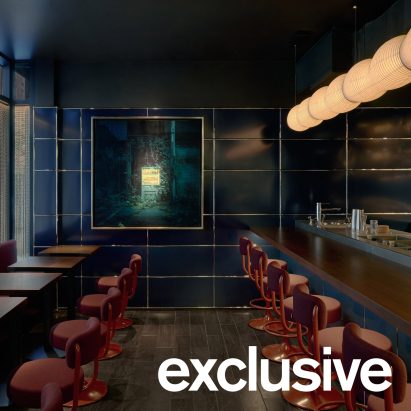
Josh Greenspan’s VV’s Cocktail Room in Manhattan utilizes Steel Blue USM Haller modular shelving to wrap almost the entire interior, presenting a stark lesson in material immersion.
These recent projects reveal a consistent design impulse: the creation of hyper-specific, curated environments through an intense focus on singular material applications or highly defined modular systems, often within existing or compact footprints. This approach prioritizes a deliberate, almost monolithic tactile quality and spatial tension, rather than a broad, eclectic material palette. It dictates human flow not through grand gestures but through the subtle, repeated interaction with a consistent surface or structure.
The mainstream design discourse often prioritizes bespoke, handcrafted elements as the benchmark for luxury, valuing visible artisanal effort above all else. This view overlooks the sophisticated spatial and tactile experiences achievable through the deliberate, extensive deployment of industrial modular systems. At VV’s Cocktail Room, the choice to embrace USM Haller shelving almost universally does not diminish luxury; it redefines it. The repetitive grid and uniform Steel Blue finish create an immersive, almost hermetic spatial tension, a tactile consistency that grounds the visitor. This uniformity, far from being merely functional, becomes a primary design language, guiding sightlines and subtly influencing how guests inhabit the intimate space.
The perceived lack of “uniqueness” in a readily available modular system is precisely what enables a different form of design control. By eschewing varied materials and forms, the focus shifts entirely to the quality of the chosen system, its inherent precision, and its cumulative impact on atmosphere. This approach creates a specific spatial narrative through repetition, a counterpoint to the more commonly celebrated narrative through diversity. This deliberate, immersive application of single-source modular systems will become a sought-after aesthetic for intimate hospitality and retail spaces by mid-2027, driven by clients seeking precise, controlled material experiences over overt opulence.
The primary opposing force to this precise, material-centric approach remains the industry’s default towards narrative-driven eclecticism and the relentless pursuit of “statement” pieces in every corner. Many projects still gravitate towards layering diverse textures and styles, aiming to convey complex stories or historical references through a profusion of forms, often diluting the direct spatial impact.
A working interior professional should dedicate time this week to researching and physically interacting with robust modular systems, not merely for their functional utility, but for their potential as primary, defining materials. Consider how a single system, applied extensively, can generate unexpected spatial tension, tactile depth, and guide human flow within a space.
TL;DR
The deliberate, immersive use of single-material modular systems is redefining luxury spatial design and tactile experience.
Curated References
About this editorial — This piece was developed using AI-assisted research and curation across multiple industry sources. All analysis, opinions, and predictions represent the editorial perspective of JHDD. Sources are linked in the references section above.