JHDD Architecture Report — 2026.07.02
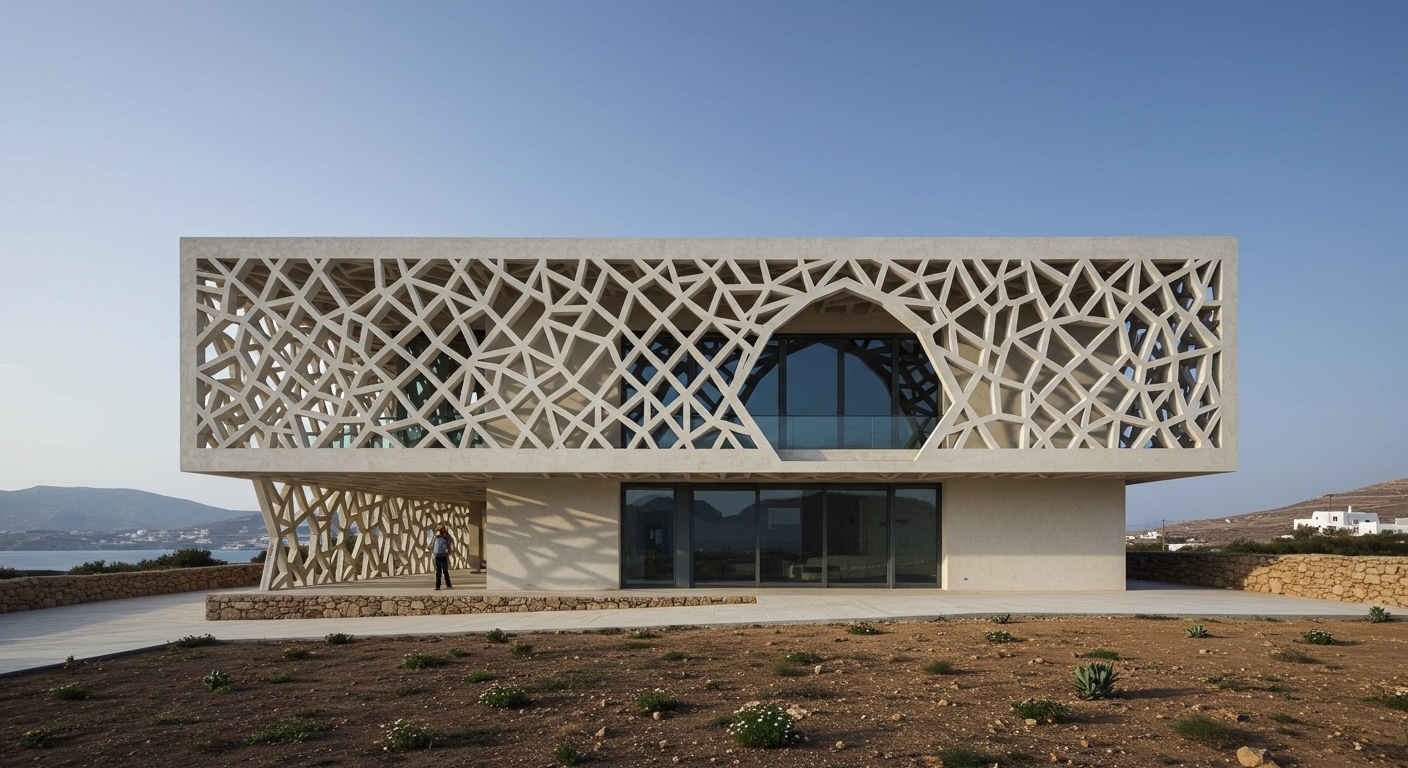
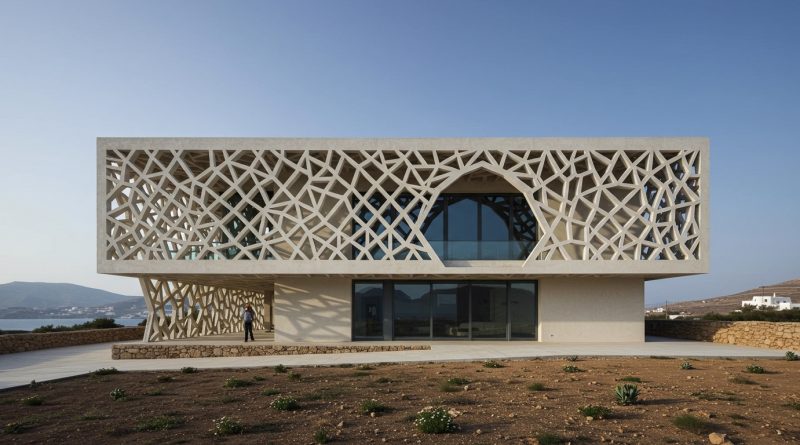
Mold Architects’ Perma project on Serifos demonstrates a structural philosophy deeply rooted in site-specific material use, employing stone excavated directly from its rugged terrain to form five guest residences.
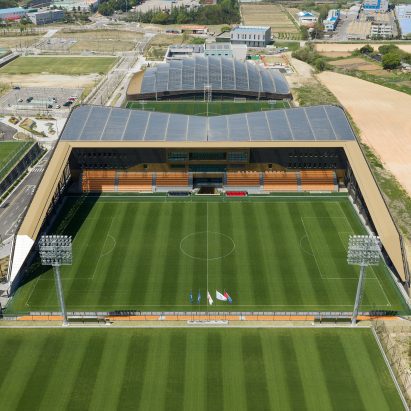
These diverse stories, from a minimal Adinne chair by Leonardo Rossano for True Design to a sprawling Korean Football Park by UNStudio, collectively reveal a pervasive industry focus on tangible material narratives. Whether through the explicit sourcing of local stone by Mold Architects, the tactile emphasis of the “Design You Can Feel” exhibition by Dezeen with ASUS, or the conceptual “green thread” woven into ASKA’s Fantastic Frank Stockholm Showroom, there is a recurring effort to define identity through material properties. This emphasis on the physical often occurs even as digital platforms become the primary medium for architectural discourse and promotion.
The Perma project by Mold Architects offers a critical counterpoint to the prevailing industry trend that often prioritizes novel, globally-sourced, or technologically advanced materials for their perceived luxury or aesthetic innovation. While many contemporary hospitality developments seek to create a distinct, often imported, visual identity, Mold Architects instead anchors its design in the earth itself. The studio’s decision to carve stepped residences into the hillside and clad them with excavated stone challenges the notion that sustainability is an add-on; it demonstrates that deep material honesty and site integration can be the fundamental structural and aesthetic drivers. This approach redefines luxury not as extravagance but as profound connection to place and minimal intervention.
This philosophy has significant implications for urban context and structural innovation. Instead of imposing structures onto a site, a material-first approach informs the very form and volume of a building, encouraging designs that respond to geological conditions rather than resisting them. Such thinking also pushes structural solutions towards simplicity and an elegant reliance on inherent material strengths. By mid-2027, this shift will compel many major developers and public clients to incorporate stringent material provenance tracking and embodied carbon assessments as non-negotiable requirements in their project briefs, moving beyond voluntary certification schemes to mandatory disclosures.
This vision of architecture is continually challenged by the economics of globalized material suppliers who prioritize efficiency of scale and cost over local sourcing and embodied energy transparency. Furthermore, the ubiquitous influence of real estate developers often pushes for homogenized aesthetics and standardized building components. These forces simplify procurement and accelerate project timelines but simultaneously erase regional material specificity and innovative structural adaptation.
An architecture professional should, within the next project cycle, perform a detailed material audit for all primary structural and enclosure systems, meticulously tracing each material’s origin, manufacturing process, and transportation footprint. This exercise moves beyond standard specification sheets to demand transparency from suppliers, fostering a more informed design practice rooted in urban responsibility.
TL;DR
Architecture must re-center on material honesty and site-specific structural logic to achieve true urban responsibility.
Curated References



About this editorial — This piece was developed using AI-assisted research and curation across multiple industry sources. All analysis, opinions, and predictions represent the editorial perspective of JHDD. Sources are linked in the references section above.