JHDD Architecture Report — 2026.06.12
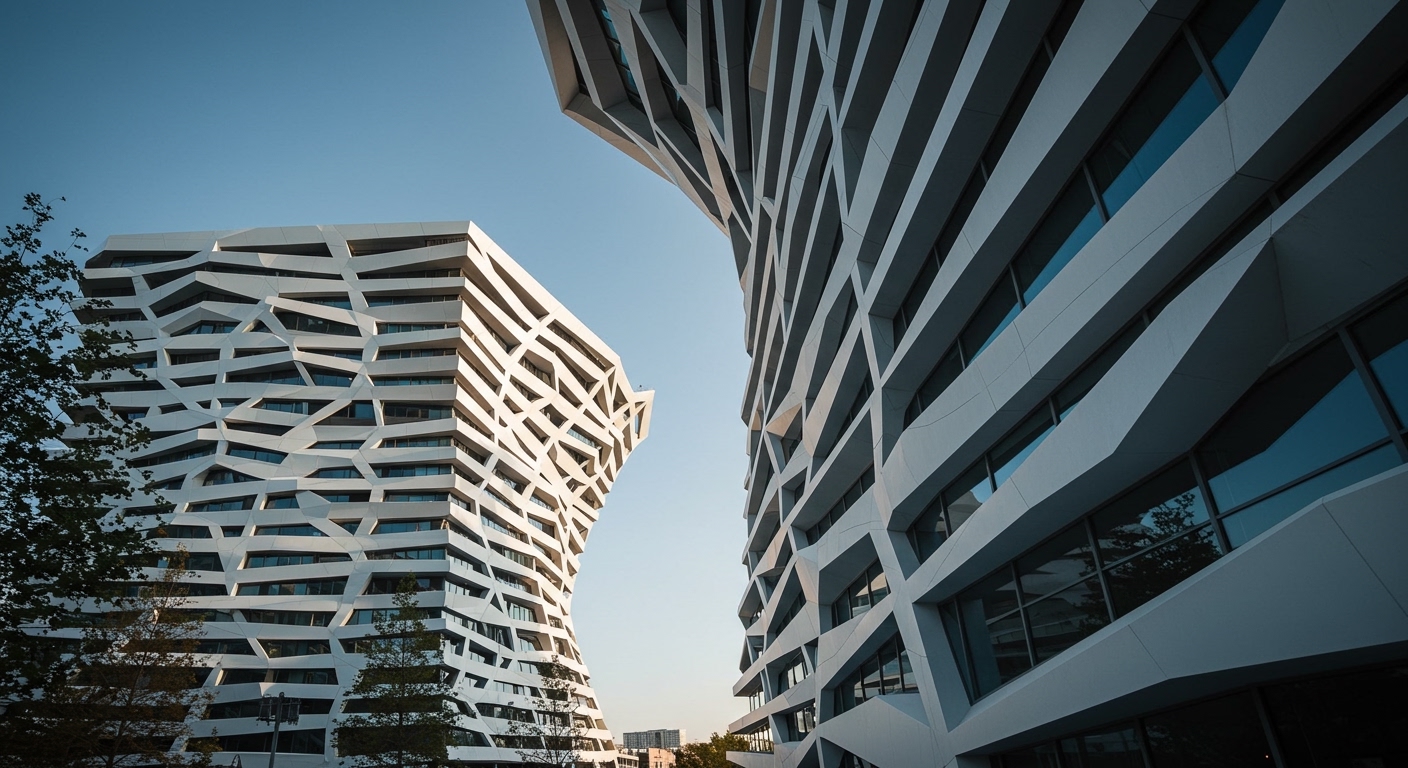
The true metric of architectural value is no longer scale or spectacle, but the embedded intelligence of its material lifecycle.
Across disparate projects from student proposals for resilient urban housing to high-altitude sculptural interventions, a singular force is coalescing: the recalibration of material logic. This is not merely a trend towards sustainable materials, but a fundamental re-evaluation of what constitutes a building’s inherent worth. We are witnessing a quiet but profound shift away from the dogma of structural permanence as the sole guarantor of value, towards a more nuanced understanding of material performance across time, from origin to potential re-integration. This shift acknowledges the inherent, often overlooked, kinetic and biological potential within materials themselves.
Herzog & de Meuron’s transformation of the Titlis antenna tower exemplifies this nascent philosophy. Their intervention, rather than imposing a new, monumental form, respects and amplifies the inherent structural logic of the existing industrial artifact, grafting a new programmatic skin that responds dynamically to its extreme environment. This is a far cry from the prevailing industry wisdom that often champions complete deconstruction and wholesale reinvention. Conventional thinking still largely defaults to the ‘new build’ paradigm, driven by a desire for virgin materials and novel forms, often overlooking the embodied energy and established material capital of existing structures. This approach, however, prioritizes the integration of advanced, but inherently degradable or reversible, materials that acknowledge their finite lifespan. By late 2027, we will see a significant increase in demolition projects being re-classified as ‘material liberation’ initiatives, with architects actively engaged in designing for disassembly and remanufacturing, not just new construction.
The friction in this transition arises from the entrenched economic models that profit from the linear extraction, manufacture, and disposal of building materials. Large-scale material manufacturers and traditional construction consortia often resist the shift towards circularity, as it fundamentally challenges their established supply chains and profit margins. This resistance is not overt ideological opposition, but a deeply ingrained inertia that prioritizes predictable output over the complex, often less profitable, logistics of material reclamation and localized re-fabrication. The tension reveals a critical misalignment between the accelerating pace of material innovation and the slow, bureaucratic mechanisms of regulatory approval and financial investment within the built environment sector.
For a working Architecture professional, the actionable step this week is to begin mapping the material dependencies of their current projects with an explicit focus on end-of-life scenarios. Beyond simply specifying recycled content, investigate the potential for disassembly, the material’s inherent recyclability or compostability, and its capacity for future material reclamation. This involves a deliberate move from designing a static object to choreographing a material journey.
TL;DR
Architects must transition from designing static buildings to orchestrating material lifecycles, where end-of-life considerations dictate form and substance by late 2027.
Curated References





About this editorial — This piece was developed using AI-assisted research and curation across multiple industry sources. All analysis, opinions, and predictions represent the editorial perspective of JHDD. Sources are linked in the references section above.