JHDD Architecture Report — 2026.06.11
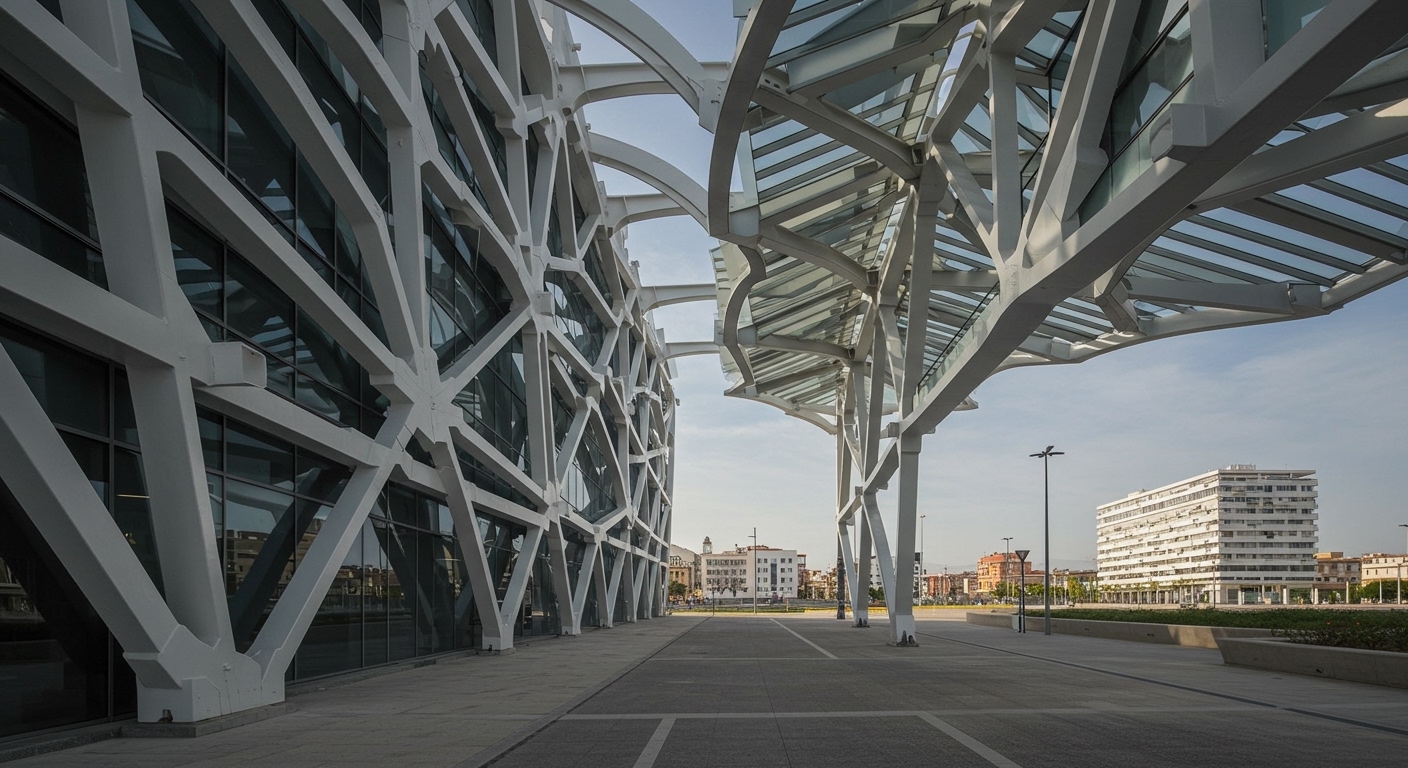
The tectonic language of construction is fundamentally shifting from articulation of newness to dialectics of reintegration.
These disparate news items coalesce around a critical pivot: the accelerating integration of the “already existing” into the architectural armature. It’s not merely about reusing materials, or adapting old buildings, but a deeper conceptual realignment where the life cycle of the built environment is understood as a continuous, interwoven narrative. This forces a re-evaluation of material provenance, structural integrity beyond initial occupancy, and the urban fabric as a palimpsest of continuous use and re-use. The underlying force is the undeniable reality of resource scarcity and the increasing societal demand for demonstrable environmental stewardship, pushing architectural practice toward a regenerative model where disassembly, repurposing, and deconstruction are no longer edge cases but core operational principles. This is not just about “sustainability” as an additive feature, but a fundamental restructuring of how we conceive of, and enact, built form.
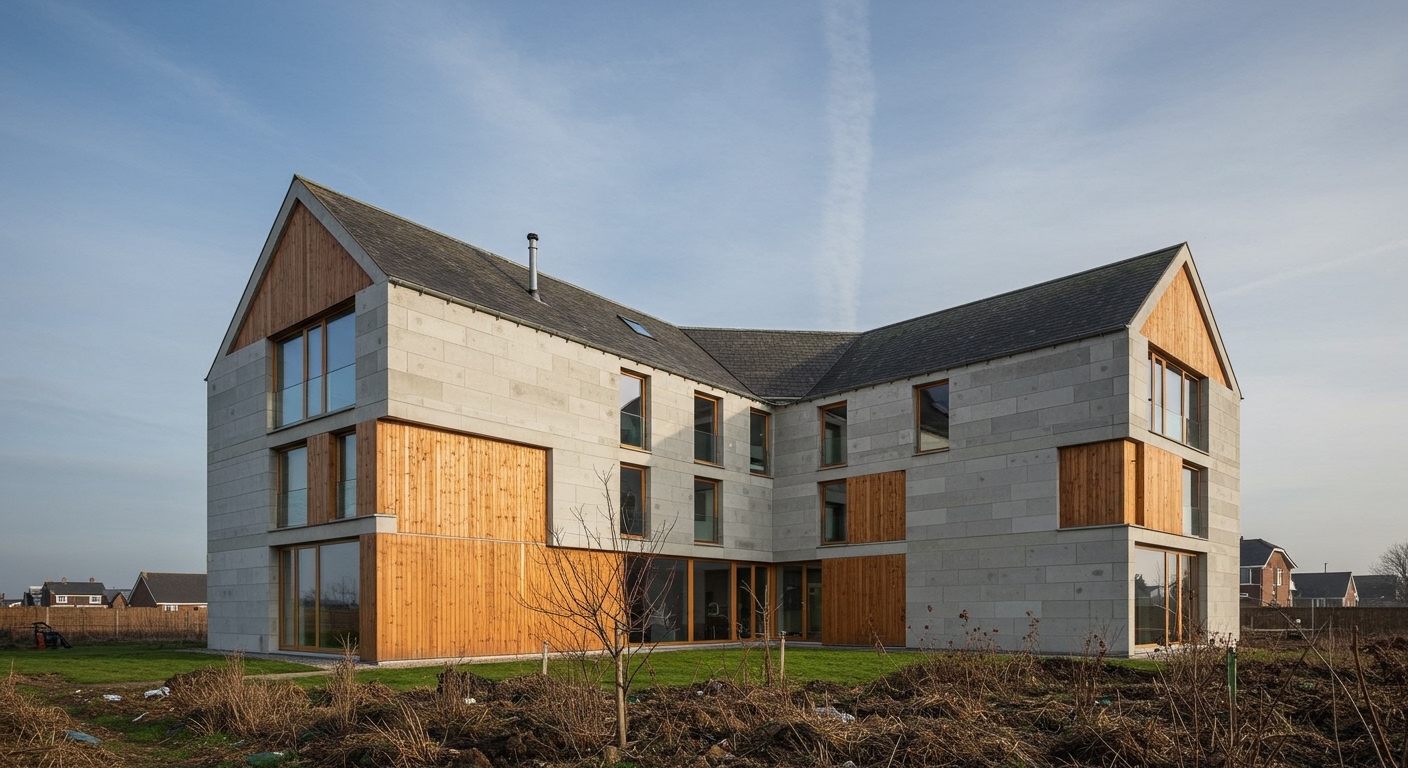
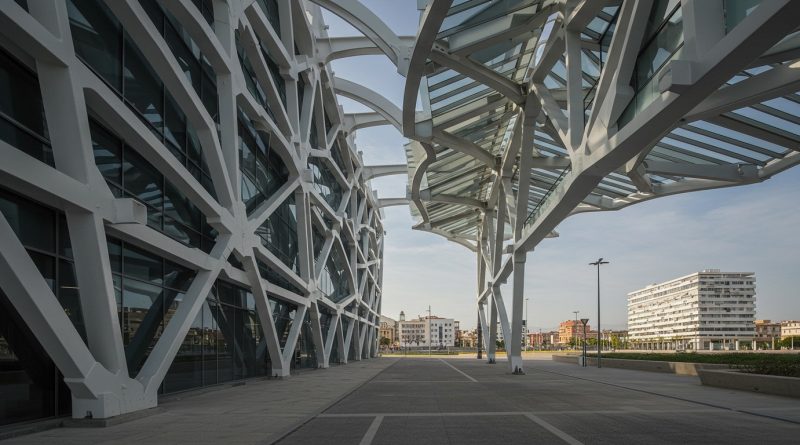
Beneath the surface, this manifests as a latent structural philosophy that embraces inherited qualities. Consider Herzog & de Meuron’s revitalization of the Palace of Congresses in Tirana. While a new skyscraper is part of the scheme, the core of the project lies in the sensitive overlay of contemporary needs onto a substantial, existing communist-era structure. This is not just an adaptive reuse project; it is an act of historical material negotiation. The conventional industry wisdom often frames renovations as a compromise, a lesser alternative to a pristine new build. However, this perspective misses the profound creative potential inherent in working with existing structures. The “gritty, unrefined” aesthetic championed by Marta Nowicka in her DOM Studio, utilizing salvaged scaffolding planks and concrete blocks, exemplifies this shift. Her approach suggests that the inherent character of reclaimed materials is not a flaw to be masked but a virtue to be amplified. We are witnessing a return to the tectonic honesty of the past, not as mimicry, but as a source of new aesthetic and structural logic. By late 2026, expect to see a demonstrable increase in projects that explicitly catalogue and valorize the embodied energy and material history of their constituent parts, moving beyond simple LEED points to a richer form of material accounting.
This emergent sensibility directly contradicts the prevalent industry pursuit of novel, virgin materials as the sole arbiters of architectural advancement. The allure of the “new” often overshadows the rich, often more responsible, potential of the “old.” While material innovation continues, its most impactful future lies not in the laboratory synthesis of new compounds, but in the intelligent integration and refinement of existing ones. The Blue Ocean quartzite by Eggersmann, for instance, represents a familiar material form but is presented through a lens of curated natural beauty, hinting at the appreciation of inherent geological narratives. The challenge is not to invent entirely new material systems, but to develop sophisticated methodologies for reinterpreting and redeploying those already in circulation. The ongoing work at Sagrada Familia, while technologically advanced, also highlights the immense challenge and inherent value in preserving and extending the life of complex, existing structures. The prediction stands: by the end of 2026, material passports detailing the origin, quantity, and potential for future reuse of all significant building components will transition from a niche academic interest to a standard contractual requirement for major public and institutional projects.
The friction against this shift arises from entrenched economic models and the inertia of established construction practices. The prefabrication and standardized workflows of conventional development are heavily invested in virgin materials and linear lifecycle thinking. Large-scale demolition and replacement are often perceived as more predictable and financially expedient than meticulous deconstruction and material reclamation. This resistance is not merely logistical; it represents a deep-seated cultural bias within the industry towards efficiency defined by speed and cost, often at the expense of long-term environmental and urban resilience. The tension reveals a critical gap between the aspirational discourse around sustainability and the pragmatic realities of capital investment and risk assessment in the built environment sector.
A working architecture professional should, this week, begin to meticulously document the deconstruction potential of every project proposal, not as a secondary consideration, but as an integral part of the design brief. This means actively exploring modularity with disassembly in mind, specifying materials with clear end-of-life pathways, and engaging with demolition contractors not as reactive agents but as collaborative design partners from the outset. This proactive engagement will foster a deeper understanding of material lifecycles and unlock new avenues for resourcefulness.
TL;DR
The architectural future lies in the intelligent reintegration of existing material lifecycles, not in the relentless pursuit of novel virgin resources.
Curated References


About this editorial — This piece was developed using AI-assisted research and curation across multiple industry sources. All analysis, opinions, and predictions represent the editorial perspective of JHDD. Sources are linked in the references section above.