JHDD 3D Modeling Report — 2026.08.03

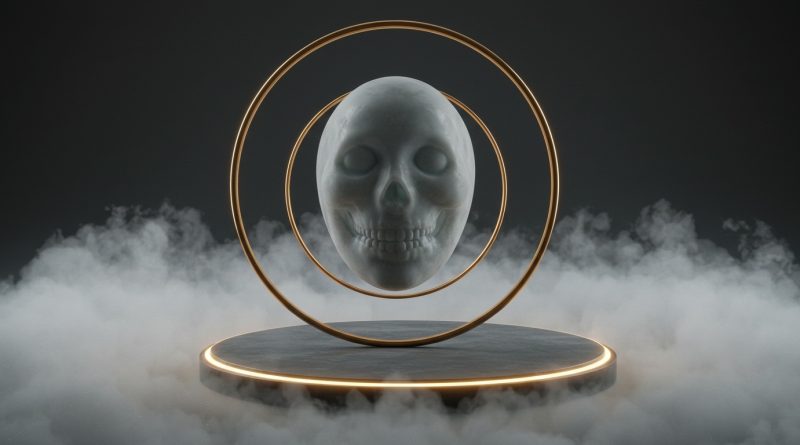
Lazy3D’s add-on now allows Blender artists to generate cinematic volumetric fog with ease.
This development, alongside the painterly aesthetic of “This Supernatural Mystery Game” and the anime pixel art of “This RPG”, points to a calculated shift away from chasing absolute photographic fidelity in virtual spaces. Artists are increasingly prioritizing distinct atmospheric identity over raw polygon count, using advanced rendering techniques to achieve specific emotional or aesthetic outcomes, rather than just objective mimicry. This is not a retreat from technical sophistication, but a strategic re-direction of it.

Ryan Portelli’s work on Steelkrill Studio’s “Where Dolls Hang” exemplifies a deeper trend. Instead of aiming for photorealistic replication of Mexican folklore, the studio blends psychological elements with the supernatural, crafting a distinct atmosphere through its virtual spaces. Conventional industry wisdom often equates technological advancement in 3D modeling with an inevitable march towards photographic hyper-realism. However, this perspective overlooks the power of stylistic intent. The real cutting edge lies in leveraging sophisticated rendering and spatial computing to articulate a specific, non-photographic vision. The atmospheric “look” of an Edward Hopper painting, seen in “This Supernatural Mystery Game”, or the deliberate retro feel of “This Retro LCD Game” inspired by Satoshi Kon, demonstrate that artistic resonance often emerges from curated abstraction rather than mimetic perfection.
The belief that procedural generation primarily serves the pursuit of complex, high-fidelity realism for open-world games is increasingly limited. Instead, procedural methods are becoming critical tools for stylistic consistency and atmospheric control across virtual spaces. For example, volumetric lighting, as seen with Lazy3D’s add-on, is not just about simulating physical light; it is about art directing mood. This challenges the notion that procedural generation inherently leads to generic outcomes. By mid-2027, the industry will see a significant shift towards procedural generation engines optimized not for generating “realistic” landscapes, but for creating specific painterly, abstract, or stylized environments with controlled atmospheric properties, pushing beyond the default expectation of photorealistic outputs.
The primary opposing force to this nuanced approach remains the marketing narratives of high-end GPU manufacturers and certain mainstream game engine developers. These entities often foreground raw polygon counts, texture resolution, and universal photorealistic benchmarks as the ultimate indicators of advancement. Their business models often incentivize a race towards ever-higher fidelity, inadvertently marginalizing projects that prioritize a strong, non-photorealistic artistic vision, even when those visions leverage sophisticated underlying technology.
A working 3D Modeling professional should spend time this week deliberately using advanced tools like volumetric rendering or intricate material shaders not to replicate reality, but to exaggerate, abstract, or simplify it. Experiment with applying procedural textures and lighting dynamics to achieve specific artistic styles – for instance, pushing a rendering engine to achieve a stylized, painted look rather than photographic accuracy, or using procedural fog to evoke psychological unease rather than just environmental haze.
TL;DR
The most impactful innovations in 3D are now about leveraging advanced tech for specific stylistic and atmospheric effects, moving beyond generic photorealism.
Curated References
About this editorial — This piece was developed using AI-assisted research and curation across multiple industry sources. All analysis, opinions, and predictions represent the editorial perspective of JHDD. Sources are linked in the references section above.