
JHDD 3D Modeling Report — 2026.06.28

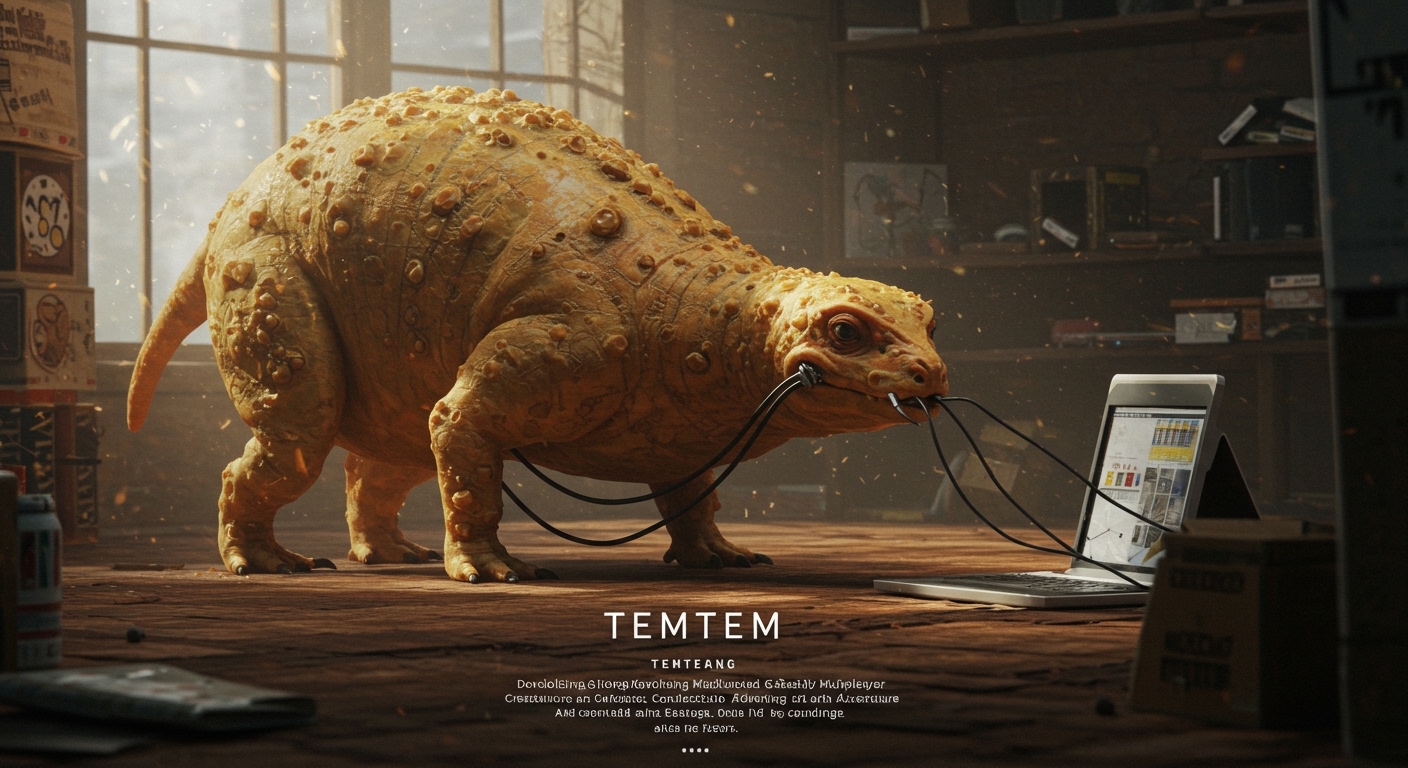
Grand Theft Auto 6 pre-orders are already signalling unprecedented demand months ahead of its November 2026 launch. This anticipation, alongside projects like Crema’s Temtem: Pioneers blending survival crafting with creature collection, and individual artist showcases such as Daniel Novillo’s immersive Elven Tower lighting scene, indicates a specific pattern. The common thread across these projects is an increasing, almost subconscious expectation for intricate, believable digital environments, driven by a confluence of advanced technical pipelines and sophisticated user engagement. This signals a broad shift in focus towards granular immersion at scale within virtual spaces.
Many in the industry still prioritize the sheer volume of procedurally generated assets as the primary metric for efficiency in virtual world building. This view overlooks the critical bottleneck now shifting from raw asset creation to the nuanced integration of these assets within dynamic lighting and player interaction systems. The real challenge now involves ensuring those assets interact convincingly within dynamic lighting and player interaction systems, rather than simply creating them in vast numbers. Morgane Muller’s detailed breakdown of vegetation for Alien Island highlights this shift. Her emphasis on creating “diversity in 3D vegetation” through specific texturing, rather than just raw polygon count, underscores a deeper understanding of environmental believability. It is insufficient to merely scatter procedurally generated plant models. Each species must react convincingly to light and context, contributing to an overall sense of organic presence within the virtual space.
This granular approach to hyper-realism, particularly in environmental assets and their lighting dynamics, will become non-negotiable for competitive virtual spaces. The demand seen for Grand Theft Auto 6, with its historically realistic open-world environments, illustrates an audience primed for this level of detail. By mid-2027, leading game engines will integrate advanced photogrammetry pipelines directly into their procedural generation tools. This will move beyond simple asset distribution to context-aware material application and dynamic aging processes, ensuring that vast, procedurally built virtual worlds inherently possess the hyper-realistic, reactive qualities currently requiring intensive manual refinement.
The inertia of established asset libraries and current content pipelines, optimized for speed over adaptive realism, resists this shift. Many studios still invest heavily in static asset packs. These, while efficient for initial scene blocking, fundamentally limit the dynamic lighting and hyper-realism potential of complex virtual spaces. This approach often leads to environments that, despite high poly counts, feel sterile and unresponsive to subtle environmental cues or user interaction.
A 3D Modeling professional should spend this week exploring the practical application of real-time material blending nodes within game engines. Focus specifically on how environmental factors like proximity to water, exposure to light, or even simulated wear-and-tear can dynamically alter surface properties. This moves beyond static texturing into reactive environment design, crucial for achieving modern hyper-realism.
TL;DR
Granular immersion is pushing 3D environments towards dynamic materials and adaptive lighting rather than just asset volume.
Curated References
About this editorial — This piece was developed using AI-assisted research and curation across multiple industry sources. All analysis, opinions, and predictions represent the editorial perspective of JHDD. Sources are linked in the references section above.