JHDD Interior Report — 2026.06.29
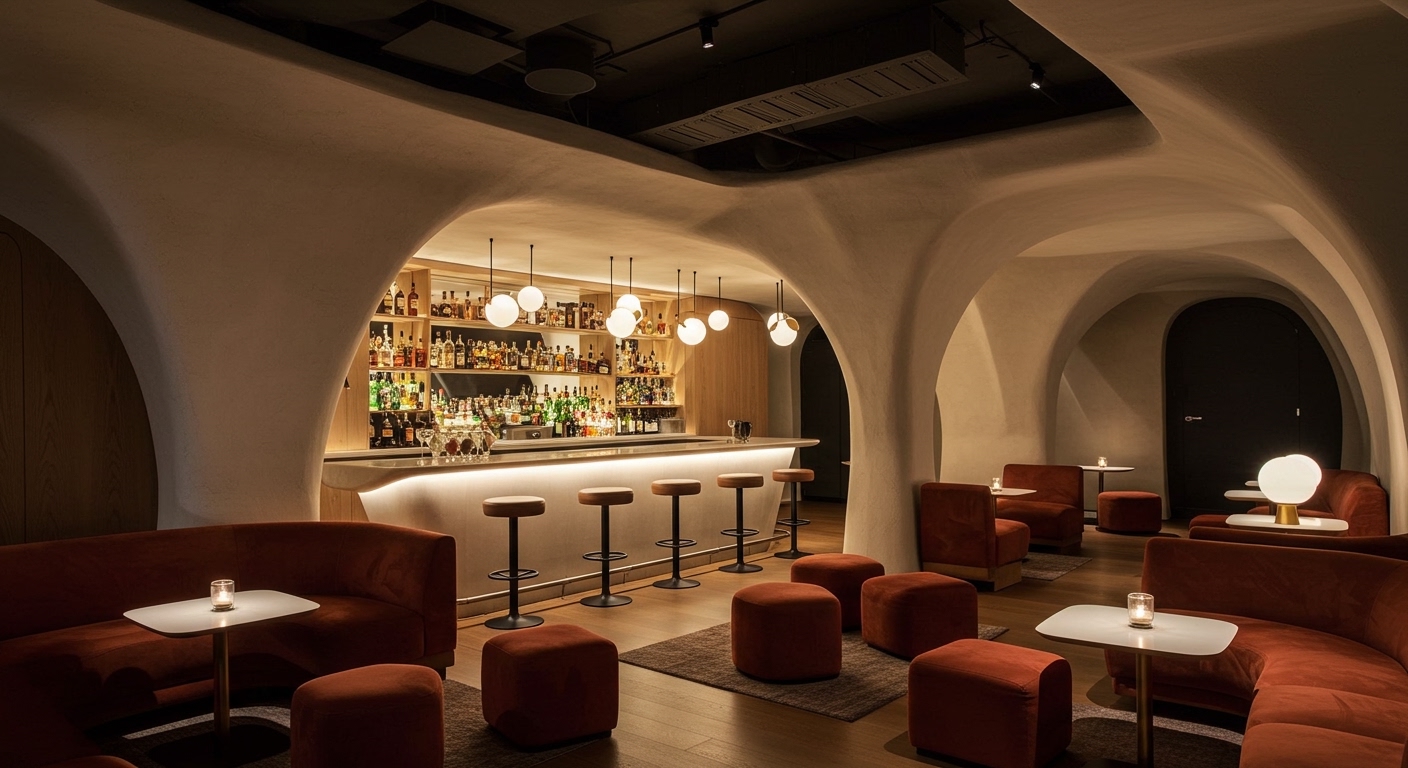
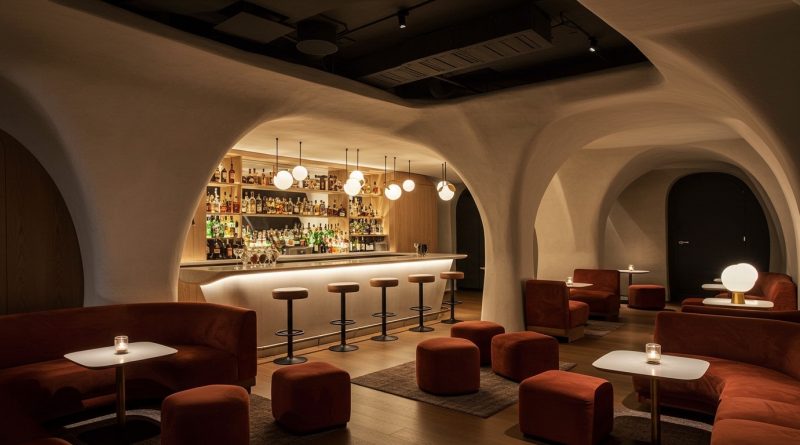
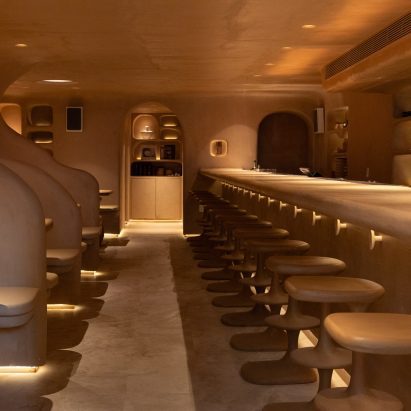
Wild Form Design Studio’s Love Thy Neighbor bar features a sculptural interior with no straight lines. This approach signals a significant shift in how luxury design addresses spatial narrative and human interaction, moving beyond overt historical pastiche to an immersive, materially driven experience. The designs from Focacha, Banh Banh, and Cubitts reflect a common thread: spaces are increasingly crafted to evoke specific identities and histories through materiality and form, rather than through literal or purely visual references.
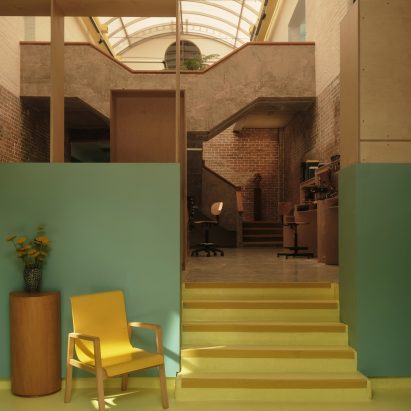
This developing pattern suggests a deeper integration of site-specific historical and cultural elements into the very fabric of a space, influencing its tactile quality and human flow. It moves past superficial thematic applications. For example, House of Baby’s design for Banh Banh draws on modernist architecture like Saigon’s Independence Palace, but translates it into material choices and volumetric tension, rather than just decorative elements. The success of projects like these indicates that clients are seeking more than just beautiful aesthetics; they demand environments with palpable character and an authentic sense of belonging, whether that character is retro-futuristic, historically reverent, or rooted in community identity.
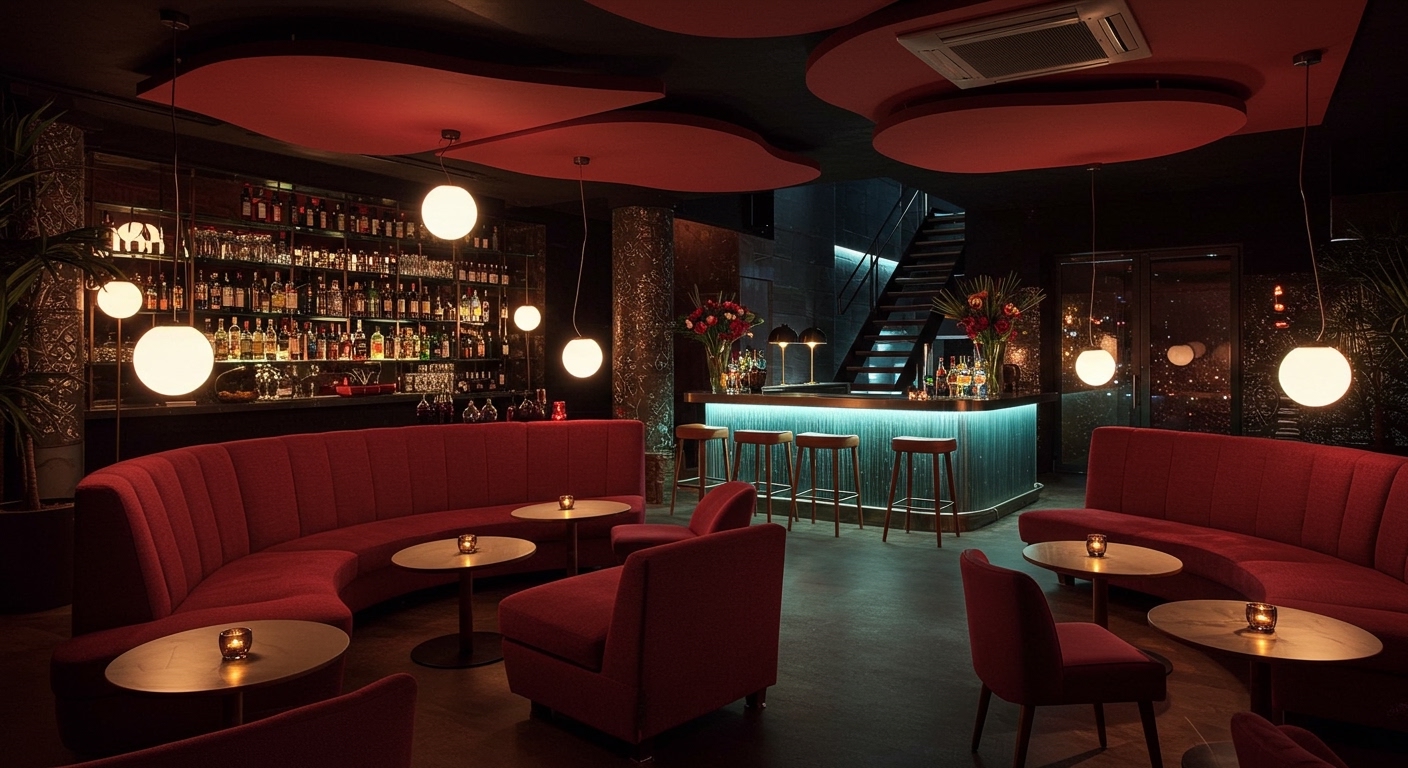
Mainstream industry opinion often prioritizes efficiency and broad market appeal, leading to a proliferation of designs that are visually appealing but spatially inert. The conventional wisdom leans towards predictable geometries and easily sourced, often synthetic, materials for durability and maintenance. However, the organic forms and varied textures seen in Wild Form Design Studio’s “no straight lines” approach for Love Thy Neighbor challenge this. The deliberate avoidance of linearity creates a different kind of spatial tension, one that encourages meandering movement and tactile engagement rather than directing a fixed path. This is not merely an aesthetic choice; it fundamentally alters human flow and the experience of occupancy, fostering a sense of discovery and intimacy through its undulating surfaces and nuanced material transitions.
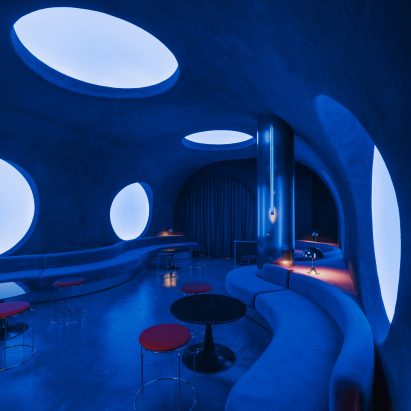
This contradicts the prevalent belief that complex, non-orthogonal spaces are inherently less functional or too costly for widespread application. Instead, these examples demonstrate that a richer spatial and tactile quality often emerges from departures from the rectilinear. The multi-coloured modular furniture in Isern Serra’s Focacha bar, while retro-futuristic, similarly prioritizes interaction and adaptability over rigid structure. Within two years, this move towards more fluid, materially rich, and historically informed spatial geometries will become a differentiator for high-end residential and hospitality projects seeking to establish genuine character and resonance, moving beyond surface-level trend adoption.
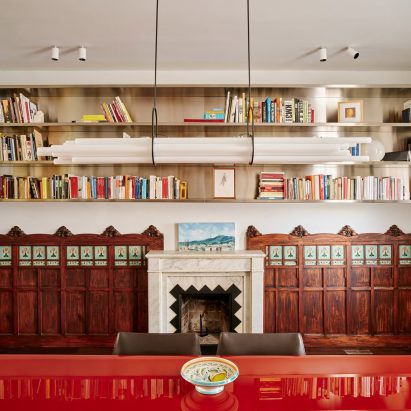
The primary resistance to this shift comes from commercial pressures that favour standardized materials and construction methods, which often result in generic spaces. The “bookmaxxing” trend, for instance, risks becoming a commodified aesthetic where books are used as decorative objects to fill shelves rather than as authentic expressions of a client’s personal history or intellectual curiosity. This reduction of narrative to decoration strips the space of its potential for genuine tactile richness and spatial tension, reducing a meaningful practice to a reproducible visual style.
Interior professionals should actively research the non-architectural history of a project site and its intended occupants. This includes local cultural narratives, forgotten material palettes, and historical social functions. This deeper context should inform material specifications, not merely stylistic references. Consider how specific textures and shapes can evoke a sense of place or history, even if abstractly, guiding the tactile experience and subconscious human flow through the space. Prioritize collaborations with local artisans who can translate these narratives into bespoke, materially rich elements, moving beyond catalogue selections.
TL;DR
Authentic spatial design now demands material and volumetric specificity derived from deeper historical and cultural narratives, challenging generic aesthetics.
Curated References

About this editorial — This piece was developed using AI-assisted research and curation across multiple industry sources. All analysis, opinions, and predictions represent the editorial perspective of JHDD. Sources are linked in the references section above.