JHDD Architecture Report — 2026.06.29
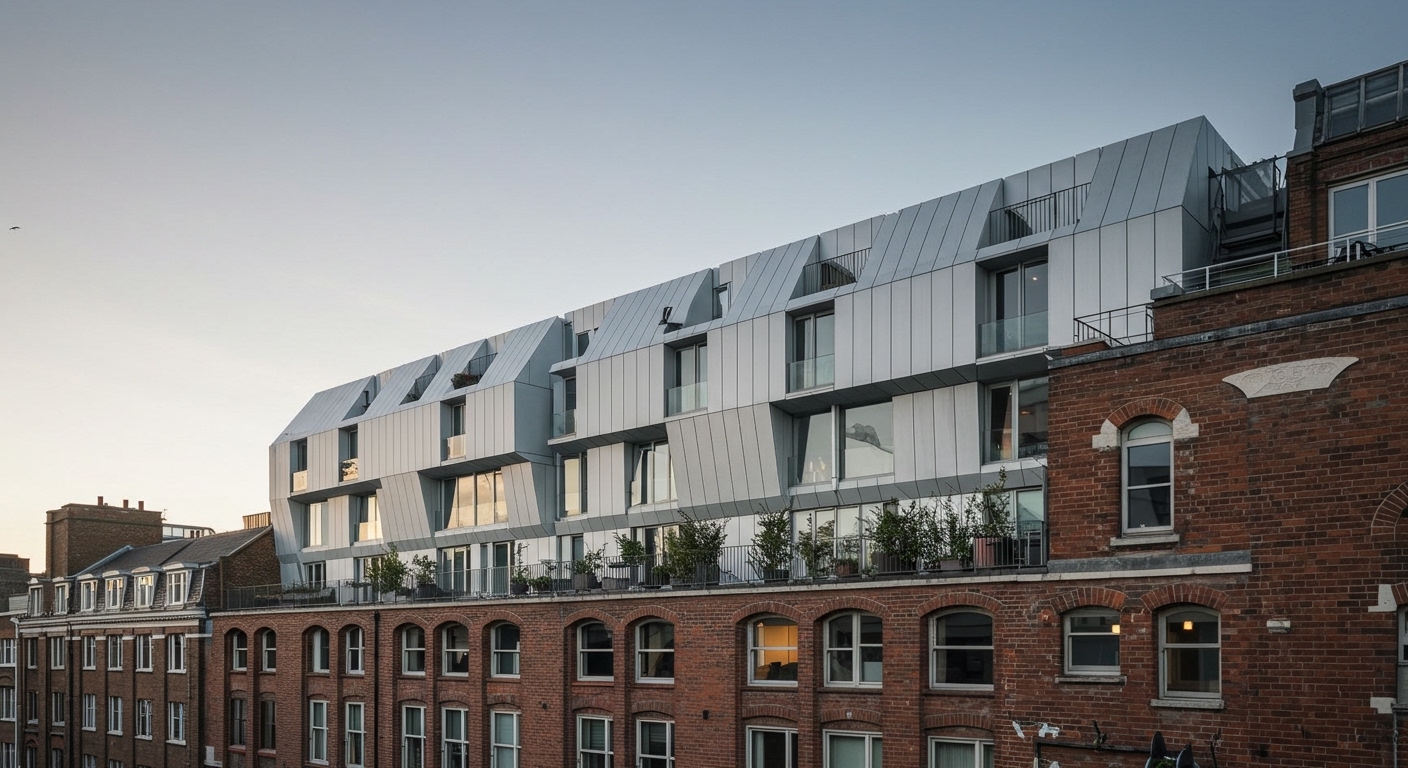
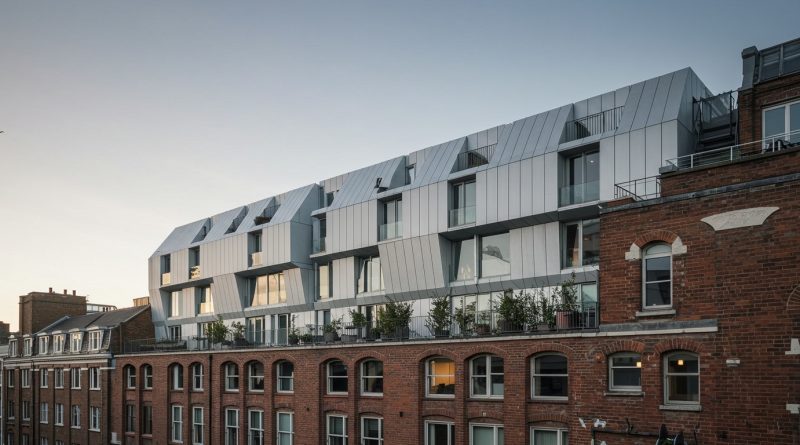
David Kohn Architects’ House on a Hill penthouse in Smarts Place animates a Victorian warehouse facade with its curved and angular bay windows. This project, alongside others recently documented in diverse settings from Chinese libraries to Barcelona cocktail bars, reveals a pervasive yet often unexamined pattern in contemporary architecture. The design discourse, particularly within high-profile publications, frequently spotlights immediate formal spectacle and stylistic evocation. This emphasis, while generating visual interest, risks overshadowing a more fundamental engagement with material honesty, structural longevity, and enduring urban responsibility that extends beyond the initial aesthetic impact of a structure.
The “imaginative” curving brickwork highlighted in projects such as HCCH Studio’s Twisted Brick Shell Library, which utilizes two connecting hemispheres to create its form, provides a clear case study. While the technical skill involved in shaping brickwork into such “fluid forms” is undeniable and often celebrated as a pinnacle of innovation, this approach simultaneously demands complex bespoke fabrication processes. These methods often lead to significantly increased material waste during production and installation, alongside a reliance on specialized labor that raises both cost and the overall embodied carbon footprint of the building. This widely lauded design direction contradicts a more fundamental structural philosophy: that brick’s inherent value lies in its modularity, durability, and the efficiency of its traditional, honest application. The mainstream industry opinion, which often equates technical prowess in executing complex geometries with architectural progress, frequently overlooks the environmental and economic inefficiencies embedded in such material acrobatics.
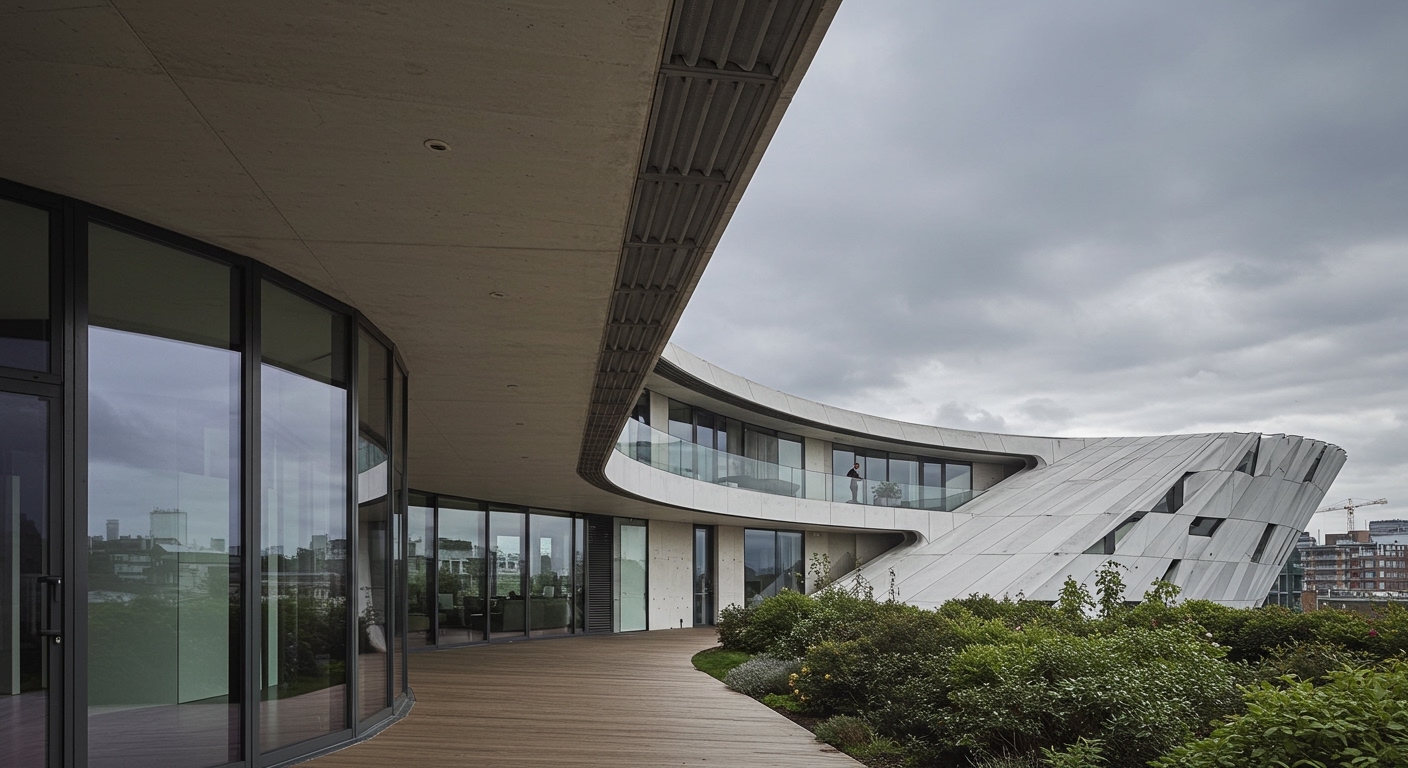
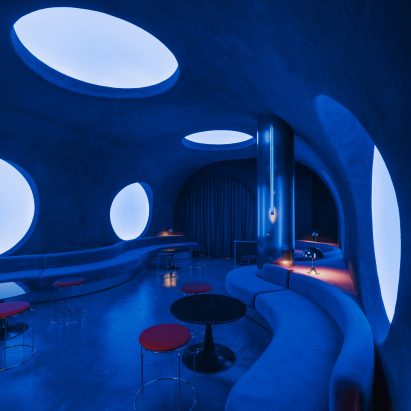
True material innovation, critical for genuine urban responsibility and sustainability, transcends transient stylistic trends or retro-futuristic evocations, such as the Space Age interiors of Isern Serra’s Focacha bar. Instead, it must draw from the profound, embedded ecological intelligence found in historical sacred landscapes, which the research context underscores. In these contexts across India and the SWANA region, relationships between human activity, water systems, and local vegetation were organized through centuries of cultural and spiritual practice, not through explicit environmental agendas or modern design metrics. These ancient systems demonstrate a remarkable durability derived from intrinsic local resource cycles, culturally attuned land management, and construction methods that inherently minimize waste and maximize resilience. This perspective suggests that future material innovations, particularly in urban settings, must be driven not by globalized supply chains supporting singular aesthetic gestures, but by a rigorous re-evaluation of endemic resources and construction techniques that possess an inherent ecological logic, capable of contributing positively to biodiversity and water management. By late 2027, architectural practices and developers will face increasing public and regulatory pressure to provide comprehensive lifecycle assessments for all custom material applications, compelling a critical shift towards designs that prioritize resource efficiency, local sourcing, and long-term performance over novel form-making for its own sake.
The primary opposing force resisting this necessary recalibration is the persistent commercial imperative of branding and immediate marketability. Developers, often driven by quick returns and the need for projects that generate high visual impact, continue to incentivize designs tailored for immediate social media virality and rapid publication. This cycle, amplified by much of the architectural media, encourages designers to prioritize striking forms and superficial narratives over rigorous material investigation, structural integrity through simple means, and long-term ecological performance. It perpetuates a shallow understanding of architectural value, favoring novelty over enduring relevance.
A working Architecture professional should, for every new project initiated this week, conduct a comprehensive lifecycle assessment for any proposed material application that requires custom fabrication, bespoke components, or deviates significantly from standard, proven industry practices. This assessment must rigorously compare not only the initial cost, aesthetic intent, and construction schedule, but also the full embodied carbon, waste generation potential throughout the entire lifecycle, and specific end-of-life implications. Critically, these metrics must be weighed against simpler, locally available, and inherently robust material alternatives that offer comparable structural performance and contribute to the local material economy.
TL;DR
Contemporary architecture’s formal experimentation often obscures deeper responsibilities to material honesty and enduring ecological intelligence.
Curated References

About this editorial — This piece was developed using AI-assisted research and curation across multiple industry sources. All analysis, opinions, and predictions represent the editorial perspective of JHDD. Sources are linked in the references section above.