
JHDD 3D Modeling Report — 2026.06.29

Grand Theft Auto 6 pre-orders are open, signaling historic demand months before Rockstar’s November 2026 launch. This anticipation underscores a foundational shift in how audiences value digital environments, a trend extending far beyond AAA titles.
Across disparate projects, from Crema’s development of Temtem: Pioneers to Daniel Novillo’s Elven Tower Lighting Scene, a pattern emerges: the pursuit of deeply immersive, believable virtual spaces. This is less about pure polygon count and more about the sophisticated interplay of procedural generation, dynamic lighting, and environmental reactivity, creating digital worlds that feel less constructed and more organically existing. The stories collectively point to an industry-wide push for spatial integrity, where environments are not just backdrops but active participants in the user experience.
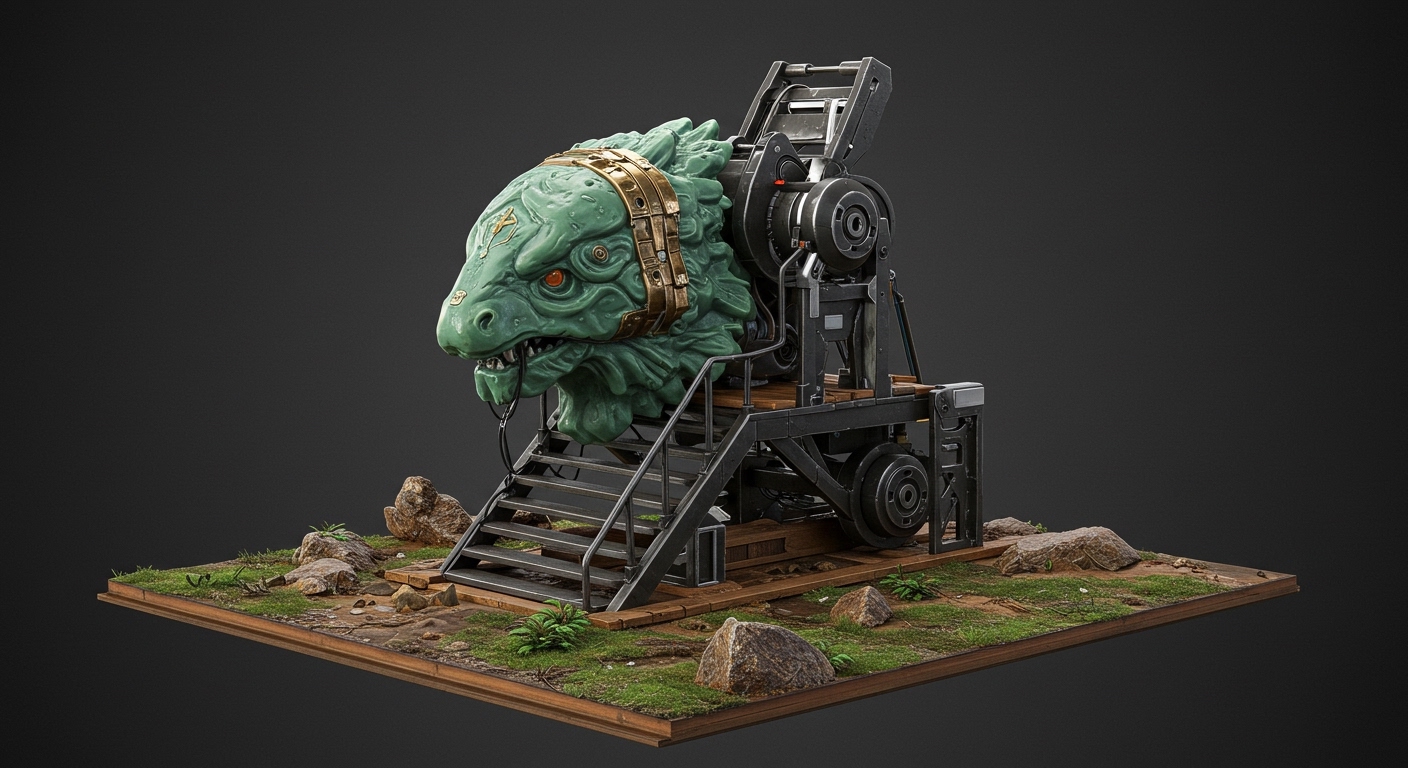
Daniel Novillo’s Elven Tower Lighting Scene, with its highly refined atmospheric quality, serves as a compelling case study. Many in the industry conflate hyper-realism with the relentless pursuit of raw geometric detail or texture resolution. This view is insufficient. True immersion, the kind that makes a virtual space feel inhabited and believable, stems more critically from intelligent lighting dynamics and nuanced atmospheric effects than from an absolute count of triangles or pixels. The emotional resonance of Novillo’s work, which achieves deep spatial presence without explicitly chasing photorealistic asset fidelity, directly contradicts the mainstream fixation on surface-level visual authenticity. It demonstrates that the subtle dance of light, shadow, and volumetric effects can create a more profound sense of place than simply replicating reality with maximum data.
This perspective suggests that resources often poured into incremental mesh detail might be better allocated to developing more sophisticated real-time lighting pipelines. The current challenge for developers lies in creating environments that react fluidly and convincingly to changing light conditions and player interactions. By mid-2027, advanced, real-time volumetric lighting and atmospheric scattering solutions will become standard features across most major game engines, accessible to a broader range of studios and independent artists, moving beyond the current dominance of bespoke AAA solutions. This will democratize the creation of deeply emotive and dynamic virtual spaces, shifting the benchmark for believability.
The primary resistance to this shift comes from entrenched production pipelines and existing hardware limitations. Many studios remain comfortable with pre-baking lighting information, a workflow optimized for static scenes and predictable visual outcomes. The computational demands of fully dynamic, real-time global illumination and complex procedural environmental systems still pose a significant challenge for widespread adoption, particularly outside of high-end PC and console ecosystems. The sheer complexity of integrating dynamic material properties with advanced lighting models across massive open worlds, as seen with titles like Grand Theft Auto 6, also presents a substantial technical hurdle for studios accustomed to less dynamic asset management.
A working 3D Modeling professional should fundamentally re-evaluate how assets are prepared for real-time environments. Instead of optimizing primarily for static render quality, modelers must focus on how their creations interact within dynamic lighting systems. This means prioritizing accurate material definitions for roughness, metallic, and subsurface scattering, and understanding how these properties behave under varied, real-time light sources. Professionals should actively experiment with real-time engines such as Unreal Engine 5 or Unity’s High Definition Render Pipeline, specifically focusing on setting up environmental light probes, dynamic shadows, and volumetric effects, rather than solely relying on traditional offline rendering for asset presentation.
TL;DR
Sophisticated real-time lighting and procedural environmental dynamics are becoming more impactful than raw polygon count for immersive virtual spaces.
Curated References
About this editorial — This piece was developed using AI-assisted research and curation across multiple industry sources. All analysis, opinions, and predictions represent the editorial perspective of JHDD. Sources are linked in the references section above.