JHDD Architecture Report — 2026.06.20
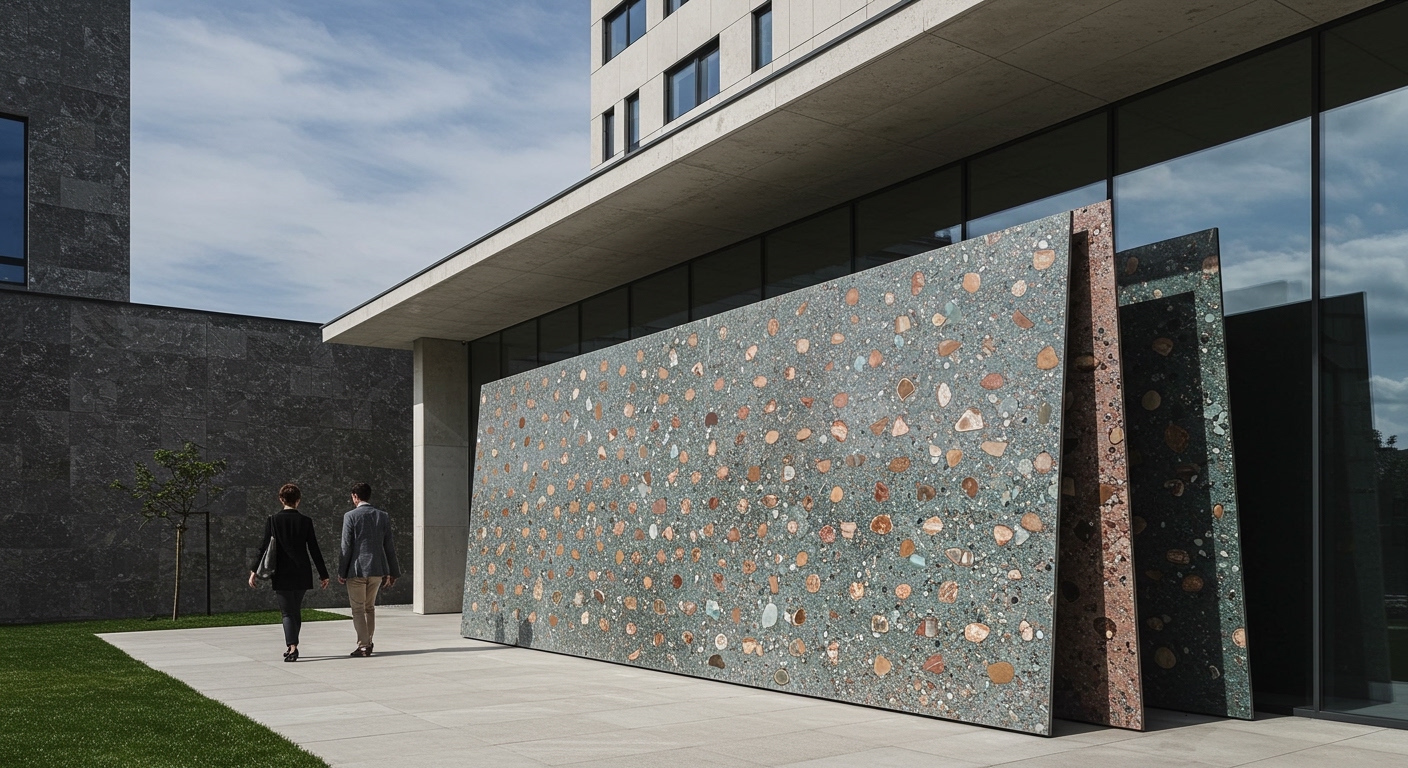
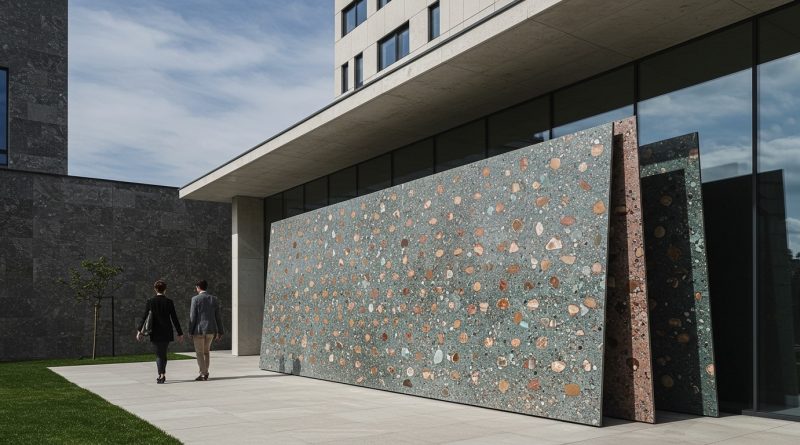
Antolini’s Precioustone collection, with its slabs clustered with cut semi-precious stones, prioritizes superficial dazzle over fundamental material intelligence.
This pursuit of ostentatious display, often disconnected from structural purpose or urban context, stands in stark contrast to projects that engage materials with integrity. The ongoing tension lies between architecture that seeks to impress through expensive surfaces and architecture that seeks to enrich experience and performance through considered material application, structural philosophy, and urban responsibility.

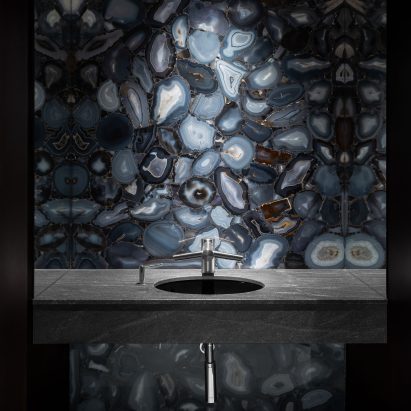
The mainstream industry often celebrates materials like Antolini’s Precioustone collection for its “dazzling surfaces” and perceived exclusivity. However, this focus on semi-precious stone slabs, primarily for their backlit crystalline translucency, exemplifies a regression in material thinking. Material honesty is not merely about using raw, unfinished materials; it is about a material expressing its intrinsic properties and contributing meaningfully to the structure, performance, or experiential quality of a space. This approach exploits aesthetics without rigorous inquiry into embodied energy, long-term durability in varied applications, or a structural philosophy beyond sheer weight. Such material choices isolate themselves from broader sustainability concerns and urban responsibility, creating objects of consumption rather than integrated architectural elements.
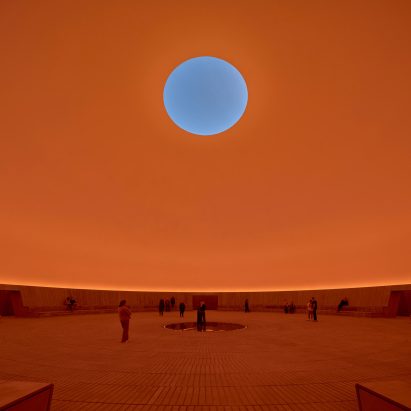
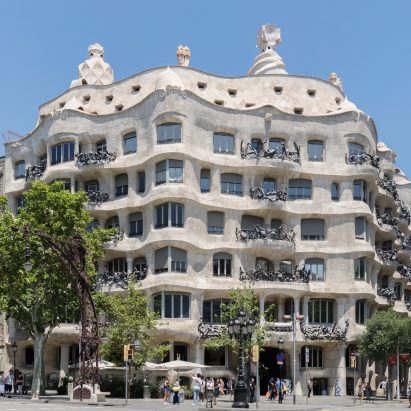
In contrast, the work of James Turrell, whose As Seen Below Skyspace, developed with Schmidt Hammer Lassen, achieves profound experiential depth through the sophisticated manipulation of light and form within a subterranean concrete dome. Here, structural philosophy merges with art: the 40-meter-wide dome, a substantial piece of engineering, is not disguised but is the very vessel for manipulating perception. The material is chosen for its structural capacity to define space and its ability to act as a neutral canvas for light, rather than for its inherent ‘preciousness’. This represents genuine material innovation, where the architectural form itself becomes a finely calibrated instrument for experience. Similarly, Antoni Gaudí’s Casa Batlló, with its skeletal shapes and intricate material assemblies, demonstrates an early commitment to materials expressing organic structure and contextual narrative. The trajectory suggests that by late 2028, the industry will pivot towards valuing materials for their performative and experiential integrity, demanding that surfaces contribute actively to environmental control or spatial narrative, rather than serving as inert symbols of luxury.
The resistance to this more principled approach comes primarily from a market driven by immediate perceived value and rapid aesthetic turnover, particularly in the high-end residential and hospitality sectors. Developers and interior designers, often influenced by trends that prioritize superficial grandeur over material longevity or environmental impact, perpetuate the demand for materials like those in the Precioustone collection. This cycle is reinforced by a lack of stringent lifecycle analysis requirements in many building codes and an incomplete understanding of true building value amongst clients.
Architecture professionals this week should challenge conventional material specification by conducting a mini-lifecycle assessment for every primary surface and structural material considered. This involves researching not only acquisition cost but also embodied carbon, typical maintenance cycles, and end-of-life disposal or reuse potential. Prioritize materials that demonstrate a clear, measurable contribution to the project’s structural, environmental, or experiential goals beyond purely aesthetic appeal.
TL;DR
Architects must prioritize integrated material intelligence and contextual performance over superficial luxury or technological obscurity.
Curated References

About this editorial — This piece was developed using AI-assisted research and curation across multiple industry sources. All analysis, opinions, and predictions represent the editorial perspective of JHDD. Sources are linked in the references section above.