Julian’s Interior Insight — 2026.05.31

The most profound spaces are those that whisper forgotten narratives through their very grain.
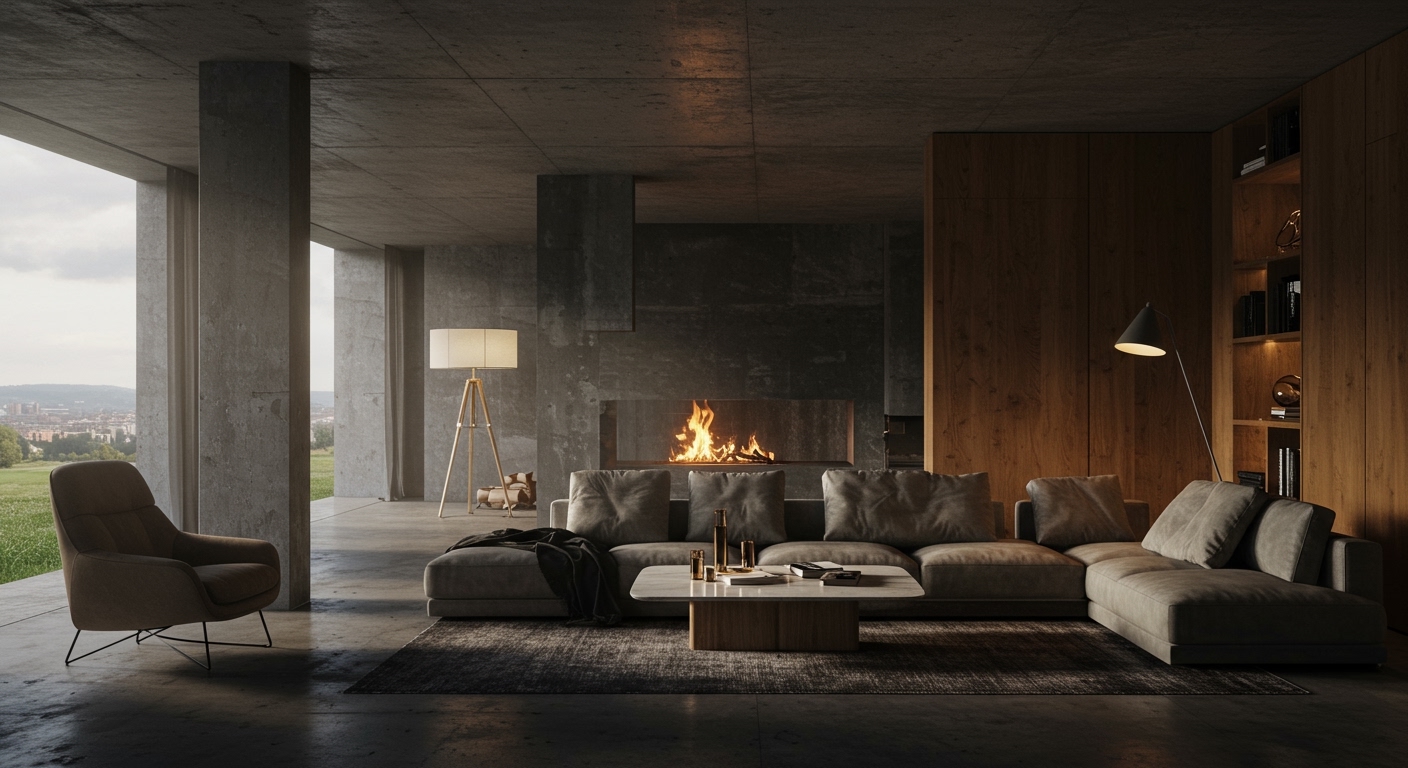
This moment in interior design is defined by an almost primal engagement with substance and form, where the tactile quality of materiality dictates the rhythm of human flow. We witness a deliberate departure from the sterile, the ephemeral, in favour of environments that resonate with an enduring presence. Architects are no longer content to merely shape volume; they are sculpting experiences, imbuing them with a sensory richness that invites introspection. This is an era where the very skin of a building, its facade and interior finishes, becomes a primary vector for narrative, a deliberate counterpoint to the digital saturation of daily life. Spatial tension, once a mere compositional tool, is now employed to orchestrate movement and perception, guiding occupants through curated sequences of discovery. The humble plywood, as seen in the micro-flats of London, is elevated to a sculptural element, demonstrating an intelligent negotiation between function and aesthetic, while the exuberant tiling of Bad Roman Beverly Hills speaks to a bold, almost performative application of pattern and texture.
The prevailing trend is one of maximalist indulgence and hyper-personalisation, an undeniable reaction against the homogenisation of global design. GRT Architects’ Bad Roman in Beverly Hills, with its “exuberant” tiled facade, is a testament to this. It’s a conscious embrace of visual density, a declaration of identity through an audacious application of pattern and colour that demands attention. This is amplified by Spaces Architects Ka’s Art House in New Delhi, a residence defined by an “intense level of customisation,” where fluid forms and curved geometries create an environment that is as much a gallery as it is a home. These projects, alongside Alex Chinneck’s surreal Dior window displays that reference familiar American streetscapes through twisted forms, suggest a yearning for the unique, the crafted, and the unforgettable. The interiors are not merely backdrops; they are active participants in the unfolding experience, engaging the senses with their inherent materiality and deliberate articulation.
Yet, this pursuit of the spectacular and the bespoke harbours a fascinating contradiction. While architects strive for originality and clients demand “something that no one has ever seen,” the very language of design risks becoming a performance, a series of calculated gestures that, while impressive, might lack genuine soul. The “design horrors” that production designer Danny Vermette anticipates in the film Backrooms, born from the mind of a frustrated architect, highlight this peril: spaces that are conceptually daring but experientially hollow. The danger lies in prioritizing the statement over the sanctuary, the grand gesture over the quiet comfort that truly defines a home or a public space. This trend towards intense customisation and maximalist expression, while undeniably exciting, can, if not carefully managed, tip into a form of architectural narcissism, where the architect’s vision eclipses the inhabitant’s lived reality.
Looking ahead, the most compelling interior designs will transcend mere aesthetic curation to become immersive narratives of material intelligence and psychological resonance. Expect to see a resurgence of deeply considered, almost elemental approaches to materiality, where the inherent qualities of stone, wood, and metal are not just celebrated but allowed to dictate the spatial experience. This will manifest in projects that move beyond applied decoration, embracing the raw beauty of construction and the patina of time, creating environments that feel not just designed, but deeply lived-in and authentically unique. The future belongs to the spaces that feel as though they have always been, imbued with a quiet confidence that speaks to enduring quality rather than fleeting novelty.
TL;DR
Interiors are embracing bold materiality and hyper-personalisation, risking superficiality in their pursuit of the unique.


