Julian’s Architecture Insight — 2026.06.02

The sanctity of the private ritual is now a public spectacle.
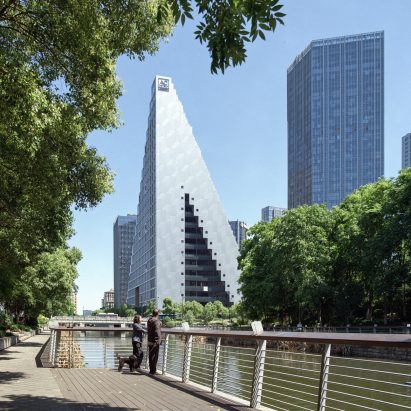
We stand at a pivotal juncture where the very definition of domesticity is being renegotiated, forcing a re-evaluation of our most fundamental architectural spaces. The recent proliferation of projects, from the audacious placement of a bathtub centre-stage in a Barcelona apartment to OMA’s ambitious ‘three-dimensional village’ concept for Hangzhou Prism, underscores a profound shift. This isn’t merely about aesthetic whimsy; it reflects a deeper societal yearning for openness, connection, and a blurring of traditional boundaries. In an era grappling with urban density and the increasing need for adaptable, multifunctional environments, architects are compelled to question prescriptive spatial typologies. The challenge lies in fostering these new paradigms while remaining grounded in the enduring principles of structural integrity, responsible material sourcing, and a deep understanding of the urban fabric. Sustainability, too, is no longer an add-on but an intrinsic driver, pushing material innovation towards greater resourcefulness and lifecycle consideration. The ambition to create a ‘continuous domestic landscape’ or a ‘three-dimensional village’ suggests a move away from compartmentalized living towards more fluid, integrated experiences, mirroring the evolving ways we inhabit and interact with our cities.

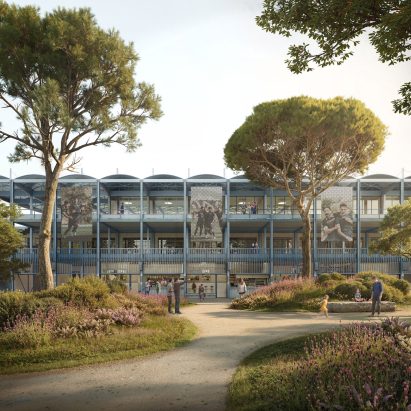
This trend towards de-compartmentalization and the elevation of previously private elements into the public realm is not entirely novel, but its current intensity and manifestation are striking. The Barcelona apartment, by Sigla Studio, bravely positions a bathroom fixture as a focal point, an act that speaks to an evolving comfort with vulnerability and transparency within one’s own living space. It suggests a desire for a more honest, unfiltered existence. Simultaneously, OMA’s Hangzhou Prism, with its integrated public square at the base and a programmatic tapestry woven vertically, offers a model for dense urban living that prioritizes community and interaction. This mirrors the rehabilitation of industrial spaces, as seen with Exbrayat Enrico’s Yard House, which transforms former production facilities into dynamic, narrative-rich collective hubs. These projects collectively argue for architecture that actively cultivates social engagement and redefines the relationship between private and public domains. The renovation and expansion of the Grigoris Lamprakis Stadium by K-Studio and Arup, while ostensibly focused on civic infrastructure, also hints at this broader theme of creating more accessible and integrated public spaces that serve diverse community needs. The emphasis shifts from static monuments to dynamic, responsive environments.
However, this embrace of fluidity and transparency carries inherent tensions. The very elements that define private sanctuary – the bathroom, the bedroom – are now being brought into the glare of shared living. While this can foster intimacy and a sense of liberation, it also risks eroding the essential concept of personal retreat. How does one achieve genuine repose when the most intimate acts are visually accessible? Furthermore, the architectural ambition to create ‘villages’ within single buildings, while admirable in its attempt to foster community in dense urban settings, can also feel artificial, a constructed facsimile of organic social growth. The danger lies in prioritizing the spectacle of openness over the nuanced needs for both connection and solitude. The material innovations that enable these fluid spaces – advanced glazing, adaptable partition systems – must be carefully considered against their long-term impact and resource intensity. The focus on programmatic integration, while addressing urban sprawl, needs to be balanced with the distinct requirements of each function to avoid a reductive homogenization of experience.
Looking ahead, the integration of private and public realms will move beyond mere visual porosity to a more profound programmatic intermingling. We will witness the rise of ‘live-work-play’ architectures not as separate zones within a building, but as truly interwoven systems where domesticity inherently supports productivity and vice versa. Imagine residential units with dedicated, yet seamlessly integrated, co-working spaces or cultural facilities embedded within apartment complexes, accessible not just to residents but to the wider neighbourhood, creating truly permeable urban ecosystems. The spotlight will shift from simply showcasing private acts to designing for shared, yet personalised, experiences that redefine the very notion of home in the 21st century.
TL;DR
Architecture is dissolving the boundaries between private and public, demanding new spatial dialogues.