
JHDD Web Design Report — 2026.08.17

HAOQI.DESIGN demonstrates a sophisticated harmony between DOM and WebGL through its retro-futurist scroll sync and glass shaders.
The pattern emerging from recent developments is a nuanced integration of advanced visual and interactive capabilities with foundational web principles. It is about extending the expressive power of the browser, not replacing it entirely. New CSS features like the Custom Highlight API and CSS Navigation Matching, detailed in recent CSS-Tricks publications, alongside WebGPU and Three.js developments from tutorials on interactive 3D clusters, illustrate an era where intricate visual effects and robust user experiences are increasingly accessible. This accessibility, however, demands a deeper understanding of front-end craft, ensuring these powerful tools enhance, rather than hinder, performance and accessibility.
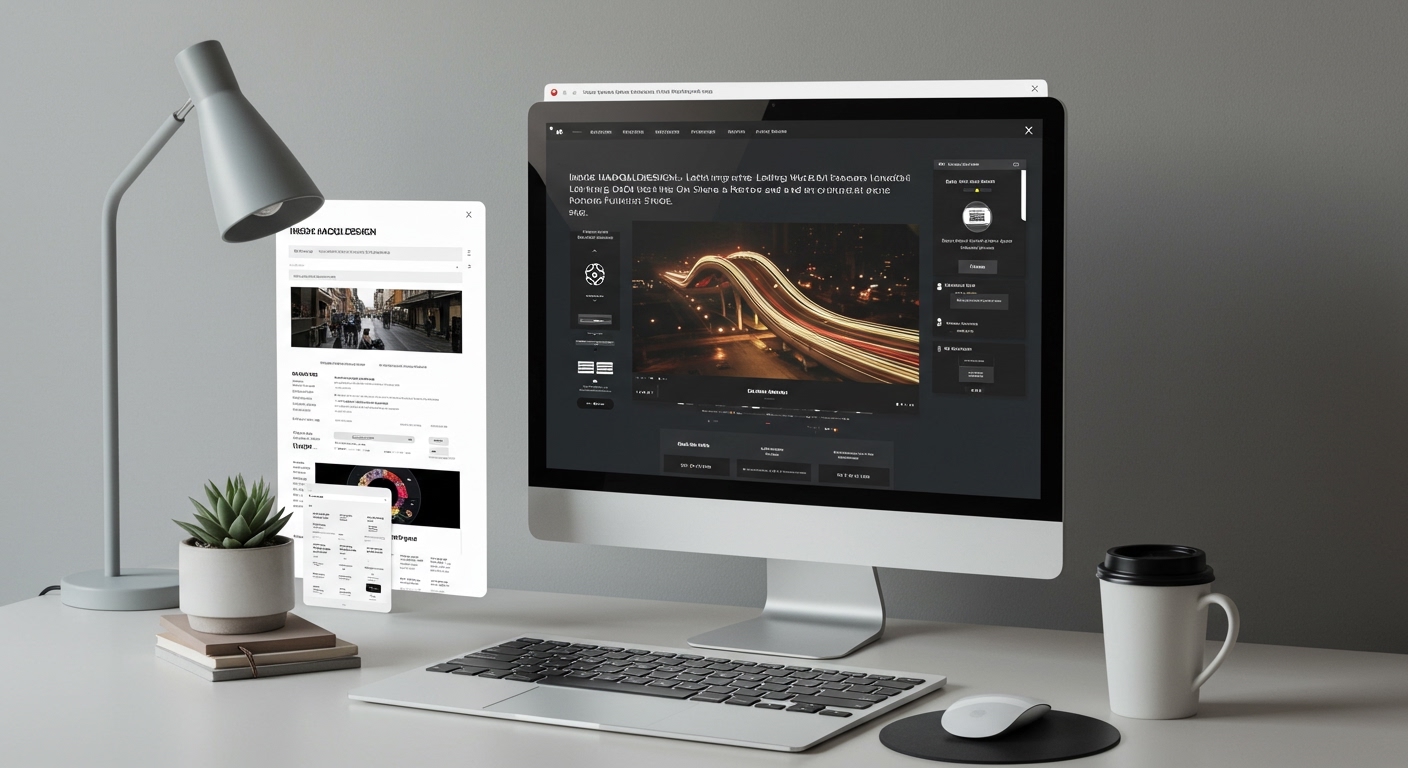
HAOQI.DESIGN’s strategy, involving scroll sync and glass shaders within a retro-futurist aesthetic, challenges the ingrained notion that highly interactive, visually rich sites must inevitably sacrifice performance or accessibility. Many in the industry still advocate for a lean, often minimal, approach, viewing extensive motion or 3D elements as indulgent and detrimental to user experience. This perspective, while rooted in valid concerns about bloated websites and poor user agent performance, often overlooks the potential for intentional and performant complexity. The true issue is not the underlying technology itself—whether it is WebGL or Three.js, as seen in the interactive 3D cluster tutorial—but rather the lack of thoughtful implementation and optimization. A meticulously crafted experience, even with advanced features, can demonstrably outperform a poorly built, simpler one.
The prevailing wisdom frequently suggests that adding significant visual flair via technologies like WebGL inherently introduces accessibility barriers or performance bottlenecks that are too complex to mitigate effectively. This viewpoint often disregards the rapid strides in browser capabilities and the growing maturity of tools, particularly with the advent of WebGPU. HAOQI.DESIGN’s meticulous approach, marrying semantic DOM elements with sophisticated WebGL compositions, illustrates that a considered blend is not only possible but often superior. It intelligently leverages the structural and semantic strengths of HTML and CSS for core content, typography, and navigation, while deploying WebGL for specific, high-impact visual layers and dynamic interactions. This careful orchestration ensures that experiences remain accessible and performant when built with a comprehensive understanding of both layers. This approach is poised for significant growth: by late 2028, web design tooling will feature native, integrated capabilities for seamless DOM-WebGL synchronization, moving these complex interactions beyond custom scripting into standardized, widely adoptable patterns that benefit from browser-level optimizations.
The primary opposing force to this elevated standard of front-end craft comes from the pervasive influence of template-driven development environments and low-code platforms. These solutions prioritize speed of deployment and simplified abstractions over granular control, performance optimization, and true accessibility. Their convenience fosters a mentality where surface-level aesthetics and rapid iteration trump underlying structural integrity, robust performance, and fundamental web best practices. This often leads to issues like inadequate accessibility implementations, such as the incorrectly handled aria-hidden cases detailed on CSS-Tricks, or heavy reliance on JavaScript for effects that could be achieved natively.
A working Web Design professional should dedicate time this week to understanding and experimenting with the Custom Highlight API and CSS Navigation Matching. These features, highlighted in recent CSS-Tricks articles, offer powerful, native browser capabilities for enhancing web typography and user interaction patterns. Proficiency with these can reduce reliance on JavaScript for similar effects, thereby improving both performance and maintainability. Attempting a small proof-of-concept, perhaps for dynamically styling text selections or creating persistent active link states within a current project, will provide immediate, practical insight into their potential.
TL;DR
The modern web’s expressive power grows through advanced native capabilities and careful integration of DOM with graphical layers, challenging assumptions about performance and accessibility.
Curated References
About this editorial — This piece was developed using AI-assisted research and curation across multiple industry sources. All analysis, opinions, and predictions represent the editorial perspective of JHDD. Sources are linked in the references section above.