
JHDD Web Design Report — 2026.06.26
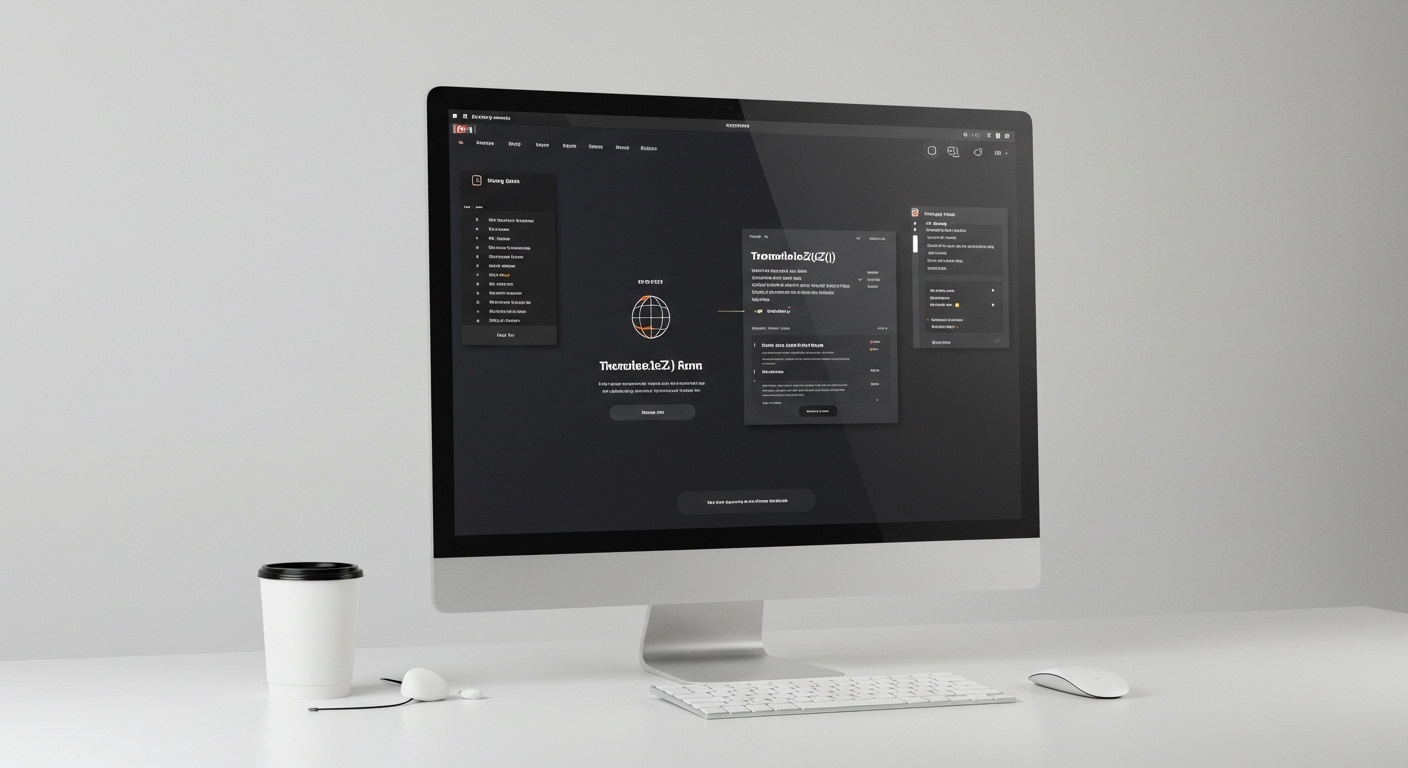
The translateZ() function allows an element to move closer to or farther from the user, a seemingly simple utility that belies its profound impact on web experience.
These atomic CSS transformation properties, ranging from two-dimensional `translate()` to the three-dimensional depth control of `translateZ()`, are often treated as mere utilities. Their detailed publication on CSS-Tricks, presented with emphasis on craft, highlights a persistent reality in web development. This consistency indicates that truly sophisticated interactive experiences and nuanced motion design depend profoundly on a deep understanding and precise application of core rendering capabilities, rather than exclusively on high-level abstractions.

Brisbane-based designer Kevin Lam exemplifies this approach, known for turning brand stories into soulful experiences across digital, print, and motion. His work suggests that the craft of web design increasingly hinges on how subtle visual shifts contribute to narrative flow and emotional connection, not just on broad layout structures. While mainstream industry opinion often prioritizes efficiency through component libraries and automated tools, a critical perspective holds that truly distinctive digital identities are forged through meticulous attention to details like precise element translation and timing. It is this granular control over the visual plane, enabled by functions such as `translateY()`, that allows designers to evoke specific feelings or guide user attention with a precision that generic animations, often bundled in larger frameworks, cannot match. This attention to responsive and meaningful motion is a cornerstone of performant, user-centric interfaces.
The prevailing view often suggests that front-end development should constantly seek to abstract away the browser’s rendering intricacies for faster development. This perspective, however, frequently overlooks the significant performance and unique expressiveness gained through direct manipulation of the rendering pipeline. An over-reliance on meta-frameworks and large JavaScript animation libraries for every movement often introduces unnecessary overhead, leading to jank, dropped frames, and a demonstrably diminished user experience, particularly on less powerful devices. Conversely, a well-placed `translateX()` property, managed directly through efficient CSS or carefully orchestrated with minimal JavaScript, can deliver superior fluidity and a smoother experience. Such a foundational approach also directly benefits Core Web Vitals. By mid-2027, the industry will witness a discernible shift back towards optimizing native browser capabilities for animations, driven by the escalating demands for consistent performance metrics and a renewed appreciation for front-end craftsmanship that avoids unnecessary abstraction layers.
This emphasis on foundational craft, critical for both performance and brand integrity, finds resistance in the relentless pursuit of rapid development cycles and the proliferation of low-code or no-code platforms. These platforms, while promising accelerated delivery, often abstract away the very granular control necessary for truly bespoke and high-performance motion design and unique typographic layouts. The constant pressure to deliver new features quickly can lead to a reliance on pre-packaged animations, heavy JavaScript libraries, or generic components that obscure the underlying mechanics, hindering both optimal performance and the ability to craft unique brand expression through fine-tuned interaction.
Working web design professionals should, this week, audit a key interaction on their current project that involves motion, such as a hover state or an element entering the viewport. Instead of automatically reaching for a comprehensive JavaScript animation library or a complex CSS framework utility, explore if the same effect can be achieved or even improved using only native CSS transforms like `translate()` in conjunction with optimized timing functions. Pay close attention to the impact on Lighthouse scores for performance, especially Cumulative Layout Shift and Largest Contentful Paint, and ensure the animation gracefully degrades or is easily controlled for users with motion sensitivities through `prefers-reduced-motion` queries.
TL;DR
Mastery of core CSS transform functions offers superior performance and expressive power for web experiences over abstract frameworks.
Curated References
About this editorial — This piece was developed using AI-assisted research and curation across multiple industry sources. All analysis, opinions, and predictions represent the editorial perspective of JHDD. Sources are linked in the references section above.