
JHDD UI UX Report — 2026.06.25

PMs and sales teams are building genuinely working prototypes with AI tools like A2UI, demonstrating functional user flows.
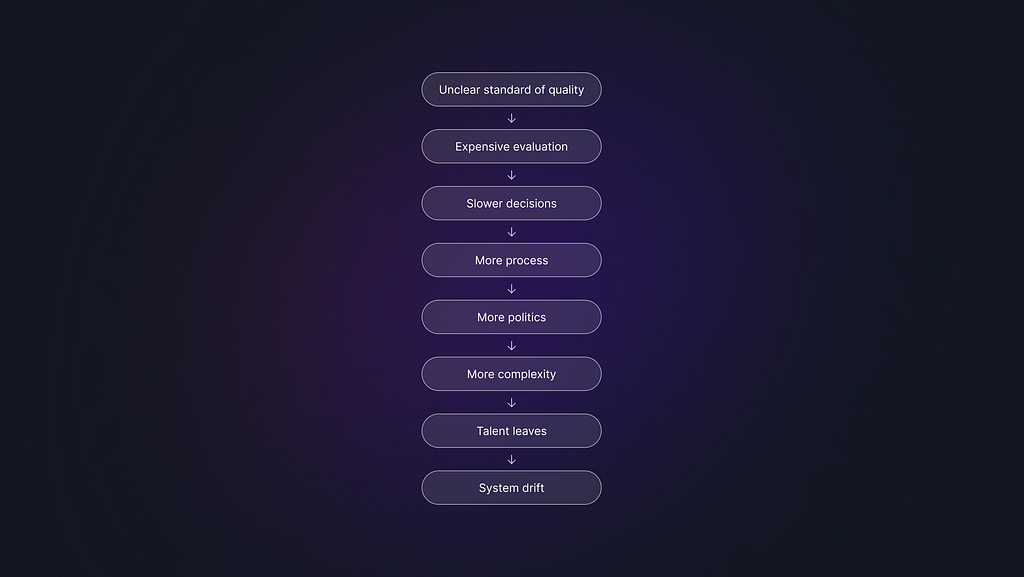
The increasing ease of generating functional interfaces with AI tools reveals a widening gap between mere operational utility and holistic design quality. While generative capabilities make creation abundant, as noted in discussions on the organizational cost of low taste, the ability to recognize and maintain what is actually worth keeping remains scarce. This dynamic plays out as seemingly functional products that operate outside established interaction patterns, leading to accumulating friction and inconsistencies that are not immediately catastrophic but erode long-term usability.

The enthusiasm surrounding AI tools like A2UI, enabling non-designers to quickly assemble functional prototypes, presents a deceptive promise. While these tools genuinely produce interfaces users can operate, a closer inspection often reveals details underneath: interactions that are subtly off, components that do not quite fit established design patterns, and decisions lacking a clear framework for long-term consistency. For example, a generated button might function but lack proper focus states for keyboard navigation, or a form field might accept input but fail to convey semantic meaning for screen readers. Mainstream industry opinion often champions this rapid prototyping as a democratizing force, speeding up product development and empowering diverse teams. However, this view overlooks the silent accrual of design debt. The critical distinction is that “it functions” is not synonymous with “it is well-designed,” “it is accessible,” or “it scales gracefully within an ecosystem.” This accelerated output, unguided by robust design system principles and accessibility expertise, results in a fragmented user experience where the cost of low taste manifests as a lack of shared quality. This fragmentation is the true, hidden cost, far exceeding the initial speed gains.
The perception that AI-generated functional prototypes reduce the need for senior design judgment is a dangerous miscalculation. Senior designers are valuable not for shortcuts, but for their ability to define what problems are worth solving and how to solve them within a coherent, accessible system. The accumulation of slight interaction inconsistencies – such as inconsistent gesture responses, misaligned component padding, or absent alt text for images – while not catastrophic individually, creates a significant cognitive load for users and a maintenance nightmare for development teams attempting to scale or localize the product. The belief that these issues can be ‘cleaned up later’ often proves financially untenable, as retrofitting accessibility or re-establishing consistent interaction patterns across a large, AI-generated codebase is a massive undertaking. It is predicted that by mid-2028, organizations that have heavily embraced AI-generated interfaces without corresponding investment in design system governance and expert human oversight will face substantial re-architecture and redesign costs as the compounding effects of unmanaged interface debt become unsustainable.
The primary opposing force to design integrity in this context is the organizational imperative to ship quickly, often prioritizing immediate functional delivery over long-term system coherence and user experience quality. This is driven by business metrics that reward rapid iteration and perceived cost savings from reduced reliance on skilled design resources, coupled with a lack of understanding regarding the downstream impact of fragmented interaction patterns and unaddressed accessibility issues.
A UI/UX professional should actively audit new AI-generated components and interaction flows against their organization’s existing design system specifications and accessibility guidelines (e.g., WCAG 2.2). Document every deviation, no matter how small, detailing the specific pattern mismatch, potential usability issue, or accessibility violation. Present these findings not as failures of AI, but as evidence of where human judgment and design system enforcement remain critical, quantifying the potential future rework cost.
TL;DR
AI-driven interface generation, while fast, risks system fragmentation and long-term usability debt if not guided by disciplined human design judgment and robust design systems.
Curated References




About this editorial — This piece was developed using AI-assisted research and curation across multiple industry sources. All analysis, opinions, and predictions represent the editorial perspective of JHDD. Sources are linked in the references section above.