JHDD Interior Report — 2026.06.17
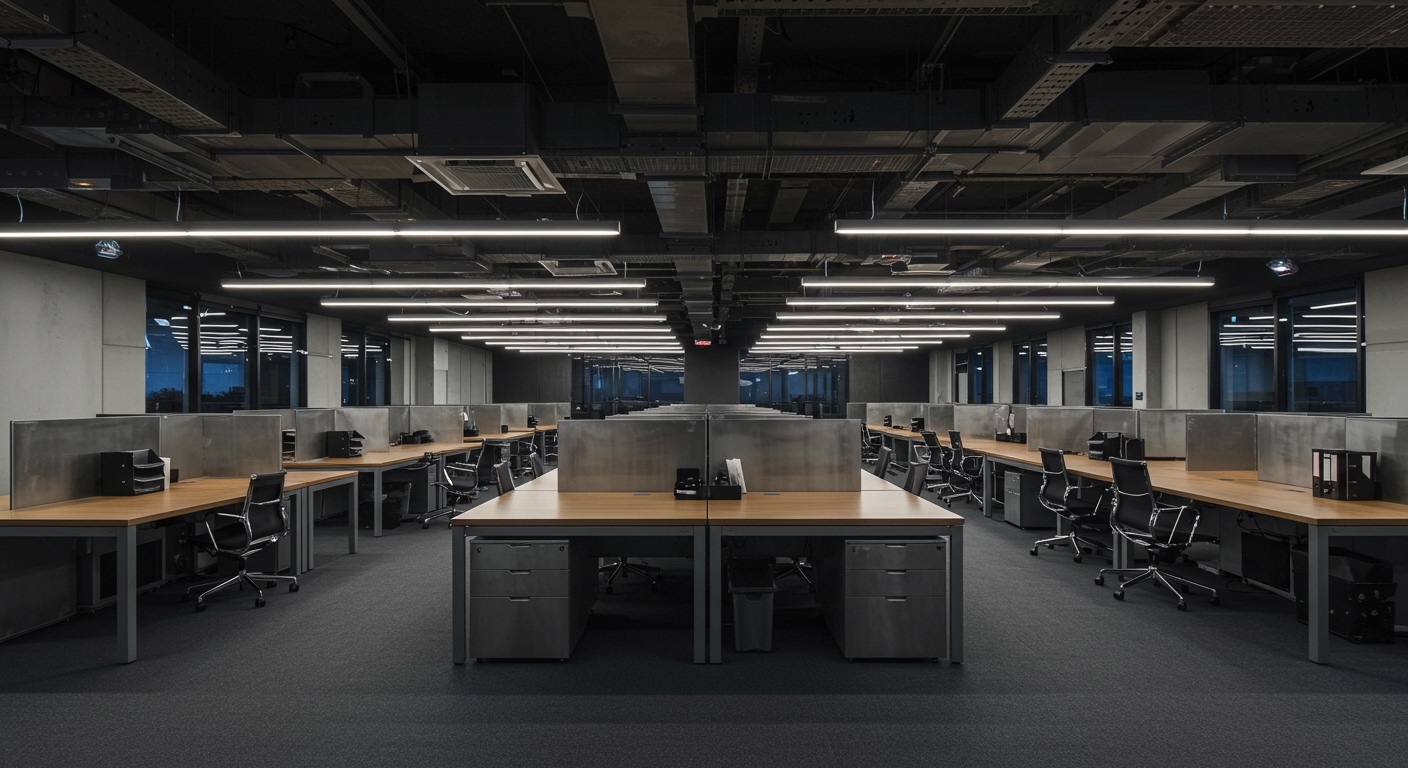
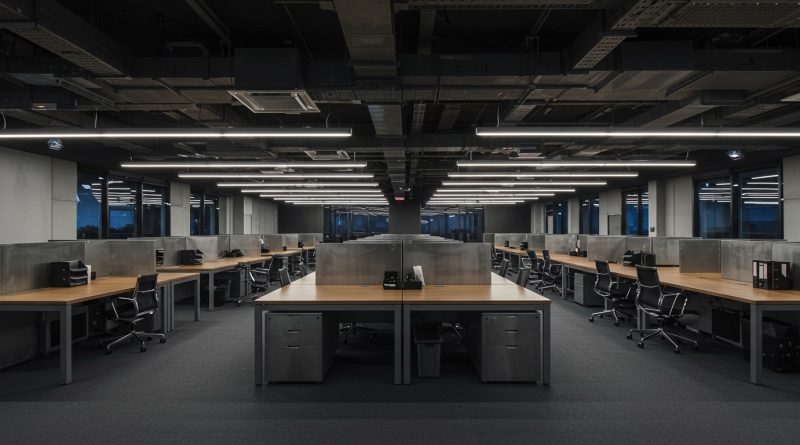
The addition of rows of custom metal workstations by Charlap Hyman & Herrero to an aerospace manufacturer’s office in California demonstrates a calculated approach to human interaction with industrial materials.
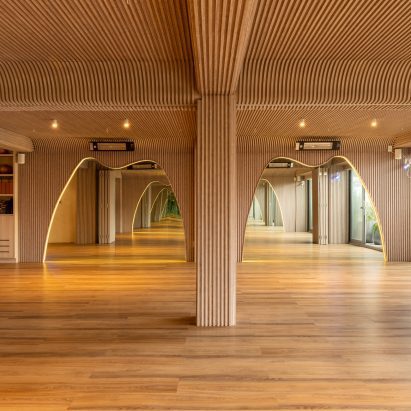
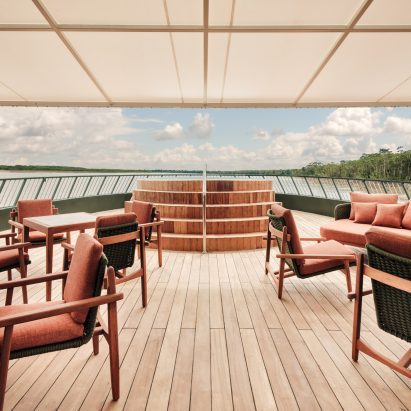
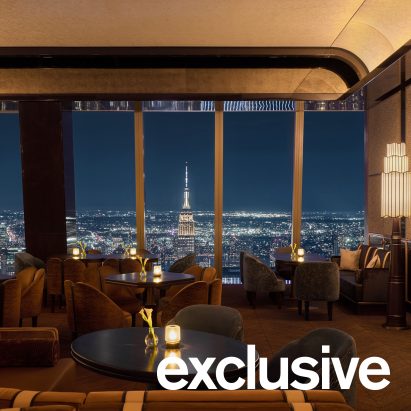
The recent projects, from the curated journeys of the Pure Amazon riverboat to the re-imagined dining at The Edge, exhibit a shared priority: the deliberate orchestration of tactile experience and spatial perception over overt aesthetic declarations. This common thread involves a sophisticated interplay of materials and boundary definitions, often blurring lines or creating subtle guidance for occupants. The goal appears to be an internal experience of flow and focus, whether for work, wellness, or leisure, rather than an external presentation of opulence.
Charlap Hyman & Herrero’s design for the aerospace manufacturer’s office, featuring those custom metal workstations, illustrates this principle. The choice of metal, often perceived as cold or stark, is here integrated to create a “futuristic yet comfortable” environment. This challenges the conventional wisdom that comfort in a workspace primarily derives from soft furnishings or natural materials. Instead, the comfort here likely emerges from the precision, the engineered flow, and the subtle interplay of light on the metallic surfaces, providing a sense of order and high-performance functionality that paradoxically calms the user. This is not about softening the industrial, but about refining it to psychological effect.
This approach stands in direct opposition to the mainstream industry’s persistent emphasis on “biophilic design” as the primary route to human-centric spaces, often reducing it to the mere inclusion of plants or natural textures. While biophilia has its place, it risks becoming a superficial overlay rather than a deeply considered integration of spatial psychology. A more potent, yet less obvious, trend is the conscious manipulation of perceived spatial boundaries and the inherent qualities of materials, even those typically considered harsh. Within two years, more commercial and high-end residential projects will move beyond simplistic biophilic gestures to experiment with “engineered comfort,” where highly refined, often unexpected, material applications define a new kind of sensory luxury that speaks to control and precision, rather than softness and mimicry of nature.
The most significant opposing force resisting this nuanced approach remains the market’s demand for instant visual gratification and easily communicable design narratives. Clients and consumers often gravitate towards designs that offer immediate, recognizable luxury cues – the plush velvet, the oversized chandelier, the sweeping vista – rather than the subtle, slow-burn psychological effect of a meticulously crafted metal workstation or the ambiguous expanse hinted at by Edwin Heathcote’s observations on spaces like the Backrooms. Developers, driven by rapid return on investment, frequently prioritize easily digestible “feature lists” over the intangible qualities of spatial tension and human flow.
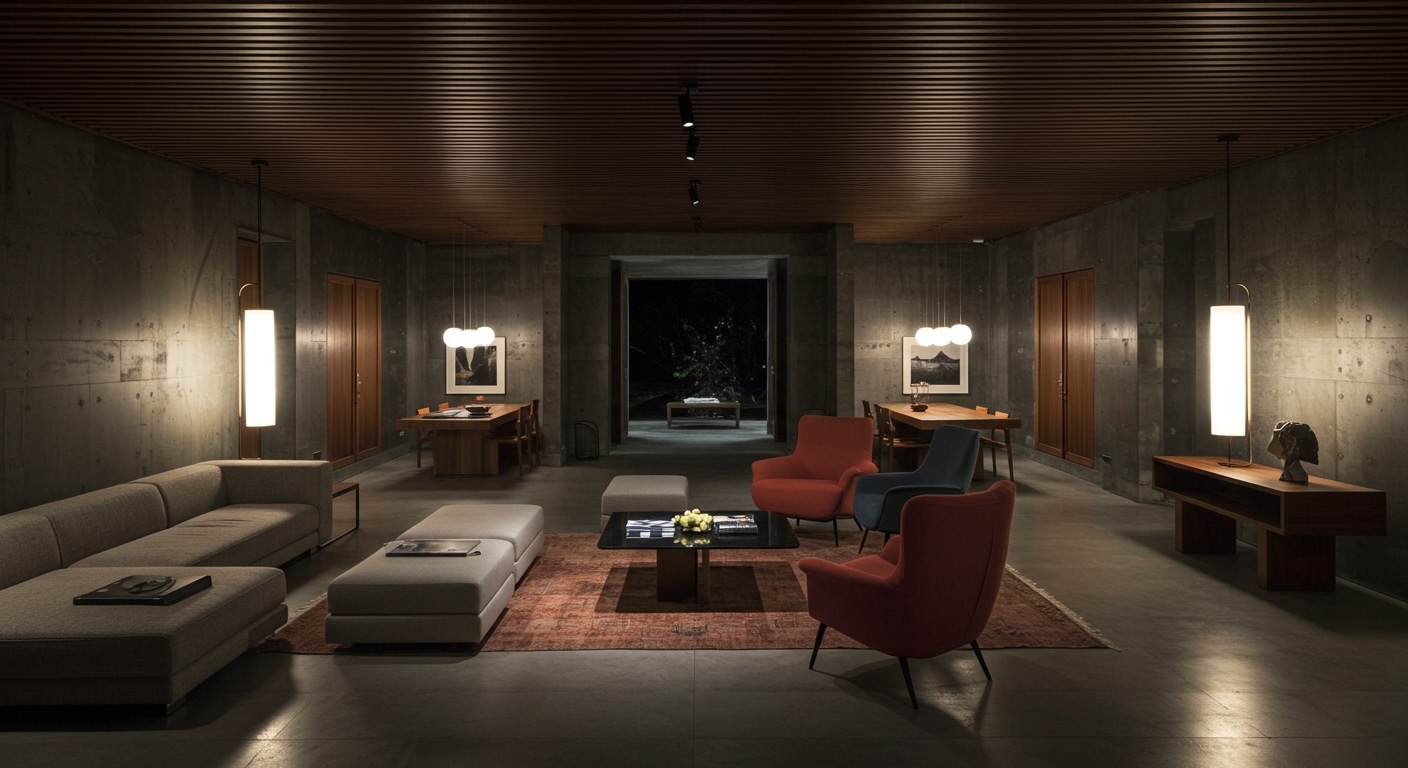
An interior professional should immediately begin exploring the latent psychological and tactile qualities of materials typically excluded from luxury palettes, specifically rigid or industrial ones like brushed metals, composites, or honed concrete. Instead of simply applying them, professionals should work with fabricators to understand how precision detailing, unexpected finishes, or modular repetition can transform their inherent character to create a sense of focused calm or directed flow. This means spending time not just on material selection, but on the method of application and interaction within the space.
TL;DR
Luxury design is shifting from overt opulence to subtle psychological manipulation through refined material application and spatial tension.
Curated References


About this editorial — This piece was developed using AI-assisted research and curation across multiple industry sources. All analysis, opinions, and predictions represent the editorial perspective of JHDD. Sources are linked in the references section above.