
JHDD Branding Report — 2026.06.10

The brief is the last thing keeping agencies alive.
A palpable tension exists between the growing demand for radical, reductive visual systems and the entrenched desire for maximalist narrative architecture. This is not merely an aesthetic divergence; it’s a fundamental schism in how brands are perceived to build equity. The market is bifurcating between ultra-lean, hyper-functional identities that signal immediate efficacy and highly curated, maximalist expressions that lean heavily on cultural resonance and aspirational storytelling. This isn’t about a new trend in typography or color palettes; it’s about a deep-seated divergence in brand strategy itself, driven by evolving consumer expectations and the sheer density of the media landscape. The underlying force is the paradox of hyper-personalization and mass commodification, forcing brands to choose whether to be a utility or an artifact.
What’s unfolding is a strategic recalibration where brands are shedding layers of perceived complexity to articulate a singular, unwavering promise. Consider Brusco’s identity. It doesn’t just look like a classic burger joint; it is the distilled essence of that archetype, stripped of ephemeral trends. The genius here lies in its ability to evoke nostalgia and authenticity through extreme simplification. This contrasts with the prevailing industry narrative that champions layering brand stories, often to the point of dilution. Many agencies, still tethered to the idea that more is more – more brand pillars, more cultural touchpoints, more narrative threads – are missing the seismic shift. They are optimizing for perceived depth when consumers are increasingly rewarding distilled clarity. By late 2025, brands that continue to rely on overly complex, multi-faceted identities will see their market positioning erode, unable to cut through the noise generated by their lean, focused competitors.
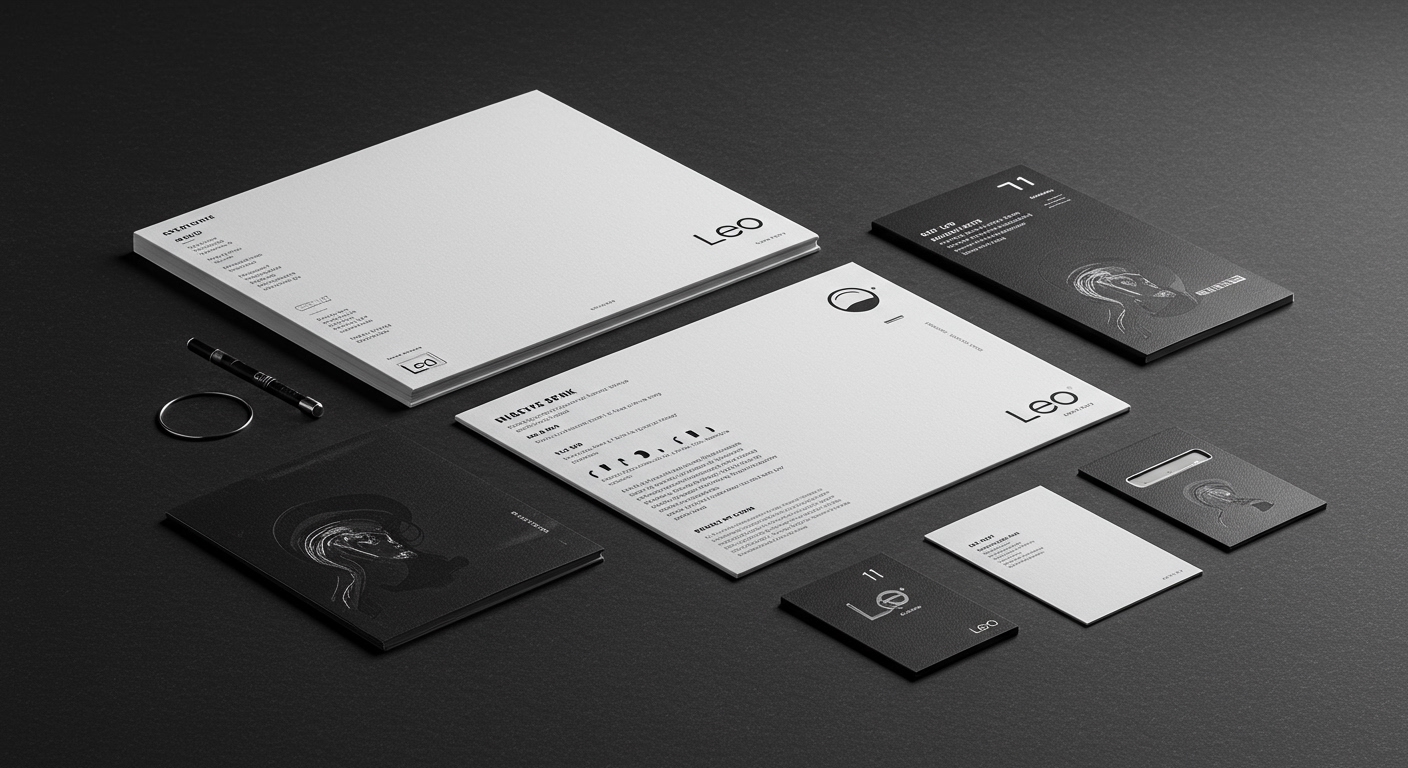
This is particularly evident when observing the subtle but powerful work of Leo. The brand’s “bold, no nonsense identity” for hair loss isn’t about elaborate scientific claims or empathetic platitudes; it’s about directness and competence. It signals a solution, not a journey. This is a direct counterpoint to the notion that deeply emotional storytelling is the sole pathway to consumer connection. In fact, the opposite is becoming true: for certain problem-solution categories, extreme clarity and a focus on functional benefit, communicated through a severely pared-back visual identity, builds greater trust and brand equity. The friction arises from legacy brand managers and agencies who are uncomfortable with this reduction. They interpret simplicity as shallowness, mistaking a lack of clutter for a lack of substance, thereby risking brand invisibility in a crowded marketplace.
The friction is palpable within client-agency relationships where the demand for immediate, tangible ROI clashes with the often-intangible, long-term play of building deep cultural relevance through complex narratives. Brands like Fussy, with their commitment to refillable systems, are pushing against the established packaging paradigms that prioritize novelty and disposability. The expert opinion on this work hints at a resistance to this change, a discomfort with friction that disrupts established consumption patterns. This resistance to embracing friction – both in product design and brand communication – highlights the inertia within industries that benefit from the status quo of complexity and frequent consumption, a dynamic that ultimately hinders genuine brand innovation.
A working Branding professional should, this week, challenge the default assumption that their brand’s equity is built on accretion rather than distillation. Instead of seeking to add more touchpoints or layers to a brand narrative, identify the single, most potent signal that defines its core promise and ruthlessly prune everything else. This requires a disciplined focus on identifying the absolute minimal viable identity that can still achieve maximal impact, embracing the power of reductive clarity to cut through the prevailing informational static.
TL;DR
The future of brand equity lies in radical distillation, not narrative accretion, making simplicity the ultimate sophistication.
Curated References
About this editorial — This piece was developed using AI-assisted research and curation across multiple industry sources. All analysis, opinions, and predictions represent the editorial perspective of JHDD. Sources are linked in the references section above.