JHDD Architecture Report — 2026.08.29
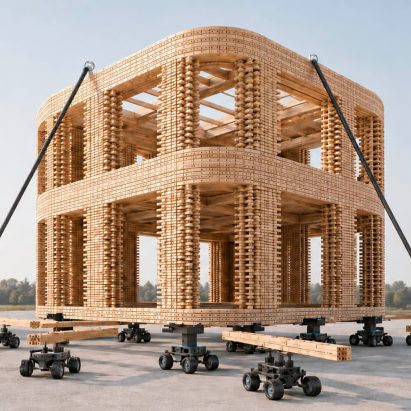
Foster + Partners has secured significant funding for SWIFT-Build, an autonomous robot construction project focused on timber.
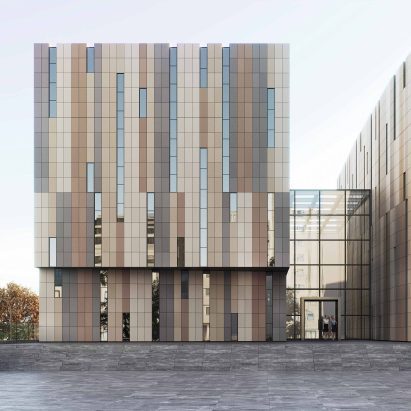
These stories collectively reveal a deepening engagement with fabrication methodologies as central to architectural expression and performance. Whether it is Craighill’s precision die-casting for an everyday object, Exagres’s extruded porcelain stoneware for facade systems, or Nodecraft Studio’s poured-earth walls, the emphasis shifts from generic material specification to a granular understanding of how materials are formed, assembled, and ultimately perform across their lifecycle. The thread is not just what is built, but how it is built, and with what level of intelligence embedded in the process.
Foster + Partners’ SWIFT-Build initiative, which focuses on autonomous robotics for on-site timber construction, represents a crucial juncture for material innovation and structural philosophy. The conventional view often posits that increasing automation distances architecture from genuine material honesty, replacing craft with machine-driven efficiency. This perspective is fundamentally flawed. Instead, sophisticated automation, when applied thoughtfully, allows for an unprecedented level of material optimization and precision in construction that human craft, at scale, cannot match. The detail of SWIFT-Build’s fleet of robots and drones points to a future where structural timber elements are assembled with minute tolerances, minimizing waste and maximizing inherent material strength. This is not a reduction of material honesty but a redefinition, where the honesty lies in revealing the intelligent process of fabrication and assembly, not just the raw material itself. This approach integrates digital design with physical construction, pushing timber’s structural capabilities beyond traditional limits.
The true value of SWIFT-Build lies in its potential to elevate structural timber’s role in dense urban environments by making complex, high-performance wood structures economically viable and rapidly deployable. By mid-2029, a demonstrable full-scale multi-story building constructed predominantly by such automated systems will emerge within a major European city, showcasing a new paradigm for efficient, low-carbon urban development. This future relies on understanding material properties at a data-driven level, where the robot becomes an extension of the designer’s intent, translating digital models into physical reality with inherent material intelligence.
The specific opposing force resisting this evolution is the inertia within established construction practices, particularly the entrenched supply chains and regulatory frameworks designed for conventional, labor-intensive methods. These systems favor known material suppliers and traditional construction sequencing over the adaptive, integrated processes promised by advanced robotic fabrication. Building codes, procurement protocols, and the fragmented nature of subcontracting all present significant barriers to the widespread adoption of such disruptive technologies, keeping material choices conservative and construction methodologies stagnant.
Architecture professionals should dedicate time this week to identifying at least one local material supplier or fabricator who prioritizes process innovation, whether through digital fabrication, advanced material composites, or traditional methods applied with modern precision. Engage directly with their manufacturing floor or workshop to understand the specific capabilities and limitations of their production methods. This direct engagement fosters a deeper understanding of material intelligence and fabrication potential, moving beyond generic specifications towards design that is truly informed by how things are made.
TL;DR
Architectural progress hinges on understanding fabrication methods as deeply as material properties.
Curated References


About this editorial — This piece was developed using AI-assisted research and curation across multiple industry sources. All analysis, opinions, and predictions represent the editorial perspective of JHDD. Sources are linked in the references section above.