JHDD Architecture Report — 2026.08.25
Evolving Radical Aesthetics designed Ushas, a farmhouse built into a steep Kerala hillside, where an open-air temple is carved into a retaining wall.
These diverse reports reveal a quiet, consistent pattern: a re-evaluation of architecture’s fundamental responsibilities, moving beyond form-making to embrace embedded value. Whether it is integrating into a natural landscape, reclaiming shared urban green spaces as with CN10 architetti’s work on PARCOBROLO, or addressing social inequities outlined in Public Interest Design in South Africa, the emphasis falls on careful material selection and a direct response to specific site conditions. This involves not only formal integration but also considering the social and ecological impact of every design decision, often without seeking prominent recognition for the architecture itself.
The work of Evolving Radical Aesthetics on Ushas exemplifies this recalibration. The decision to build the farmhouse directly into a Kerala hillside, utilizing local granite and carving an open-air temple from the retaining wall, demonstrates a structural philosophy rooted in deep site engagement rather than imposition. This approach directly contradicts the mainstream industry’s frequent pursuit of immediate visual distinctiveness or “signature” forms that often disregard context. The true innovation here is not in a novel material, but in the intelligent deployment of readily available local resources to minimize disruption and maximize symbiotic existence with the terrain. The retired couple’s relocation from city life to cultivate farmland underscores architecture’s role in supporting a more grounded, materially honest way of living.
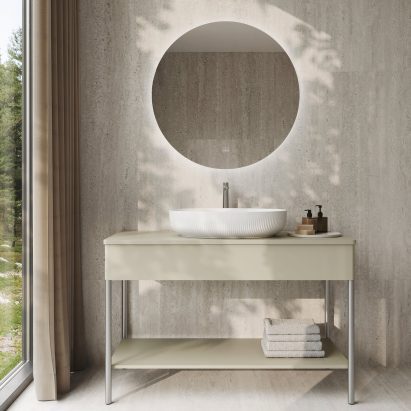
This mode of practice, where architecture serves an underlying cultural, social, or environmental imperative, is frequently overlooked in favor of projects designed for higher media visibility or larger budgets. However, the true material innovation and urban responsibility often reside in such site-specific, materially grounded responses. Christian Haas’s Artis Sense washbasin, with its textured ceramic surface informed by pleated textiles, similarly emphasizes tactile engagement over purely visual impact, bringing a deeper material honesty to everyday objects. This perspective suggests that the definition of ‘cutting-edge’ design must expand to include quiet integration, responsible stewardship, and local economic support. By mid-2027, the demand for truly embedded projects which prioritize regional material ecologies, local craft, and long-term community benefit will measurably increase as clients and municipalities seek genuine, lasting value over transient architectural trends.
The primary opposing force remains the entrenched globalized development model and the associated architectural competition system, which often rewards visually assertive, easily marketable proposals. This often prioritizes speed, cost-efficiency through standardized components, and global supply chains, rather than the detailed, slower engagement required for projects like the PARCOBROLO reclamation. Even initiatives like the call for proposals for the Bahrain Pavilion at the Venice Architecture Biennale 2027, while fostering discourse, can inadvertently encourage more ‘statement’ architecture over deeply integrated, context-specific work. These larger systemic forces create barriers for incremental, materially responsible interventions.
Architecture professionals must critically re-evaluate their material specifications, pushing beyond readily available standardized products. This involves actively seeking out and specifying local materials and regional fabrication methods, even if it requires deeper research or slightly longer procurement timelines. It means engaging with local artisans and construction techniques early in the design process, understanding the embodied energy, social impact, and labor conditions of every component rather than simply relying on supplier catalogs. Professionals should also advocate for a holistic project valuation that includes long-term environmental and community benefits, moving beyond initial construction cost metrics to truly reflect urban responsibility.
TL;DR
Architecture must prioritize deep site integration, local material responsibility, and social equity over globalized aesthetics.
Curated References

About this editorial — This piece was developed using AI-assisted research and curation across multiple industry sources. All analysis, opinions, and predictions represent the editorial perspective of JHDD. Sources are linked in the references section above.