JHDD Architecture Report — 2026.08.14
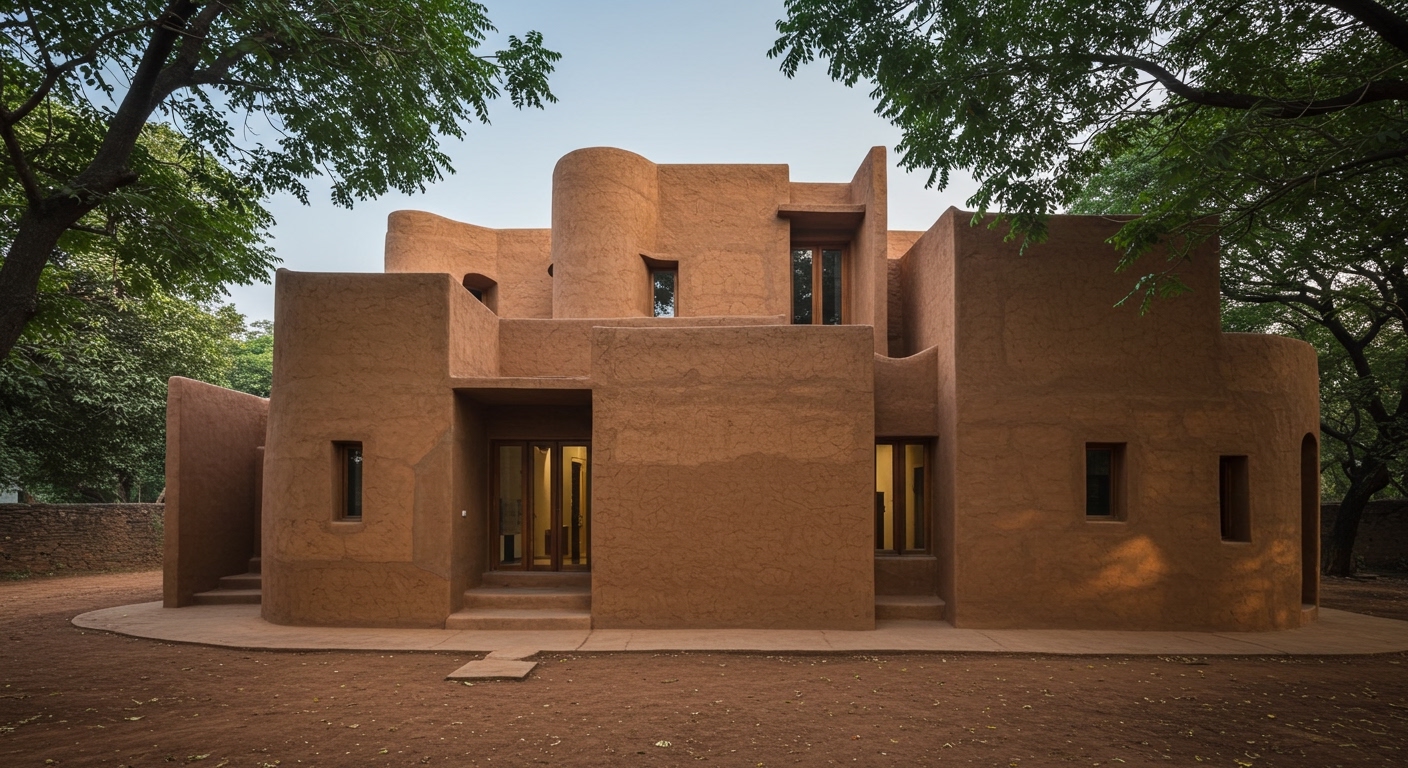
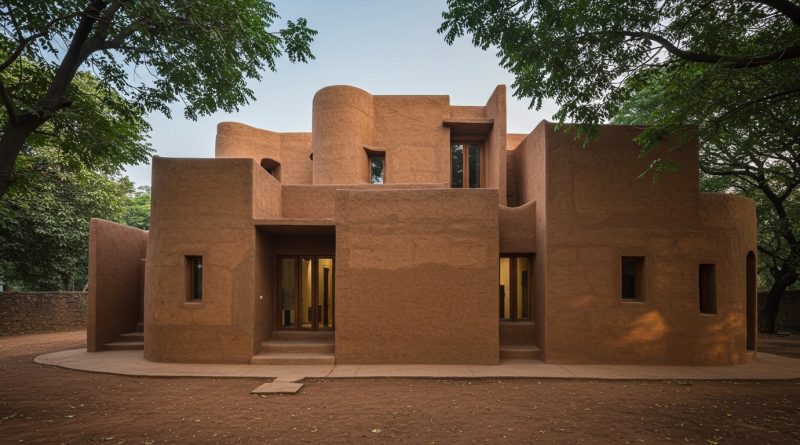
AKSH Architects’ Earthen Retreat in Pune demonstrates a critical engagement with existing structures, using mud and lime plaster to redefine abandoned site offices.
This approach, alongside the material thoughtfulness evident in contemporary Chinese interiors and the specific contextual response of Youth’s Cubitts store in Manchester, reveals a quiet but pervasive shift. This is not merely an embrace of local aesthetics, but a structural philosophy emerging from the inherent limits and potential of existing urban fabric and traditional making. The focus is on re-articulation rather than wholesale replacement, and on surface treatments that speak to process rather than pure finish.
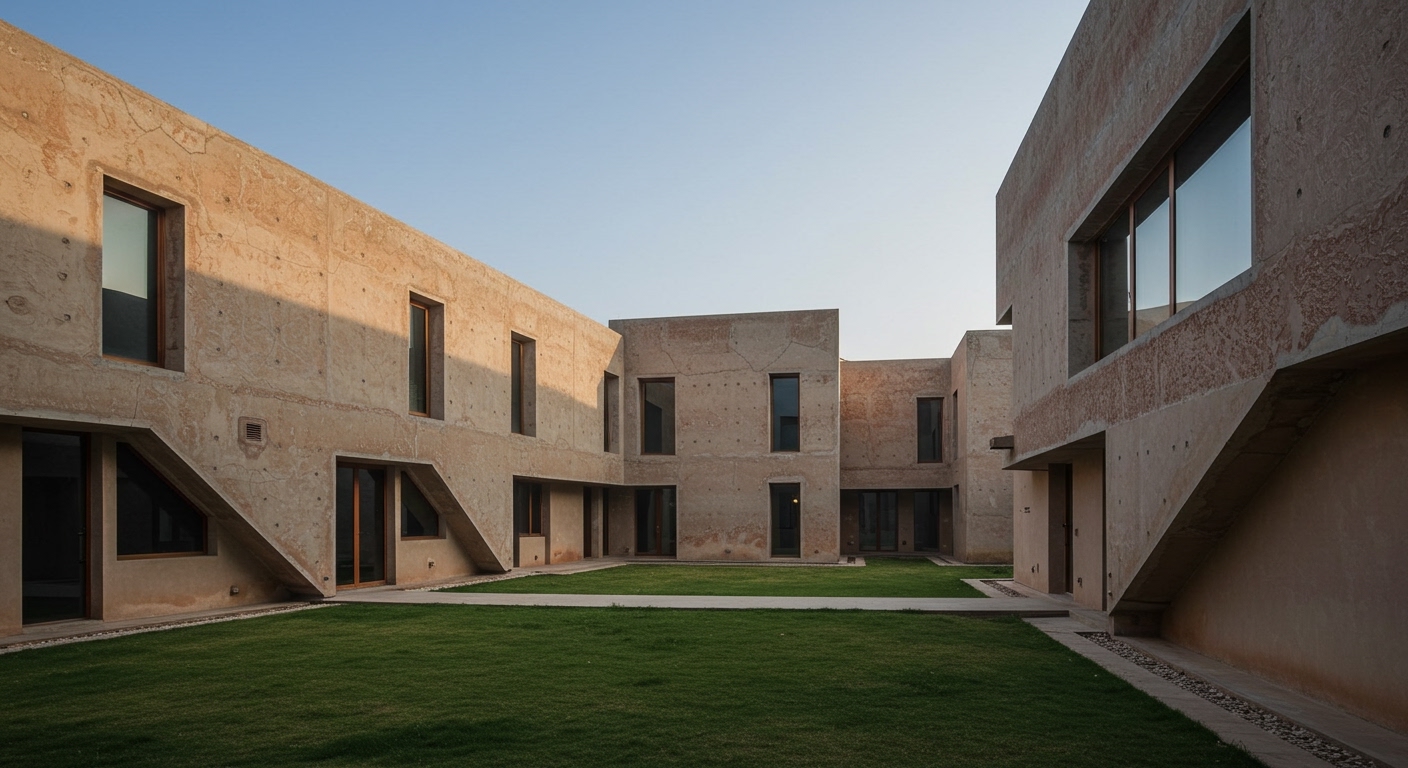
Studio Saransh + IKSOI’s LJ House in Ahmedabad exemplifies this re-articulation in its urban context. The project directly confronts the contemporary Indian urban condition of desiring spatial generosity while respecting a deep-rooted culture of collective living. Instead of designing for individualistic spatial division, which is a common post-modern paradigm in residential architecture globally, LJ House prioritizes collective spaces, drawing from the logic of traditional pol houses. This contradicts the mainstream industry’s often uncritical adoption of Westernized individual room typologies and maximum floor area ratio (FAR) exploitation, which prioritizes market value per square foot over social cohesion. The conventional wisdom frequently equates spatial luxury with isolation and private amenities. The LJ House argues for a different kind of luxury: one defined by shared experience and integrated social fabric within the dwelling. This approach offers a framework for more resilient urban communities, predicting a shift by mid-2027 where urban residential projects in dense areas will be increasingly judged not just by individual unit sales, but by their contribution to micro-community formation within the building footprint.
Material innovation is also undergoing a redefinition. While the Jaguar Type 01’s “on-demand” screens represent one facet of material flexibility, the broader, more significant trend is represented by “The Handmade Surface.” This publication highlights how craft in contemporary Chinese interiors values the way materials are joined and brought into relation. The industry often chases novel composite materials or digital fabrication as the primary forms of innovation. However, the true innovation lies in understanding and revealing the intrinsic qualities of simpler materials – timber that retains its irregularity, terrazzo that records aggregate. This approach elevates the process of making to a material quality itself, offering durability and a deeper connection to place that manufactured perfection often lacks. This perspective posits that the long-term sustainability of materials is less about their embodied carbon alone and more about their cultural resilience and capacity to age gracefully within their context. By 2028, material specifications for high-end projects will place increased emphasis on the transparency of material provenance and the visibility of fabrication techniques, moving beyond mere certification labels.
The primary opposing force to this re-evaluation is the inertia of globalized supply chains and the immediate financial incentives driving “fast, inexpensive, and profitable retrofitting.” This system prioritizes speed, standardized components, and volume over localized craft, bespoke material engagement, and adaptive reuse strategies. This also includes the dominant developer models that aim for replicable, scalable solutions, often at the expense of site-specific nuance.
Architecture professionals should actively seek out local artisans and material suppliers for their projects this week, asking not only for cost estimates but for insights into their specific fabrication processes and local material sourcing limitations. This shifts the focus from abstract material specifications to embodied material knowledge.
TL;DR
Contemporary design redefines value through deep engagement with existing conditions, traditional methods, and the inherent qualities of materials, rather than perpetual novelty.
Curated References



About this editorial — This piece was developed using AI-assisted research and curation across multiple industry sources. All analysis, opinions, and predictions represent the editorial perspective of JHDD. Sources are linked in the references section above.