
JHDD UI UX Report — 2026.06.29

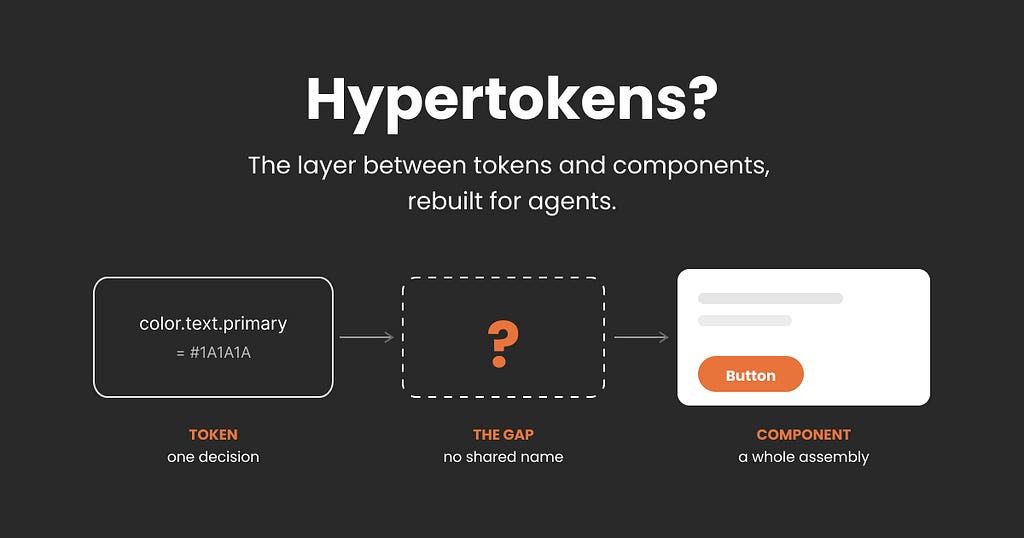
Jake Albaugh from Figma named the gap between design tokens and components as hypertokens.
The common pattern connecting recent industry discussions is the exposure of previously unexamined inconsistencies within digital product development, now exacerbated by agent-driven execution. What human designers once “smoothed over” by eye, agents interpret literally, turning previously tolerable drift into a direct, measurable cost. This gap, residing between atomic design decisions and assembled components, has become a critical point of failure in design systems.

The mainstream industry opinion often positions artificial intelligence as a simple accelerator, enhancing existing workflows by speeding up execution. This view misses a crucial implication. AI does not inherently improve the quality of a system; it amplifies the fidelity of its input. When applied to loosely defined design systems, agents operating with tools like Claude Code will efficiently produce “slop” – code and interfaces built from ambiguous instructions. Alberto Brandolini’s observation, describing how refuting falsehoods costs ten times more than producing them, applies directly to design systems. The energy required to correct agent-generated interfaces stemming from undefined hypertokens far exceeds the effort needed to precisely define those intermediate patterns beforehand. By mid-2027, organizations will begin mandating formal “hypertokens taxonomies” within their design systems, recognizing the prohibitive cost of post-production correction.
This acceleration of operational output challenges the very nature of product discovery. Conventional practice often treats discovery as a series of activities to run, focused on producing outputs for delivery. However, “discovery is a capability, not a phase.” Its true value lies in cultivating the human judgment necessary to decide what is worth building and how it should fundamentally behave. Relying on agents to generate code or designs from insufficient discovery work sidesteps this deeper problem, merely shifting the origin of system inconsistencies. The design principles that informed products like the iPod emerged from profound conceptual thought, not just efficient assembly. Without this foundational clarity, an agent acting on incomplete definitions will produce interaction patterns that are inconsistent, often less usable, and potentially inaccessible, embodying the cost of unexamined design judgment.
The primary opposing force to this necessary precision is the pervasive, short-term pressure for speed and immediate cost reduction. This pressure often incentivizes the superficial application of AI tools without investing in the foundational hygiene of design systems or the development of human judgment in strategic discovery. Decision makers frequently prioritize quantitative output over qualitative robustness, leading to a cycle of rapid generation followed by costly rework.
A UI UX professional should conduct an ‘interaction pattern audit’ within their current design system. This involves systematically documenting the specific decision logic that transforms atomic tokens into reusable, coherent interaction patterns, such as how individual spacing tokens combine to form a card layout or how text styles integrate into a navigation element. Ensure this documentation is explicit, unambiguous, and ideally machine-readable, reducing any interpretative burden for agent-driven design processes.
TL;DR
AI’s efficiency exposes design system ambiguities, making precise definition of intermediate interaction patterns a critical priority to prevent costly, agent-generated inconsistencies.
Curated References



About this editorial — This piece was developed using AI-assisted research and curation across multiple industry sources. All analysis, opinions, and predictions represent the editorial perspective of JHDD. Sources are linked in the references section above.