
JHDD UI UX Report — 2026.06.26

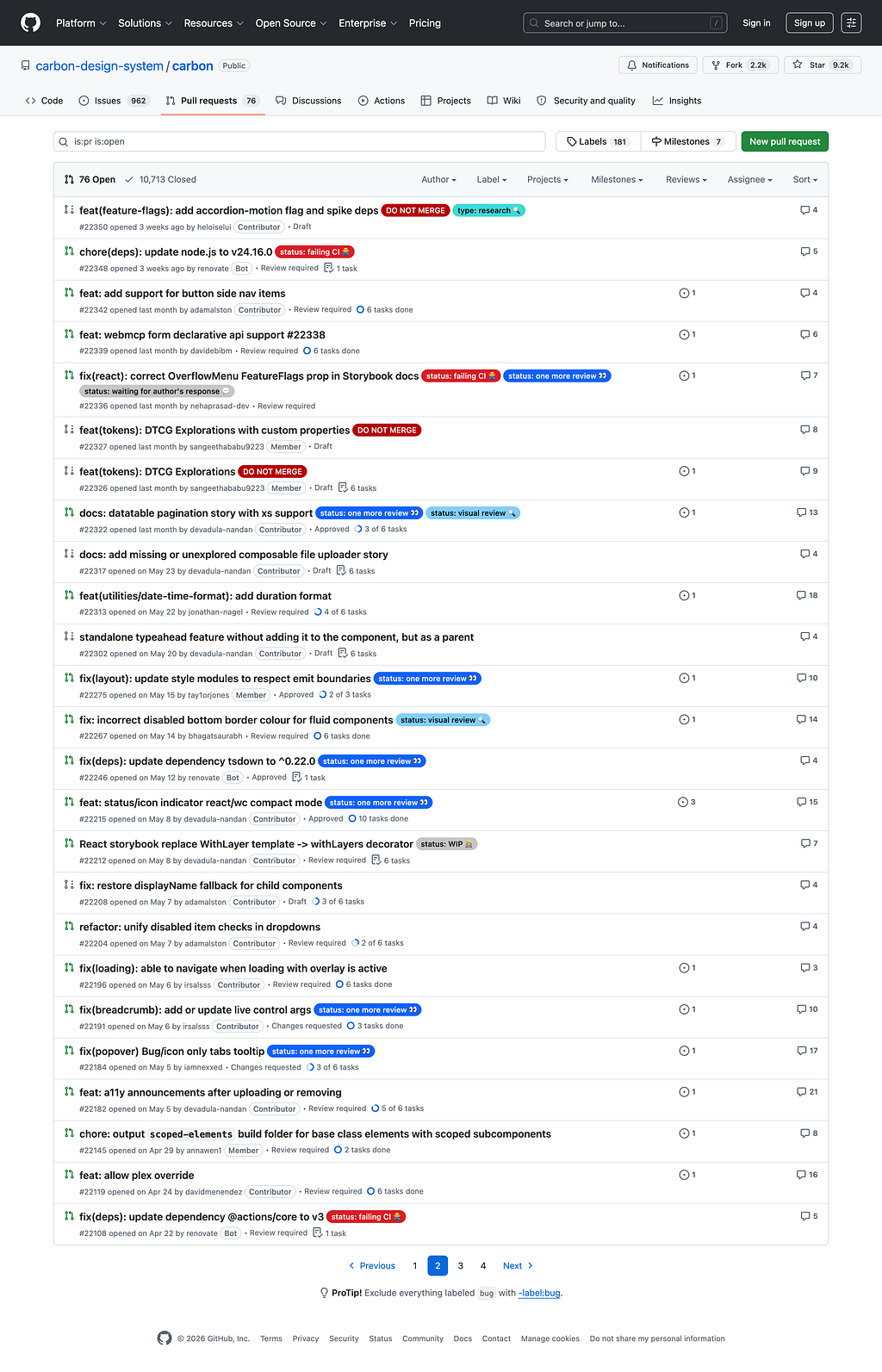
Seventy-six open contributions to IBM’s Carbon design system, some dating back to April, await clearance from a single reviewer.
This specific bottleneck at IBM’s Carbon highlights a broader, unacknowledged pattern emerging in design: human judgment has become the primary scarcity. While AI rapidly democratizes content and interface creation, from generated images to entire design system components, the capacity for nuanced, qualitative evaluation, particularly for usability and accessibility, remains centralized and unscalable. Organizations are proficient at increasing output, yet they struggle to distribute and scale the discerning intelligence required to identify what is actually worth keeping or shipping.

The reliance on a single individual for critical qualitative oversight, as seen within the IBM Carbon design system, exemplifies a significant organizational miscalculation. The conventional industry perspective frequently advocates for integrating AI to automate various stages of the design process, including aspects of design system maintenance or quality assurance. However, this approach risks creating a false sense of security regarding component quality and accessibility. True innovation in design systems will not come from AI automating the final judgment, but from solutions that enable a distributed, informed human judgment. AI can accelerate code generation or even identify potential issues, but it does not inherently understand the human experience of an accessible interface or the subtle implications of an interaction pattern. This demands a contrarian view: investing in AI primarily to automate judgment is a misdirection; the real challenge is effectively scaling and distributing human discernment. By mid-2027, leading organizations will pivot their design systems strategy, focusing on building “judgment frameworks” and collaborative qualitative review processes that empower multiple human contributors, rather than centralizing review authority or deferring it to AI.
The primary opposing force to this necessary shift is the ingrained organizational impulse to prioritize quantitative metrics of efficiency and speed over the inherently slower, qualitative processes of expert human review and shared taste. Companies often measure success by output volume or rapid iteration cycles, inadvertently devaluing the deep, contextual understanding that underpins true usability and accessibility. This often manifests as pressure to integrate AI for perceived efficiency gains, bypassing the foundational work of cultivating and distributing human design intelligence.
A working UI UX professional should proactively implement a structured, distributed peer review system for design system contributions within their team this week. This system must include explicit accessibility and interaction pattern checklists that demand concrete justifications for design decisions. This approach cultivates shared accountability and distributes critical judgment, rather than waiting for a single gatekeeper to identify fundamental flaws.
TL;DR
Judgment, not creation, is the scarce resource in design, demanding organizational solutions beyond AI automation.
Curated References



About this editorial — This piece was developed using AI-assisted research and curation across multiple industry sources. All analysis, opinions, and predictions represent the editorial perspective of JHDD. Sources are linked in the references section above.