JHDD Architecture Report — 2026.06.23
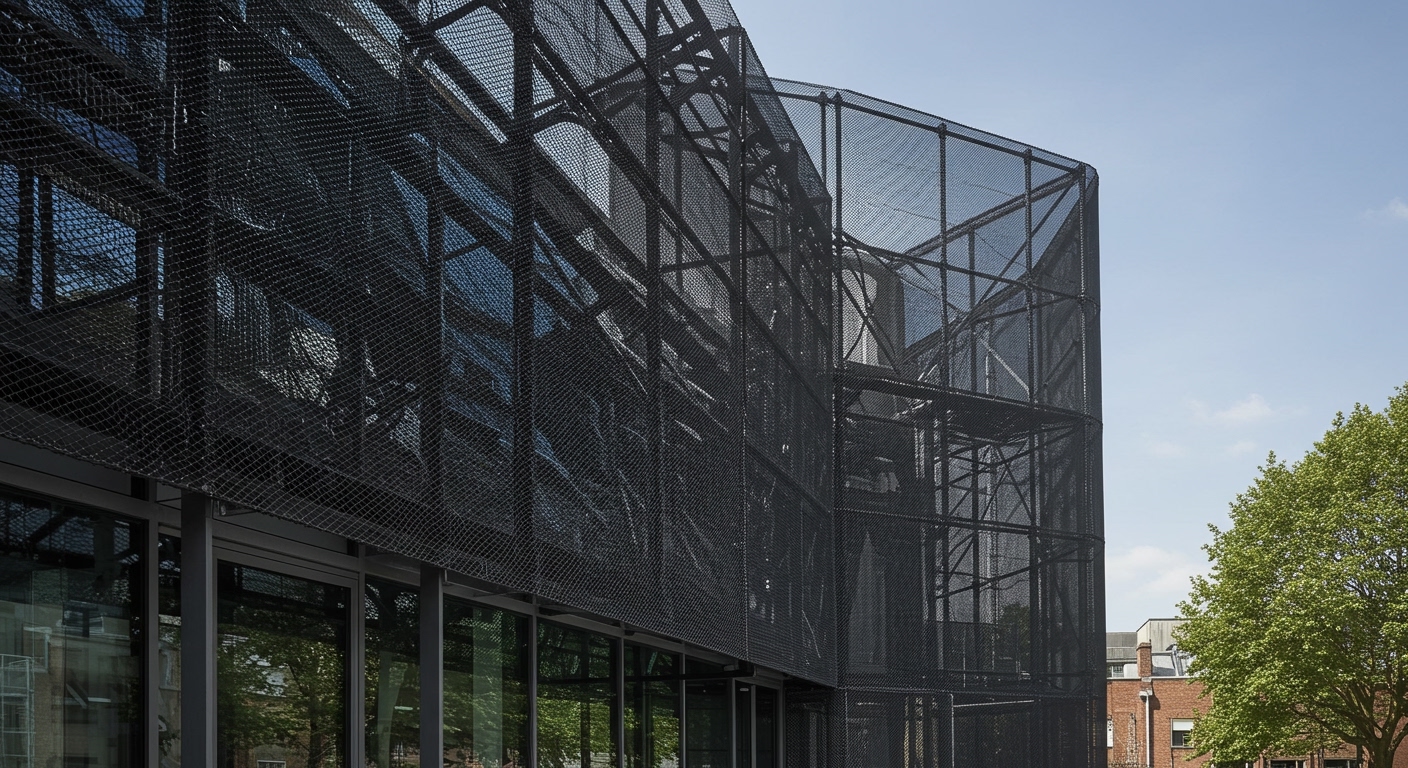
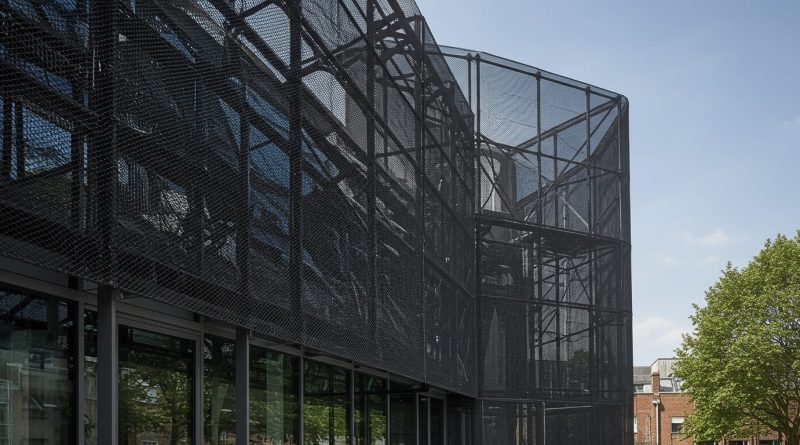
Rana Begum and engineering studio Webb Yates reframe industrial powder-coated mesh at the London Festival of Architecture.
This collection of projects reveals a common thread: a precise, almost surgical re-evaluation of material potential, structural integrity, and urban integration. Architects and designers are engaging with existing conditions, whether a historic bridge, a dune landscape, or a common fence, not through imposition but through thoughtful adaptation or reinterpretation. It is a quiet insistence on finding richness in the familiar, rather than perpetually seeking the entirely new.
The No.1616 Fence by Rana Begum and Webb Yates, a 13-meter-high tower constructed from industrial mesh, exemplifies this approach. Instead of concealing its origin, the project elevates a utilitarian material, challenging its conventional association with barriers and security to become an architectural statement of structural possibility. The mainstream industry frequently prioritizes novel composite materials or bespoke finishes, driven by marketing narratives of “innovation” that often overlook the embodied energy and true lifecycle of components. This often leads to an architectural language that alienates rather than integrates. Conversely, Begum and Webb Yates demonstrate that innovation resides not solely in material invention, but in the intelligent application and re-contextualization of what already exists. The inherent tensile strength and modularity of the mesh are celebrated, revealing an understated elegance derived from honest engineering.
This counter-narrative suggests that material honesty, coupled with a deep understanding of structural capacity, can yield more compelling and responsible outcomes than the relentless pursuit of hyper-specialized components. By mid-2027, the industry will see a measurable increase in the specification of commercially available, typically overlooked, industrial materials for prominent architectural applications, driven by a renewed focus on lifecycle assessment and manufacturing accessibility. This shift will manifest in facades, public furniture, and even structural elements that consciously expose their humble origins.
The primary resistance to this re-evaluation comes from the entrenched supply chains and marketing departments of large material manufacturers who benefit from the cyclical demand for proprietary “new and improved” products. They cultivate a perceived need for novelty, often at the expense of material circularity and local resource optimization, propagating a culture where architects are incentivized to specify complex, often single-use, components.
An architecture professional should this week audit one regularly specified material on a current project, researching its primary constituents, typical manufacturing processes, and potential for reuse or downcycling, then actively seek a commercially available alternative that exhibits greater material honesty or repurposing potential within budget and performance parameters.
TL;DR
Architects are finding new value in existing materials and contexts by prioritizing honest application over constant novelty.
Curated References




About this editorial — This piece was developed using AI-assisted research and curation across multiple industry sources. All analysis, opinions, and predictions represent the editorial perspective of JHDD. Sources are linked in the references section above.