
JHDD 3D Modeling Report — 2026.06.22

Fox 福克斯’s beautiful character with “spellbinding eyes” showcases a granular approach to hyper-realism that is rapidly becoming standard.
A common thread connects recent developments in digital fabrication and virtual space creation: the increasing democratization of sophisticated procedural generation and real-time rendering tools. This shifts the focus from manual asset production to dynamic system design, enabling more responsive and intelligent virtual environments.
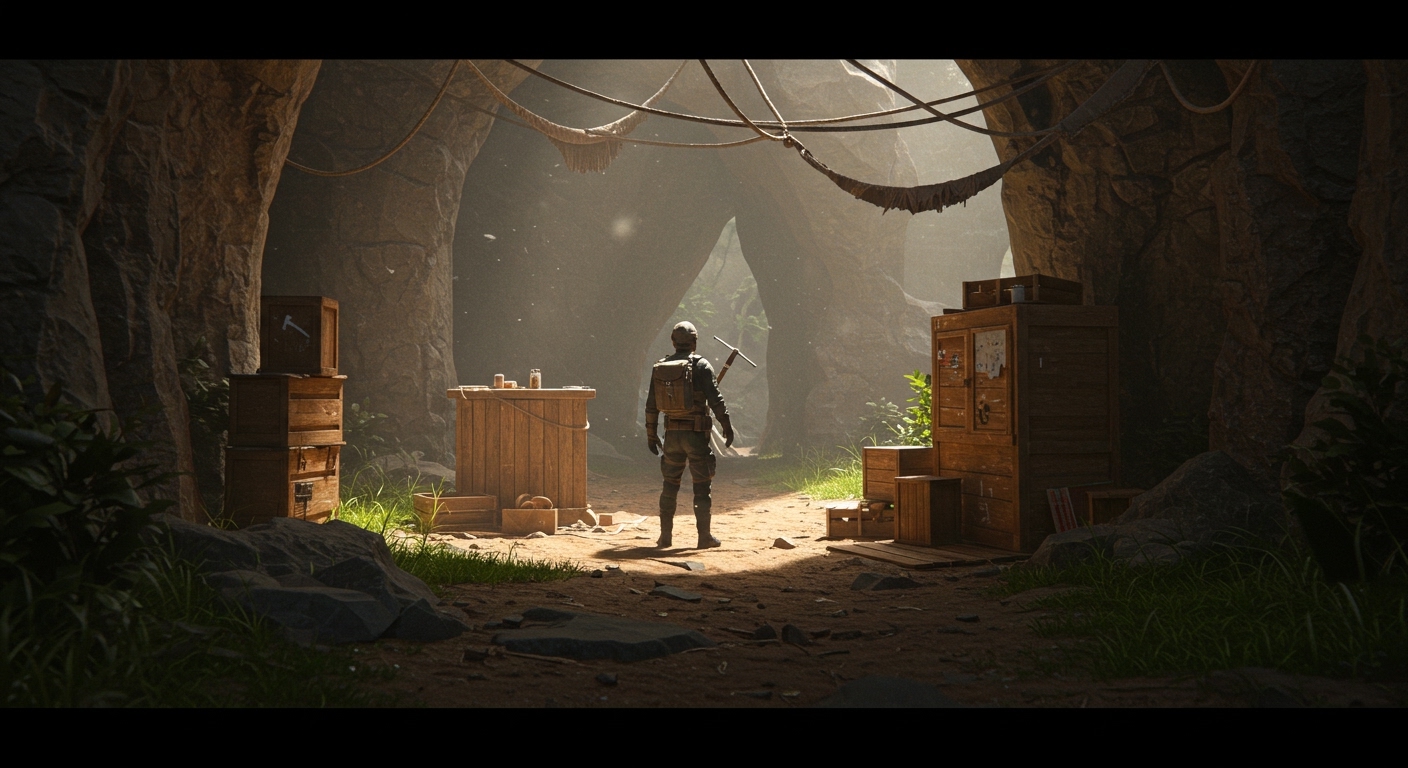
The fact that Epic Games has paid out over $1 Billion to indie creators through Unreal Editor for Fortnite signals a deeper shift than mere platform monetization. It highlights the democratization of sophisticated virtual space creation and the power of accessible procedural tools. Many industry observers incorrectly assume that the rise of AI-assisted workflows and more intuitive procedural scripting like Blueprints and Verse, as discussed in the State of Unreal UE6 reactions, will diminish the value of bespoke artistic skill. This view misses the crucial point. Instead, these advancements elevate the roles of the conceptualizer, the systems architect, and the lighting director. The true artistry shifts from sculpting individual vertices to designing robust, dynamic systems that affect hyper-realism and lighting. The satisfying detail of a Houdini foam simulation, for example, is less about its final rendered form and more about the elegant procedural system that generates its believable motion, fluid interactions, and how light scatters through it. This paradigm requires artists to think in terms of rules, behaviors, and reactions within a virtual environment, understanding how these systems inherently define visual properties. By mid-2027, the most highly valued 3D modeling professionals will be those proficient in orchestrating complex procedural systems within engines like UE6, rather than traditional static mesh sculptors.
The hyper-realism exemplified by Fox 福克斯’s character and its “spellbinding eyes” illustrates the current technical prowess in rendering minute details. However, achieving genuine hyper-realism in virtual spaces extends beyond static model fidelity. It increasingly demands environmental reactivity, believable physics, and dynamic lighting that responds to real-time interactions, all areas heavily influenced by procedural generation. The discussions surrounding UE6’s MCP and enhanced AI-assisted workflows suggest a future where diverse assets and dynamic environments are seamlessly integrated, not merely placed. This enables creators to construct responsive, living worlds rather than static dioramas. Consider the distinction between a pre-rendered image and a “touchable” foam simulation from Houdini: one is static, the other is a dynamic system whose volumetric properties directly impact light absorption and scattering. This systemic approach pushes the boundaries of hyper-realism from static visual representation to interactive, dynamically lit reality. It profoundly challenges traditional texture artists, requiring them to understand material properties and their behavior within a simulation context, including how they interact with incident light, rather than just their visual appearance on a static surface. This also extends to environmental artists who must now consider how entire biomes can be procedurally generated with self-adjusting lighting conditions.
The primary resistance to this transition comes from established workflow inertia within many large studios and, notably, from traditional educational institutions. These entities often maintain curricula and production pipelines that heavily prioritize manual mesh modeling, UV mapping, and static asset creation. They are slow to adapt to the rapid advancements in procedural generation, AI-assisted workflows, and real-time engine logic offered by tools like Unreal Engine 5.8 and UE6. There is a prevalent misconception that “kits” for game creation or AI-driven tools inherently undermine artistic integrity or substitute for foundational skills. This perspective often prevents the necessary investment in retraining existing staff and evolving pedagogical approaches to embrace system design and dynamic environment creation.
A working 3D Modeling professional should immediately begin hands-on experimentation with Unreal Engine’s Blueprints and Verse, focusing on creating dynamic, procedurally generated elements and interactive lighting setups. This requires moving beyond static asset import and delving into the engine’s inherent logic for system design.
TL;DR
The future of 3D modeling emphasizes procedural system design, dynamic environments, and AI-assisted workflows over traditional static asset creation.
Curated References
About this editorial — This piece was developed using AI-assisted research and curation across multiple industry sources. All analysis, opinions, and predictions represent the editorial perspective of JHDD. Sources are linked in the references section above.