
JHDD Web Design Report — 2026.06.21

The WAI-ARIA 1.3 Specification’s new ariaNotify() method offers a programmatically triggered narration for screen readers. This collection of updates highlights the technical sophistication now available to front-end craftspeople, from advanced scroll-driven animations to critical accessibility enhancements. The common thread is an increased demand for highly nuanced control over the user interface, pushing the boundaries of interaction design. These advancements provide opportunities for rich, art-directed experiences, yet they simultaneously elevate the responsibility of the implementer to ensure thoughtful application and robust performance.
Cyd Stumpel’s journey, emphasizing “curiosity, thoughtful motion, and modern CSS,” exemplifies the ideal approach. Her work suggests a practice where technical mastery serves a deeper purpose than mere demonstration of capability. For example, her exploration of thoughtful motion implies a design ethos where movement is deliberate, adding meaning or utility rather than simply existing for visual flash. The mainstream often misinterprets “modern web” and “craft” as a directive to deploy every new browser feature or animation API without critical evaluation. The prevailing industry narrative frequently celebrates the most visually complex or technically audacious implementations, implicitly equating novelty with quality.
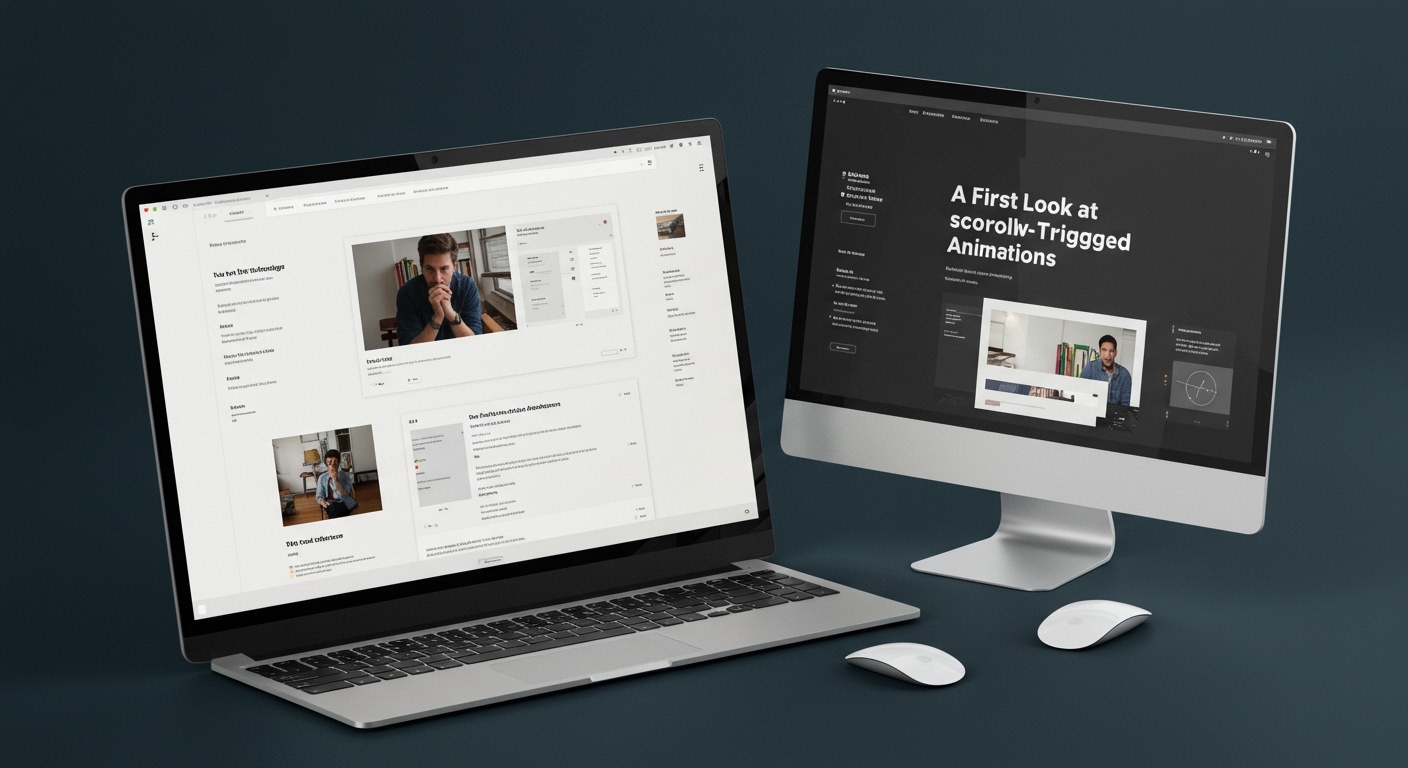
This view contradicts the mainstream tendency to prioritize feature adoption over utility. True craft is not measured by the number of scroll-triggered animations on a page, nor by the dramatic flair of a 3D image rotation, but by the seamlessness, performance, and accessibility of the user experience. Uncalibrated motion, regardless of how technically advanced, degrades legibility and performance, especially on less capable devices or for users with cognitive sensitivities. By mid-2027, the mainstream adoption of sophisticated browser developer tools will include integrated performance budgeting specific to scroll-driven effects, making the costs of unoptimized motion immediately visible to front-end teams during development.
The persistent client demand for “experiential” sites, often interpreted as sites saturated with elaborate, uncalibrated visual effects, continues to challenge a measured approach to front-end craft. This external pressure frequently pushes development teams toward superficial complexity rather than foundational excellence, prioritizing immediate visual impact over long-term usability and maintainability.
Before implementing any scroll-driven animation or 3D effect, a web design professional should prototype the experience with a screen reader enabled and a low-bandwidth connection simulated. This practical step allows for evaluation of information transfer and cognitive load in adverse conditions, ensuring enhancements genuinely improve the experience for all users, not just those with optimal setups.
TL;DR
Considered web craft balances advanced technical capabilities with essential user experience and performance.
Curated References
About this editorial — This piece was developed using AI-assisted research and curation across multiple industry sources. All analysis, opinions, and predictions represent the editorial perspective of JHDD. Sources are linked in the references section above.