Julian’s Branding Insight — 2026.06.09
Brand identity is no longer a static emblem, but a fluid narrative woven into the fabric of experience.
In a world saturated with visual noise and fleeting trends, the enduring power of brand equity rests on its ability to forge authentic cultural connections. This moment, underscored by recent projects from Another Collective, Koto, OlssønBarbieri, Studio Bland, and Beta Design, highlights a critical shift. Brands are moving beyond mere aesthetic differentiation to become active participants in cultural discourse. For a smash burger joint like Brusco, reinventing classic diner tropes isn’t just about nostalgia; it’s about tapping into a collective yearning for perceived authenticity in a hyper-curated food landscape. Similarly, Koto’s revitalisation of The Norton Museum of Art’s identity acknowledges that cultural institutions are not isolated temples of art, but integral parts of everyday life, demanding a visual and experiential system that reflects this accessibility. This speaks volumes about the evolving expectations of consumers who seek brands that not only offer a product or service, but a meaningful experience that resonates with their values and aspirations. Market positioning is now less about shouting louder and more about whispering the right story, embedding brand narratives into the visual identity systems that consumers encounter at every touchpoint.
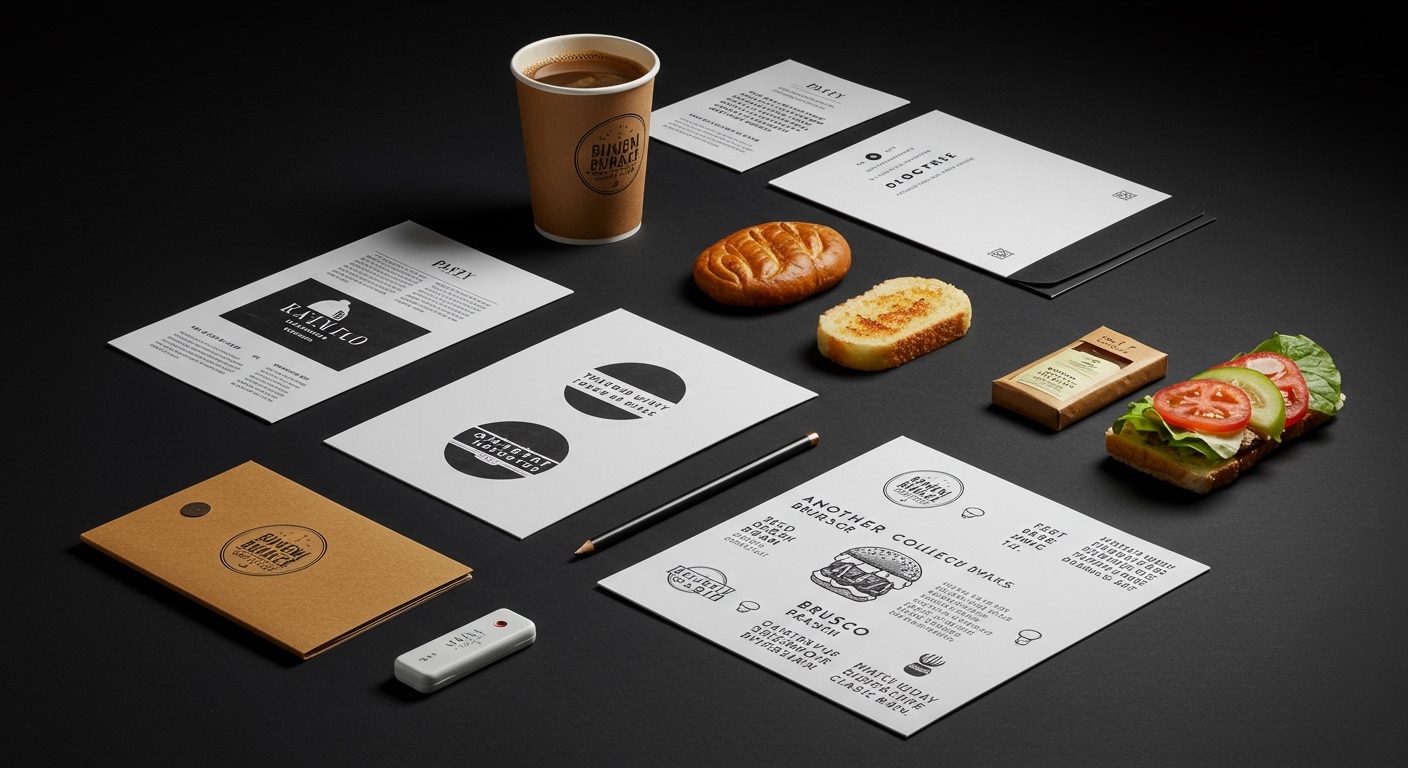
The recent work signifies a conscious effort to imbue brands with personality and purpose, moving away from generic signifiers. Another Collective’s approach to Brusco demonstrates a sophisticated understanding of how design can evoke emotion and memory, transforming a seemingly simple food offering into a cultural statement. This isn’t about mimicking the past, but about reinterpreting its essence for a contemporary audience. Likewise, OlssønBarbieri’s work for Theaterbaren at Oslo’s Nationaltheatret, infusing melodrama into a potentially staid institutional identity, underscores a desire for brands to be bold and evocative, capable of captivating audiences through a nuanced visual language that acknowledges the theatricality of everyday life. Packaging, too, is undergoing a radical transformation. Lisa Cain’s observations on Studio Bland’s work for Bu Deli and Beta Design’s Fussy project reveal a growing emphasis on tactility, materiality, and the sensory experience. The subtle nuances of packaging – the texture of paper, the weight of a container – are becoming critical battlegrounds for brand differentiation, moving beyond purely visual appeal to engage multiple senses. This strategic evolution suggests that brands are recognizing the profound impact of these granular details on overall brand perception and consumer loyalty.
The inherent tension lies in the simultaneous pursuit of radical innovation and deep-seated familiarity. On one hand, designers are tasked with creating entirely novel visual languages that cut through the clutter and signal a brand’s unique proposition. On the other, there’s a palpable desire among consumers for brands that offer a sense of comfort, authenticity, and connection to established cultural touchstones. This tension is most acutely felt when brands attempt to reinvent heritage, or to inject personality into established categories. The challenge is to innovate without alienating, to be novel without being jarring, and to be familiar without being derivative. It’s a delicate balancing act that requires a profound understanding of both cultural currents and individual psychology.
The next wave of successful brand identities will be those that seamlessly integrate digital and physical experiences, creating a wholly immersive narrative that transcends individual touchpoints. We will see brands that deploy AI-generated visual elements that adapt in real-time to user interaction and environmental context, while simultaneously employing artisanal craftsmanship in their physical manifestations, creating a tangible, human connection.
TL;DR
Brands are embracing experiential, sensory, and culturally resonant identities that blur the lines between the digital and the physical.