Julian’s Typography Insight — 2026.06.07
Typography’s most potent rebellion occurs not in its most experimental forms, but in its quiet insistence on clarity.
The current discourse surrounding typography, as illuminated by recent design shifts, underscores a critical juncture where legibility battles conceptual ambition, and the foundational grid systems grapple with the ephemeral nature of digital experience. This is not merely an aesthetic exercise; it is about the very architecture of information in an era saturated with it. Designers are wrestling with how to imbue brands with resonant meaning beyond superficial aesthetics, a task that requires a deep understanding of conceptual letterforms – the shapes that carry cultural weight and emotional resonance. Simultaneously, the meticulous scaffolding of grid systems, the unsung heroes of editorial design, are being tested by the fluid demands of responsive interfaces, forcing a reconsideration of their rigidity versus adaptability. Micro-typography, the often-overlooked details of spacing, weight, and hierarchy, is emerging as a crucial battleground where legibility is either won or lost, especially as screen fatigue becomes a pervasive reality. The drive for “limitlessness” in branding, as seen in Design Army’s work for Gold House, demands a visual language that transcends predictable tropes and offers a lasting impression, requiring a sophisticated interplay between form and function.
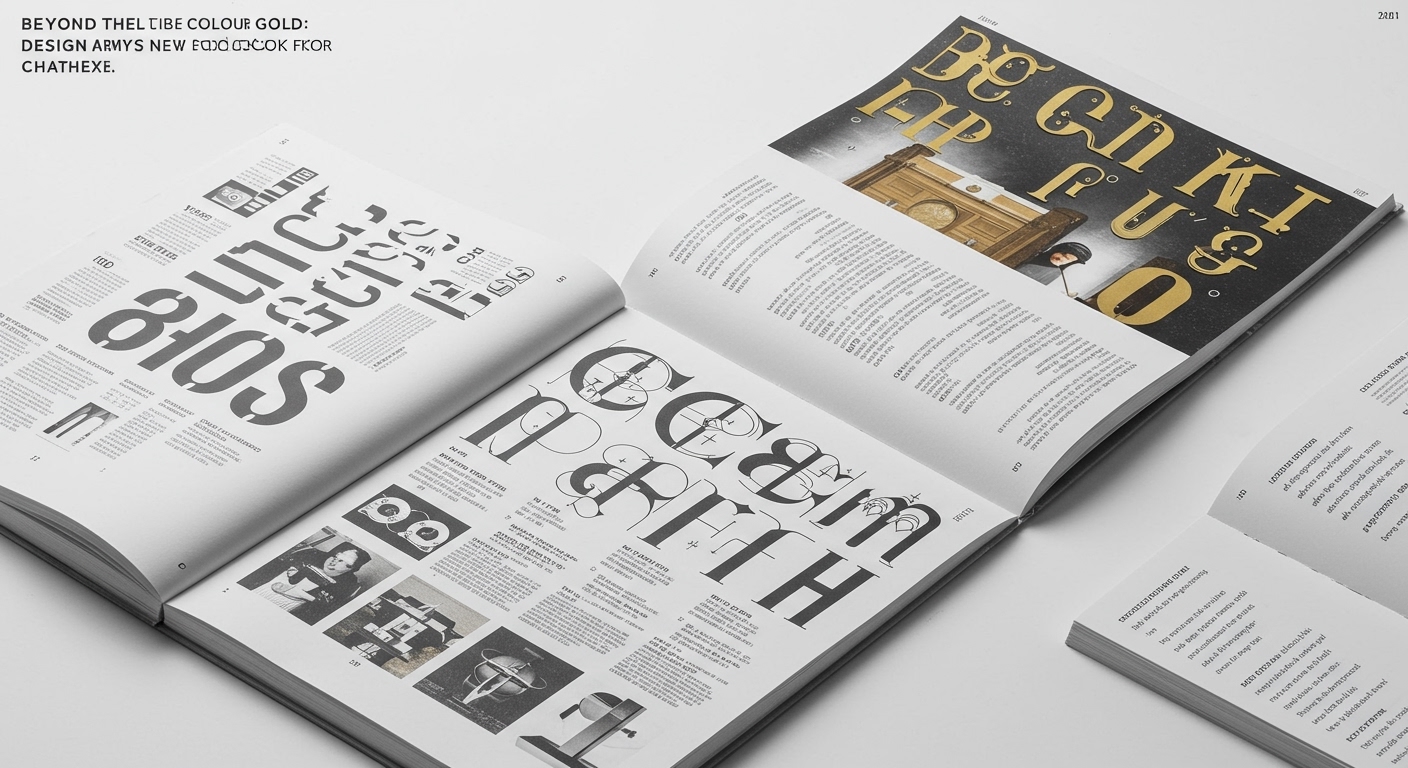
What emerges from these disparate narratives is a palpable tension between the desire for enduring, conceptually rich design and the relentless pressure of contemporary communication. Design Army’s avoidance of the cliché “gold” for Gold House, opting instead for a “timeless, culturally rich visual system,” signals a mature understanding that true empowerment lies not in overt symbolism but in the nuanced delivery of a brand’s promise. This echoes the sentiment that “perfection is the enemy,” suggesting that the most impactful creative work often arises from process and iteration, not a rigid pursuit of an unattainable ideal. Steven Heller’s contemplation of “Canons” and an Iranian designer’s mission to create a “visual warning” both point to the power of typography to engage with established norms, either by questioning them or by leveraging them to deliver potent messages. Collins’ redesign of Olipop, aiming to convey that “delicious and good for you are not opposing forces,” demonstrates the subtle yet powerful role typography plays in shaping perception and influencing consumer behavior, moving beyond mere aesthetics to communicate core values. This suggests a broader trend: typography is being tasked with communicating complex ideas and challenging conventional wisdom, requiring designers to be both culturally astute and technically precise.
The central tension lies between the gravitational pull of established typographic canons and the urgent need for innovation that speaks to a contemporary, often fragmented, audience. On one side, there’s the wisdom inherited from masters, the “canons” that provide a framework for understanding what works and why. On the other, there’s the imperative to break free from these very structures, to offer “visual warnings” and express “limitlessness” in ways that feel urgent and relevant to our current moment. The inherent contradiction is the necessity of both: without the foundation of established principles, innovation risks becoming meaningless noise, yet an uncritical adherence to tradition can lead to stagnation and irrelevance. The very act of questioning guardians of faith, or moving “beyond the color gold,” highlights this struggle to balance reverence with revision, to build upon existing structures without being confined by them.
Within the next five years, grid systems in digital editorial design will evolve from rigid frameworks into intelligent, adaptive architectures that anticipate user interaction and content flow, effectively becoming a form of responsive typography.
TL;DR
Typography’s power lies in its ability to balance enduring principles with the dynamic needs of modern communication.