JHDD Architecture Report — 2026.06.07
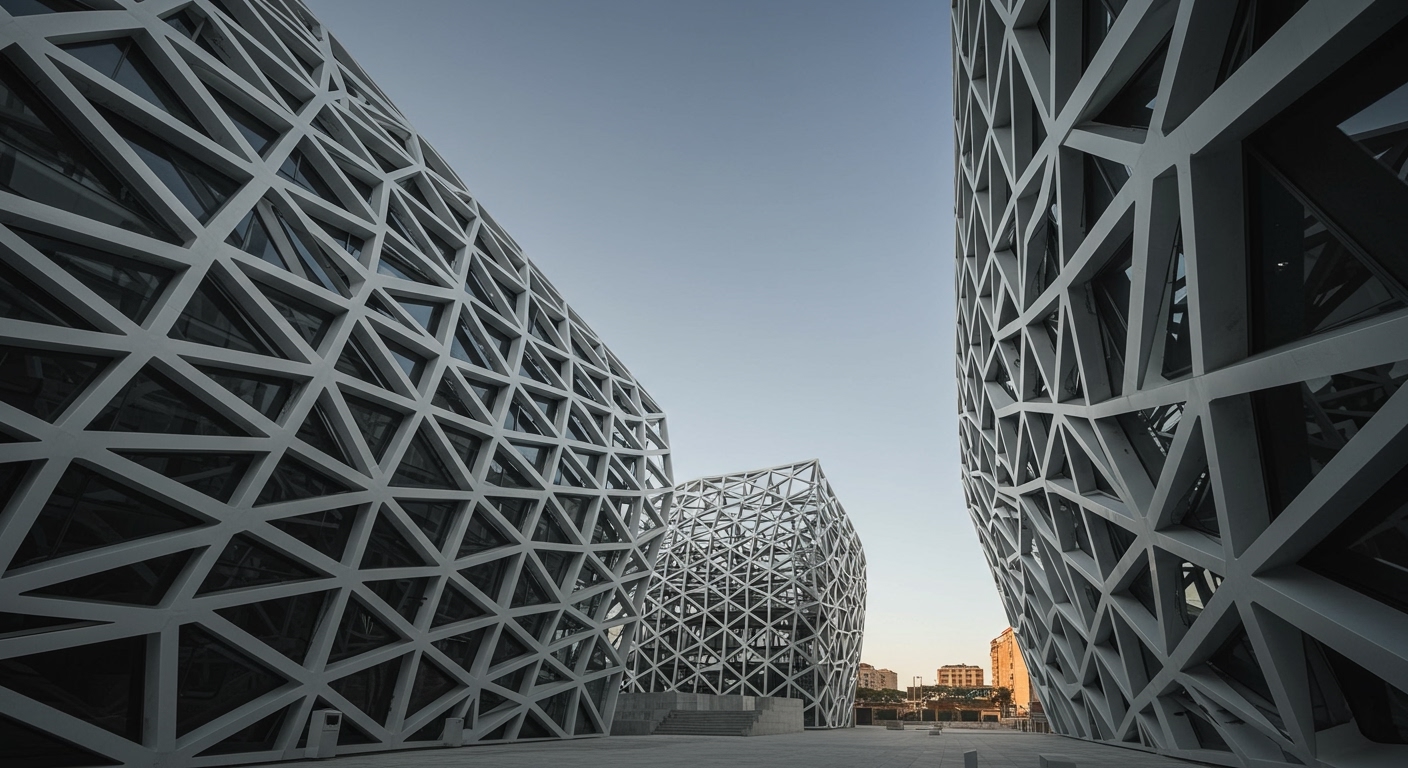
The tectonic logic of the post-digital vernacular is no longer a theoretical exercise but a present-day operational imperative, necessitating a direct confrontation with the latent structural narratives within existing building stock.
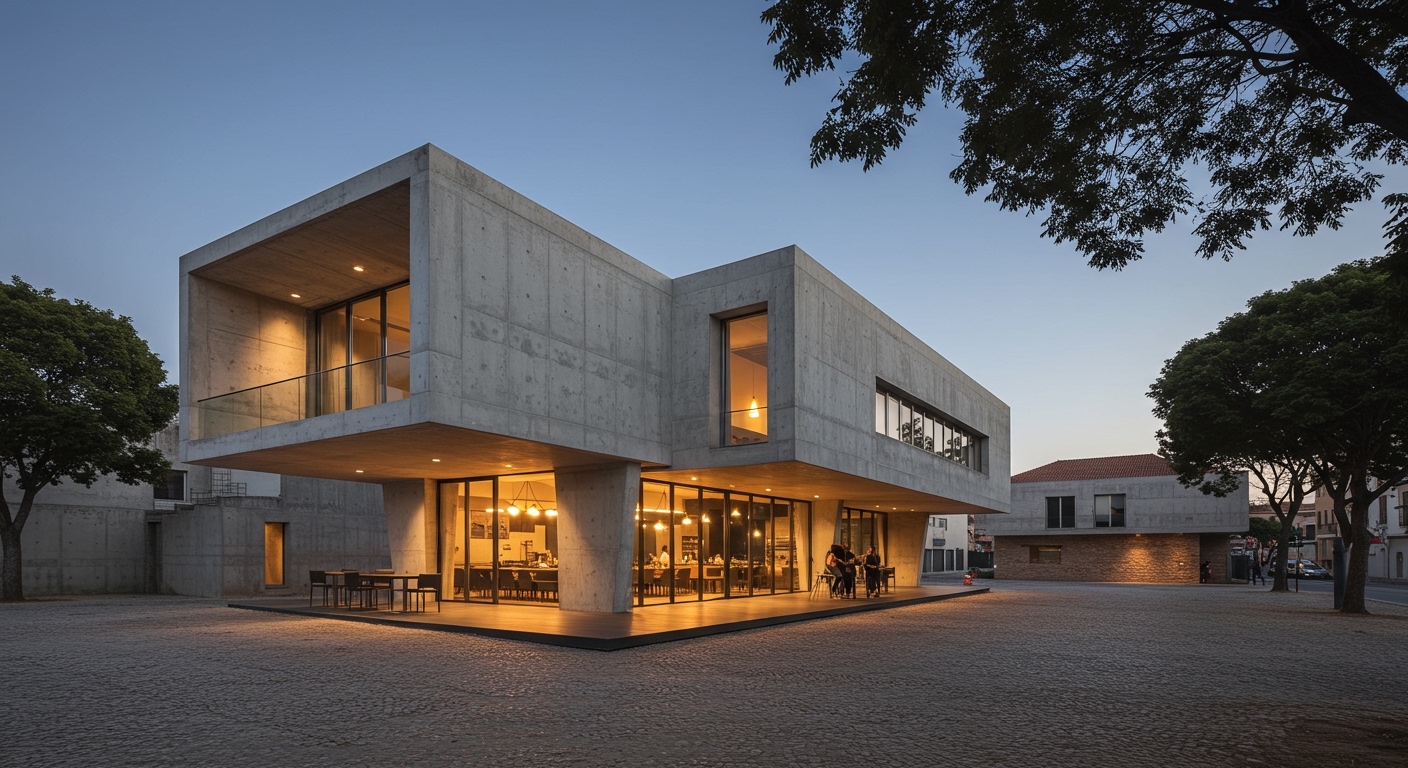
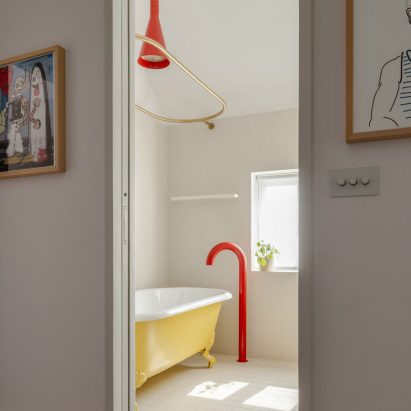
Across disparate project typologies—from the social rehabilitation of a Portuguese restaurant to the adaptive reuse of a French farmhouse and the artistic interpretation center in Brittany—a singular, potent force emerges: the revalidation of embodied intelligence. This isn’t merely about sustainability as a performative act of material selection, but a deeper engagement with the inherent structural philosophies embedded within existing urban fabrics and building typologies. The socialist housing example in New Belgrade, with its disciplined concrete repetition subtly rewritten by occupant adaptation, perfectly illustrates this phenomenon. What appears as rigid repetition at the urban scale reveals itself as a site of continuous negotiation and material evolution at the human scale. This is the nascent era of ‘poetic deconstruction,’ where the architectural act is less about imposing a new dogma and more about coaxing out the latent potential and historical resonance of what already stands, recalibrating its structural narrative for contemporary needs. The colorful tapware trend, seemingly superficial, acts as a micro-indicator of a broader cultural shift towards embracing tactile, expressive, and contextually resonant details within functional elements.
This revalidation of embodied intelligence is fundamentally about recognizing that the most profound innovations in structural philosophy now lie not in virgin materials but in the intelligent disassembly, reinterpretation, and reintegration of existing structures. For a studio like Atelier AJO, the renovation in Veillac is not simply a “renovation” but a strategic excavation and amplification of the farmhouse’s original tectonic expression, its vernacular wisdom informing every new intervention. This perspective directly contradicts the mainstream industry’s persistent fascination with a singular, often reductive, vision of technological futurism, which frequently prioritizes the new and untested over the proven and the contextually rich. The industry’s push for prefabrication and large-scale modularity, while offering efficiencies, often overlooks the nuanced structural and material languages that define a place. The true innovation is in understanding how to leverage the existing structural integrity and material performance of older buildings, rather than discarding them for a conceptually cleaner, but often materially and culturally impoverished, new build. By late 2026, we will see a measurable increase in project proposals that are fundamentally structured around the adaptive reuse of significant portions of existing load-bearing elements, rather than simply façade retention or superficial cosmetic updates.
The inherent friction within this paradigm shift stems from the capital-intensive nature of demolition and new construction, a system deeply entrenched in global development models. Developers and financial institutions are conditioned to see obsolescence as a cue for replacement, not for intricate recalibration. The risk aversion associated with the unpredictable variables of existing structures—unknown structural conditions, historical preservation constraints, and the perceived longer lead times for adaptive reuse—creates a powerful inertia. This tension reveals a fundamental misalignment between an architectural profession increasingly attuned to the ecological and cultural imperative of embodied intelligence and a market economy that often favors rapid, standardized renewal. The aesthetic debate around colorful tapware, while seemingly minor, is symptomatic of a broader cultural yearning for expressiveness and individuality within mass-produced environments, pushing back against a perceived homogenization.
A working Architecture professional should, this week, initiate a rigorous audit of their current project pipeline, specifically identifying opportunities to elevate the dialogue beyond mere material substitution. This means proactively seeking out the latent structural potential within existing buildings—not just their aesthetic character, but their load-bearing capacity, their thermal mass, their inherent resilience. This involves a deeper engagement with the existing structural philosophy, asking not “what can we build here?” but “what can this building already tell us about how to build and inhabit this place?”
TL;DR
The next wave of architectural innovation will be defined by the intelligent deconstruction and empathetic reconstruction of existing structures, revalidating their latent structural philosophies for contemporary urban responsibility.
Curated References
About this editorial — This piece was developed using AI-assisted research and curation across multiple industry sources. All analysis, opinions, and predictions represent the editorial perspective of JHDD. Sources are linked in the references section above.