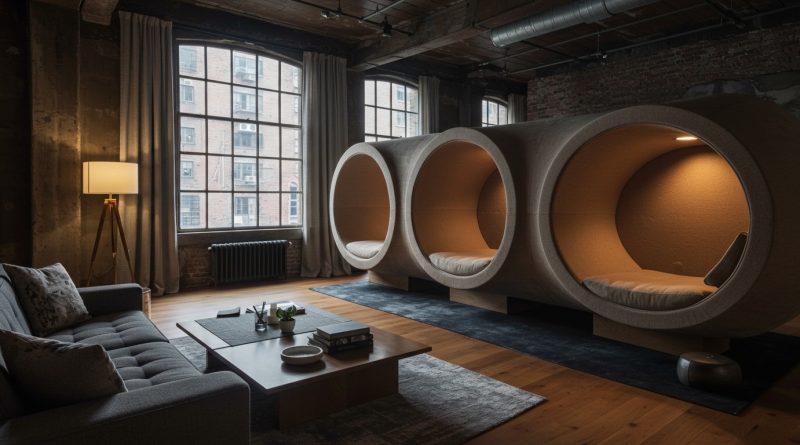
JHDD Interior Report — 2026.08.04
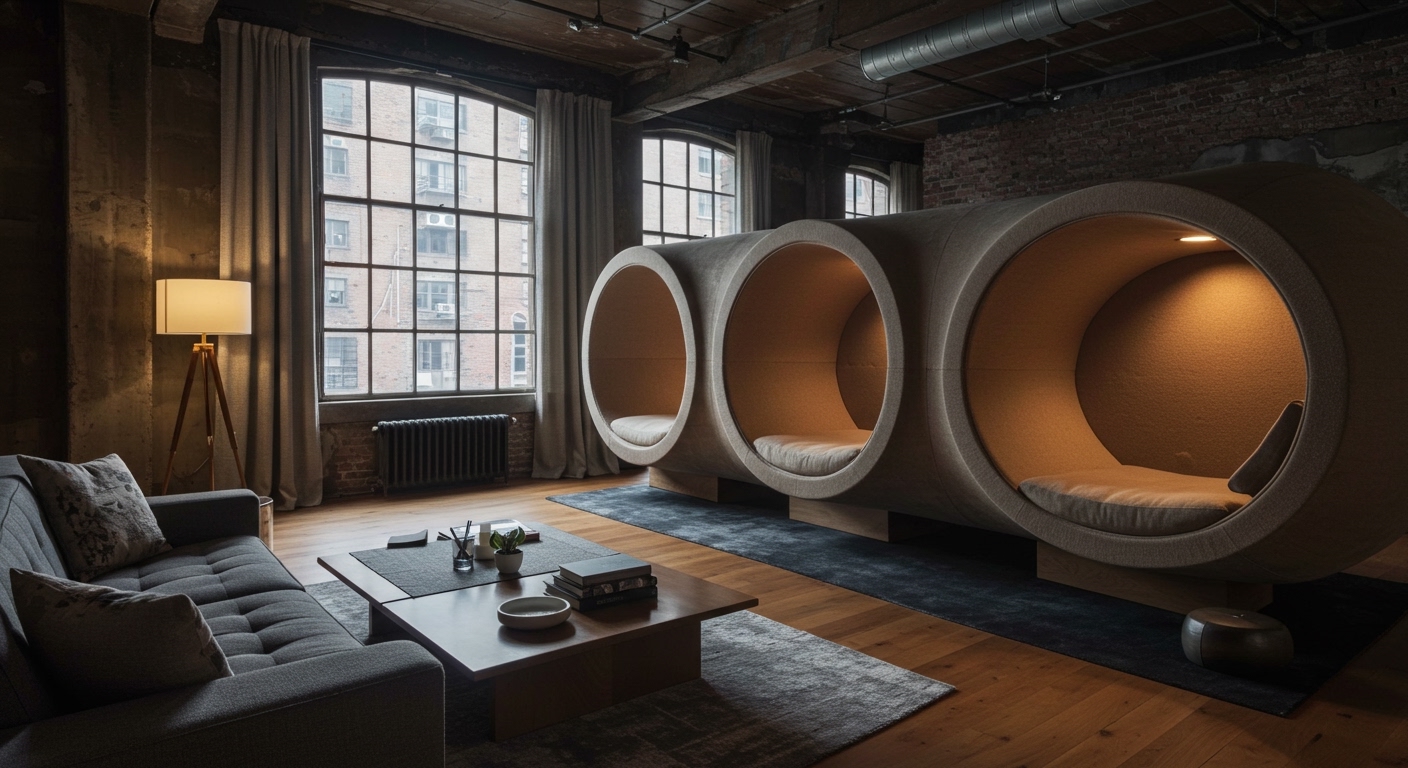
Studio Vural’s renovation of a New York loft, featuring “pods in a box,” exemplifies a precise approach to internal spatial organization.
This strategy appears across recent projects, where established structures receive targeted, self-contained interventions. Whether it is Ivy Studio “embracing its raw shell” at Minnibar or Ænsemble adding “contemporary layers” to a Wilhelminian period home near Berlin, designers are less concerned with complete overhaul and more with strategic insertion. The focus has shifted from holistic renovation to a more surgical articulation of new experiences within existing architectural envelopes, subtly redirecting human flow and redefining internal boundaries through material distinctiveness.
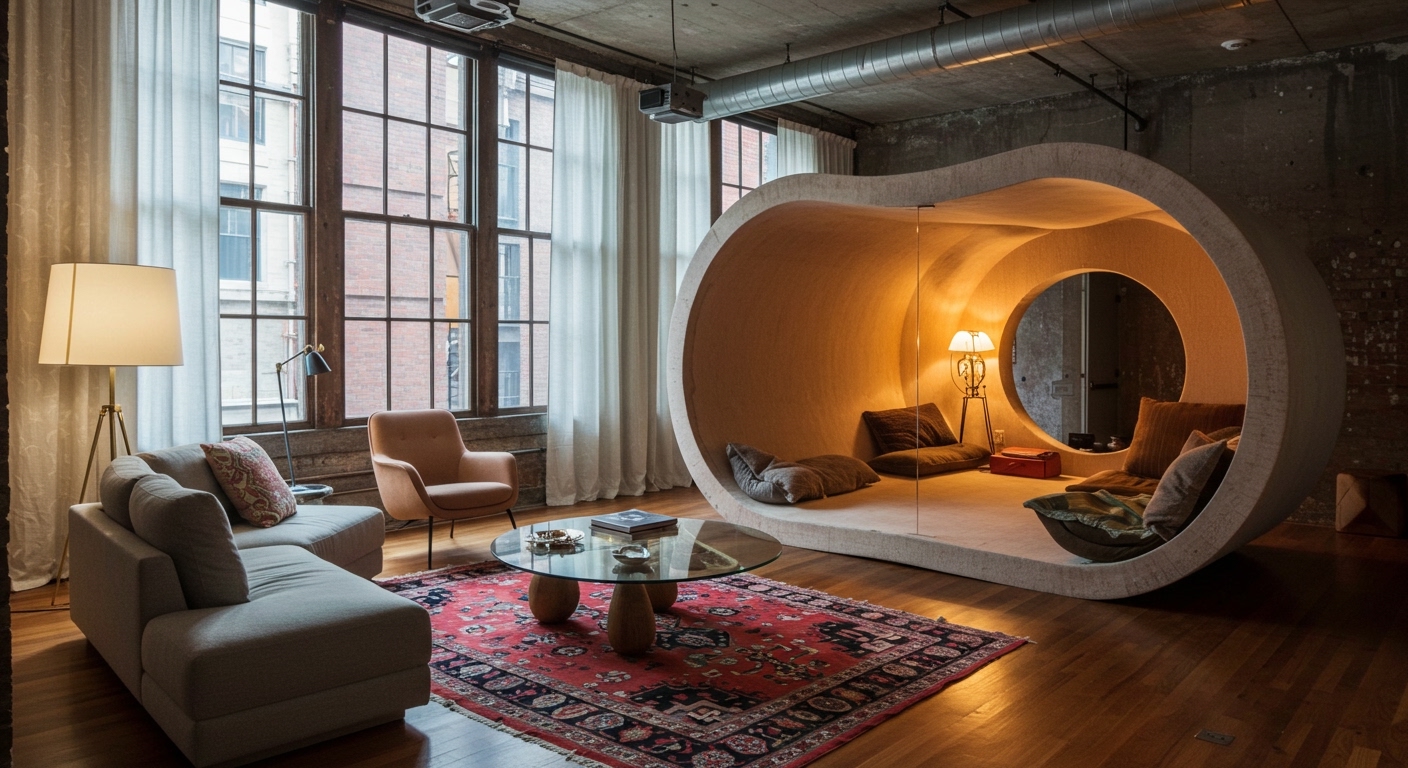
Consider Isern Serra’s design for Napoli on the Road, where rounded corners and curved built-in furniture aim to create a “relaxed and welcoming atmosphere.” While the intent to soften hard lines and guide human movement is clear, this trend, often hailed as universally comforting and a natural evolution of biophilic design, risks oversimplification. Mainstream opinion often equates continuous soft forms with sophisticated comfort. This perspective overlooks the crucial role of spatial tension. A space composed entirely of curvilinear forms, particularly when executed with homogeneous materials like the pared-back finishes seen, can become spatially flaccid, lacking the energetic friction that stimulates genuine engagement. Without counterpoints—sharp angles, contrasting textures, or moments of abrupt material transition—the tactile experience can feel undifferentiated, blurring rather than enhancing specific zones for human interaction.
The true luxury in spatial design comes not from an absence of edge, but from the deliberate orchestration of edges and curves, of smoothness and grit. The current widespread adoption of rounded forms, if not balanced with assertive material specificity or contrasting geometries, will lead to a predictable design language that diminishes its own perceived value. It is predicted that by mid-2027, clients will increasingly seek designs that reintroduce deliberate, even challenging, geometric interventions and a more diverse tactile palette. This will move beyond mere ‘softness’ to create spaces with robust spatial tension, where material changes are as important as form in guiding the eye and the body, providing more sophisticated human flow patterns.
The commercial pressure to produce visually digestible, easily replicable aesthetics, often amplified by online platforms, directly opposes this nuanced approach. Designers frequently encounter client requests for the “look” of trending concepts, such as seamless curves or raw surfaces, without a deep understanding of the underlying principles of materiality, spatial tension, or how these elements truly influence human experience over time. This superficial demand for stylistic mimicry prioritizes immediate visual appeal over enduring spatial integrity.
An interior professional should begin by rigorously assessing the existing structure’s inherent characteristics, identifying opportunities to introduce deliberate material and formal counterpoints. Instead of merely echoing a trending aesthetic, one must design bespoke architectural elements, such as a sharply angled, monolithic built-in desk or a rough-hewn natural stone partition, to juxtapose against softer or smoother areas. This creates tactile variety and defines human flow through contrast, forcing a dynamic spatial reading rather than a passive one.
TL;DR
Strategic spatial tension, created through contrasting materiality and form, elevates human experience beyond superficial aesthetic trends.
Curated References


About this editorial — This piece was developed using AI-assisted research and curation across multiple industry sources. All analysis, opinions, and predictions represent the editorial perspective of JHDD. Sources are linked in the references section above.