Julian’s UI UX Insight — 2026.06.05
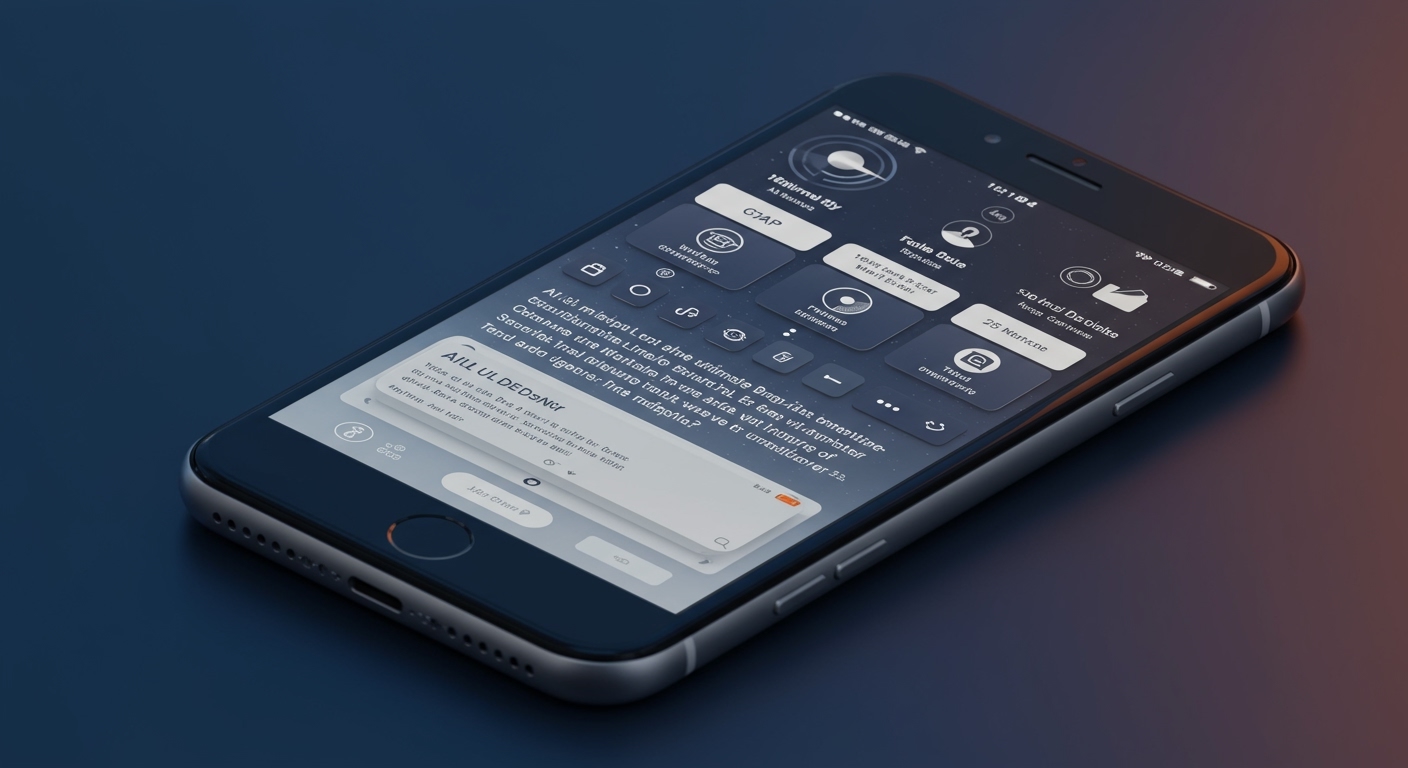
AI is the ultimate democratizer, but are we ready for the ensuing tidal wave of mediocrity?
The confluence of generative AI and sophisticated design systems presents a pivotal moment, demanding a re-evaluation of our core principles. We are no longer simply crafting interfaces; we are architecting experiences within a landscape rapidly being reshaped by intelligent automation. User psychology, particularly the drive for frictionless interaction, remains paramount. As AI tools become more adept at generating prototypes and content, the temptation to abdicate critical thinking grows. This era necessitates a heightened awareness of accessibility, ensuring that the ease AI promises doesn’t inadvertently create new barriers for diverse user groups. Micro-interactions, once subtle embellishments, now become crucial anchors of trust and clarity in an increasingly automated and potentially opaque digital world. The promise of AI was to free us from tedium, yet the reality appears to be a burgeoning document fatigue and an overwhelming deluge of AI-generated output that, too often, mirrors Sturgeon’s Law: 90% of everything is rubbish.

The current trend leans heavily into AI integration, with a focus on making design systems “AI-ready.” This means embedding intelligence into our foundational components, aiming to minimize the inherent “drifts” and “mistakes” that plague large-scale design efforts and ensure consistency when AI generates new assets or prototypes. There’s a palpable excitement around the potential for AI to accelerate the design process, churning out variations and even complete user flows with unprecedented speed. However, this acceleration comes with a significant caveat. The news item on AI-created document fatigue highlights a critical paradox: AI, intended to streamline our lives, is instead inundating us with more material to process. This points to a fundamental disconnect between the promise of increased leisure and the reality of information overload.
Furthermore, the discussion around “default bias” reveals a potent psychological lever that AI will undoubtedly exploit. Humans are naturally inclined to stick with pre-selected options, a phenomenon amplified by loss aversion and the cognitive ease of accepting the status quo. This has profound implications when AI is tasked with generating default settings or initial content. The ease with which AI can present a pre-selected, potentially suboptimal, choice could subtly steer users away from their genuine preferences, all under the guise of efficiency. This extends to the very nature of taste and creative direction. The idea that “the most important part of building your taste is to hand it off” suggests a move towards collaborative and distributed design intelligence, a concept that AI could either empower or dilute by homogenizing creative output.
The inherent tension lies in the dual nature of AI: its capacity for both profound augmentation and insidious simplification. While AI can undoubtedly enhance efficiency and democratize access to powerful design tools, it also poses a significant risk of eroding critical judgment and amplifying existing cognitive biases. The pursuit of frictionless AI-generated experiences could inadvertently lead to a less discerning user base, more susceptible to the subtle nudges of default settings and overwhelmed by the sheer volume of AI-produced content. The promise of a leisure revolution, where AI handles the grunt work, is rapidly colliding with the reality of AI-induced document fatigue and the potential for a significant dip in overall quality. We are on the precipice of a design landscape where the convenience of AI might come at the cost of genuine insight and deeply considered user journeys.
Within the next five years, AI will not just assist in generating design assets; it will become the primary engine for crafting personalized user interfaces at scale. Instead of humans meticulously tweaking individual elements, AI agents will dynamically assemble and adapt entire UI paradigms based on granular user data, context, and evolving preferences, creating an almost sentient digital environment that anticipates needs before they are even articulated.
TL;DR
AI’s promise of effortless design is overshadowed by the risk of overwhelming mediocrity and amplified default biases.