JHDD 3D Modeling Report — 2026.07.30
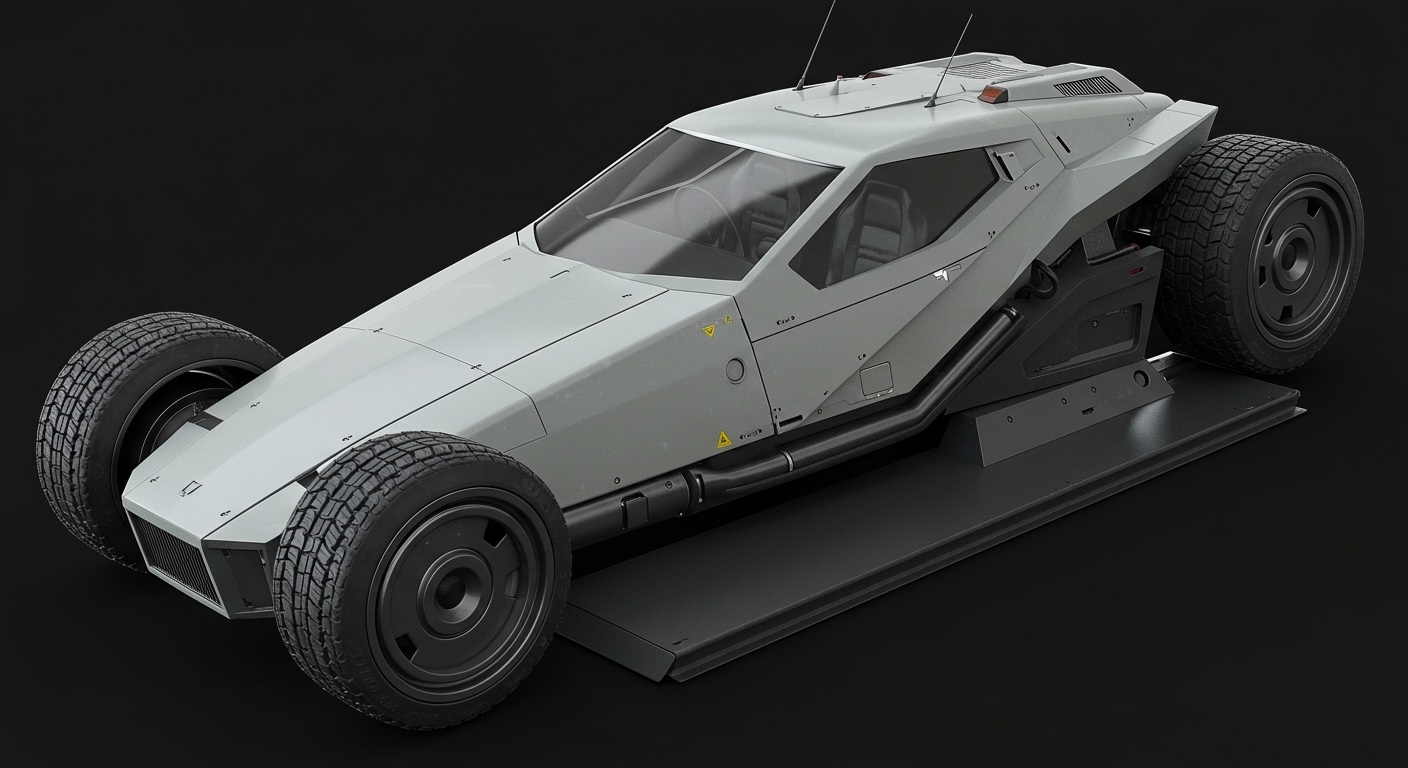
Makoto Endo’s behind-the-scenes work on the Ghost In The Shell series reveals how complex 3D vehicle models are integrated into animated sequences.
These disparate reports highlight a subtle but significant shift in the utility of 3D assets. From open job roles at Naughty Dog demanding high-fidelity realism to a fan-made project bringing Morrowind into a browser, and the free distribution of a detailed Ema Sakuraba model for MikuMikuDance, the emphasis is increasingly on the adaptability and reusability of 3D data across diverse virtual environments. The underlying pattern is a move beyond the singular, static render, toward dynamic assets that enable interaction, modification, and deployment across varied computational contexts, often leveraging community efforts or accessible platforms.
Studios like Naughty Dog and Riot Games, consistently featured in 80 Level’s job digests for top openings, often exemplify the industry’s pursuit of hyper-realism and highly optimized assets for specific game engines. The mainstream industry opinion frequently positions this relentless drive for peak visual fidelity as the ultimate objective for 3D artists, believing that increasing polygon counts and texture resolution inherently leads to superior virtual experiences and compelling virtual spaces. This perspective, however, overlooks a more significant development: the true frontier of spatial computing lies not solely in pushing visual photorealism for a single, pre-defined experience, but in creating robust, parametrically driven 3D models and environments that can intelligently adapt to multiple rendering pipelines and interaction paradigms. While a character model from a Naughty Dog title achieves breathtaking detail within its specific engine, its value is often confined by that pre-authored context.
The prevailing focus on static, pre-authored visual perfection, while visually impressive, inadvertently limits the broader potential of dynamic virtual spaces and their evolving lighting dynamics. Future-proof virtual environments demand assets designed for inherent procedural modification, not just artist-driven post-production tweaks. Imagine architectural visualizations where lighting shifts intelligently based on real-world sun paths and material responses, or game environments that procedurally generate variations based on player input, requiring assets to react dynamically without manual re-baking or re-authoring. By mid-2027, the industry will see a clear divergence: studios that have invested heavily in deeply procedural asset pipelines will demonstrate a significantly faster iteration cycle and broader market reach for their virtual content than those still reliant primarily on hand-sculpted, fixed-state models. This shift impacts not only game development but also extends into fields like industrial design, film pre-visualization, and immersive training simulations.
The primary resistance to this paradigm shift comes from existing content creation pipelines and the ingrained muscle memory of professional artists. Tools and workflows that prioritize static mesh sculpting, manual UV unwrapping, and baked texture maps, while powerful for specific, fixed outputs, inherently oppose the fluid, data-driven demands of true proceduralism. Furthermore, the perceived immediate cost of overhauling established toolchains and retraining large teams often outweighs the long-term benefits in the eyes of many project managers, hindering adoption of truly dynamic methodologies. The sheer volume of legacy assets also presents a concrete obstacle to radical procedural transformation.
A working 3D Modeling professional should immediately begin exploring non-destructive procedural modeling techniques in their chosen software, not just for effects, but for core asset creation. Specifically, dedicate time this week to rebuilding a common asset, such as a building facade or a vehicle component, using entirely procedural nodes or modifiers, focusing on how parameters can dynamically alter its geometry, UVs, and material assignments. This is distinct from simply applying procedural textures; it involves procedural geometry generation and attribute propagation, preparing assets for intelligent adaptation across different virtual platforms and lighting scenarios.
TL;DR
The future of 3D modeling prioritizes adaptable, procedurally generated assets over static, hyper-realistic renders for dynamic virtual environments.
Curated References
About this editorial — This piece was developed using AI-assisted research and curation across multiple industry sources. All analysis, opinions, and predictions represent the editorial perspective of JHDD. Sources are linked in the references section above.