
JHDD Architecture Report — 2026.07.23

House in Kinuta by Kenta Hirayama demonstrates a steel-sheet facade responding directly to the need for privacy in Tokyo’s dense Setagaya Ward.
This specific detail highlights a broader, understated shift in contemporary architectural practice: a quiet pragmatism that privileges context, resourcefulness, and embedded value over the pursuit of novel forms or entirely new material systems. The projects featured, from Norwich University of the Arts’ rehabilitative prison in a former mill to Studio Locomotive’s use of timber louvres at Waankarn for local climate response, collectively indicate an emphasis on leveraging existing conditions. These conditions—be they overlooked buildings, regional materials, or waste streams like the cocoa shells in Forbo Flooring’s Marmoleum Cocoa—become primary drivers for design. This approach grounds architectural innovation in tangible reality, redefining progress not as a tabula rasa, but as intelligent, respectful continuance.
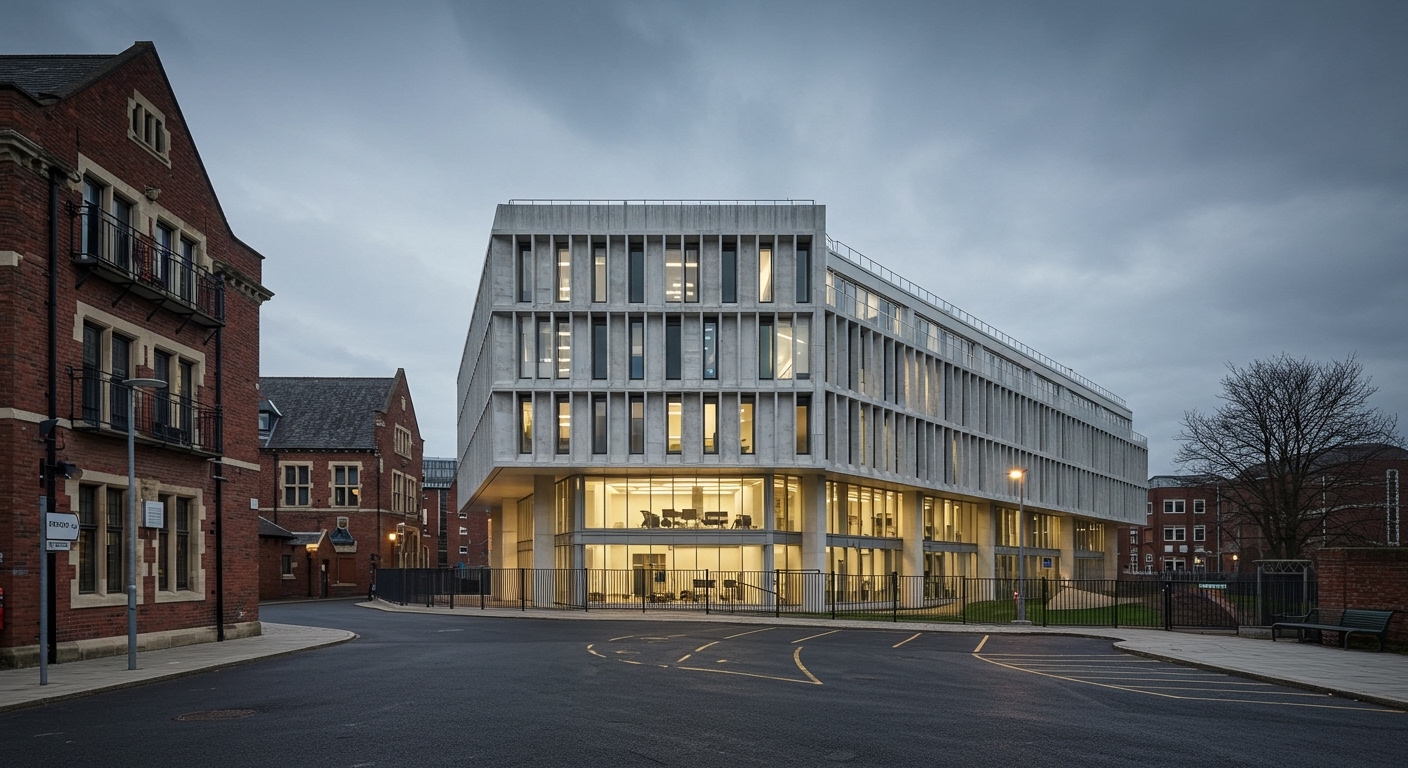
Assemble’s conversion of former United Dairies warehouses into the LifeLine Community Centre exemplifies this pragmatic urban responsibility and structural philosophy. Rather than demolishing robust existing structures, the project purposefully retained their significant embodied energy and urban memory, injecting new social purpose into the very fabric of East London’s Becontree Estate. This stands in direct contrast to a mainstream industry tendency that often valorizes the pristine, the entirely new, and the architecturally ‘signature’ building. Such an approach frequently overlooks the profound sustainability and material honesty inherent in adaptive reuse. For Assemble, the integrity of the existing structure dictated a responsive design, demonstrating that true innovation often resides in the intelligent and respectful modification of what already exists, rather than in solely new construction.
A building like the LifeLine Community Centre offers more durable and responsible solutions for urban development than many ground-up proposals claiming advanced sustainability credentials. The structural philosophy at play prioritizes the conservation of materials and the carbon already expended in construction, thereby minimizing waste and reducing the overall environmental footprint. This approach also preserves the historical layering of urban fabric, contributing to a richer, more resilient civic identity. It is anticipated that by late 2028, major municipal permitting processes in developed economies will incorporate mandatory lifecycle assessments for all significant construction projects, significantly favoring proposals that demonstrate maximum retention of existing structural mass over total demolition.
The persistent opposing force against this resourceful pragmatism is deeply embedded within the speculative real estate market’s drive for profit maximization. This economic model frequently dictates demolition and new, larger-scale construction, driven by financial metrics that often undervalue the long-term carbon cost of demolition and new material production. It also discounts the cultural and material equity of existing structures, prioritizing short-term financial returns over ecological responsibility. Furthermore, the inertia of established supply chains and conventional construction methodologies resists the complexity and site-specific challenges of bespoke material sourcing and adaptive structural interventions.
A working Architecture professional should, this week, initiate a comprehensive material and structural audit for at least one current project that involves demolition. This audit must actively explore alternative adaptive reuse strategies for existing building components or the entire structure, including seeking out local waste streams for material integration, as Forbo Flooring demonstrated with cocoa shells for its Marmoleum Cocoa.
TL;DR
Contemporary architecture is finding its most responsible and innovative expressions in adaptive reuse and context-specific material resourcefulness.
Curated References




About this editorial — This piece was developed using AI-assisted research and curation across multiple industry sources. All analysis, opinions, and predictions represent the editorial perspective of JHDD. Sources are linked in the references section above.