JHDD Web Design Report — 2026.07.15
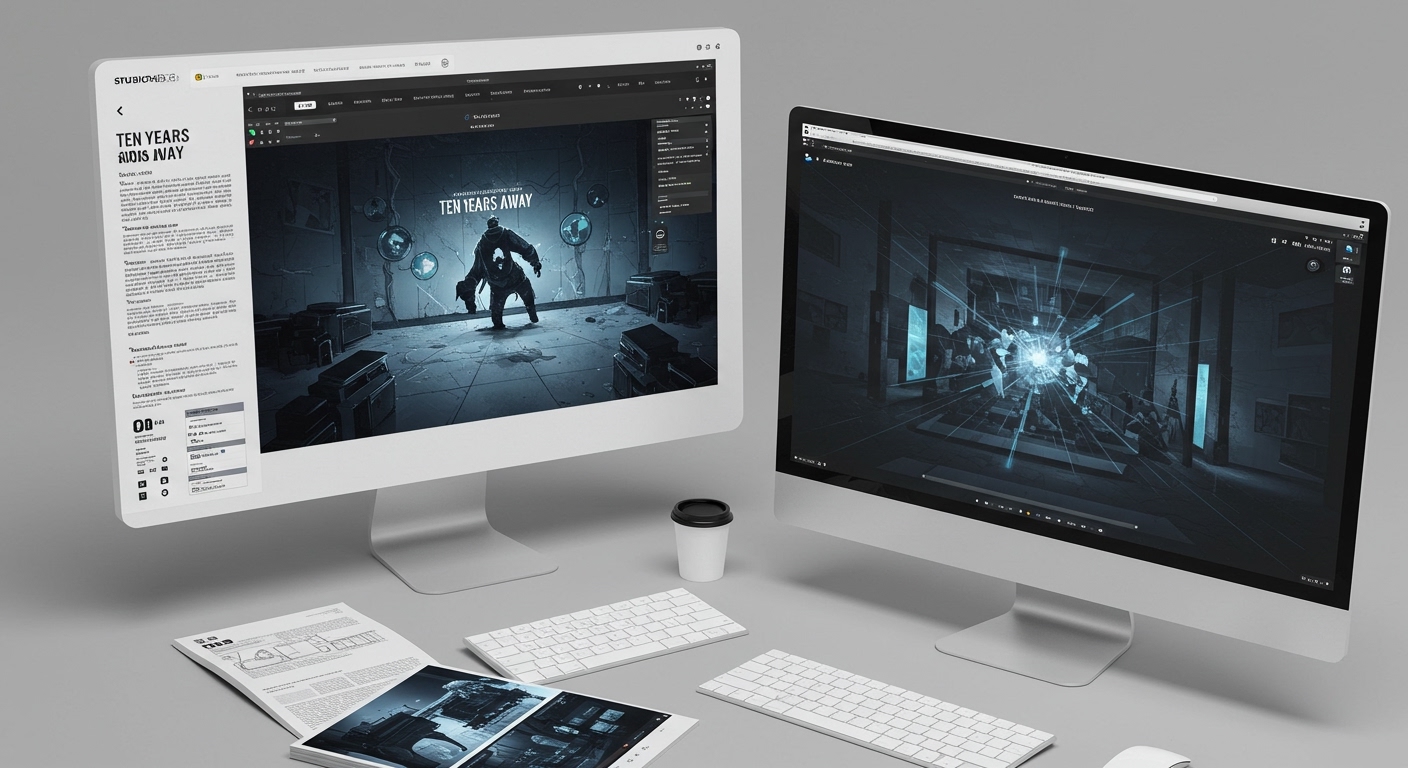
Studio375’s interactive comic, “Ten Years Away,” successfully blends printed origins with WebGL implementation.
This pattern reflects a quiet but persistent shift. Web content is moving beyond flat, static blocks or merely illustrative animations. Experiences like “Ten Years Away,” alongside “The Sleepers” using lightweight techniques for atmospheric WebGL, and even the new CSS border-shape property, indicate a convergence. Developers and designers are now actively sculpting intrinsic shape and depth into the fabric of the web, not just applying it on top, while simultaneously optimizing for efficiency.

The craft of front-end development is often measured by the visual fidelity delivered, but true mastery now encompasses an invisible layer: performance as an integral design constraint. The industry has long operated under the assumption that advanced graphics, particularly 3D or intricate motion sequences like those makemepulse crafts, automatically incur a substantial performance cost. This prevailing mindset implicitly justifies large JavaScript bundles, delayed content rendering, and sometimes even a poor user experience on anything but high-end devices. Mainstream development practices frequently prioritize rapid iteration and feature delivery over the meticulous optimization required for peak efficiency, treating performance as a post-development “fix” rather than a foundational attribute. This approach directly contradicts the principles of thoughtful front-end craft.
The emerging methodology, however, demonstrated by “The Sleepers” using “lightweight techniques” for an atmospheric WebGL experience, fundamentally redefines this. It showcases that immersive, visually rich environments do not necessitate a trade-off with speed or responsiveness. Instead, techniques like efficient shader writing, judicious use of geometry, and intelligent asset loading, often coupled with WebGL or even advanced CSS properties like the upcoming border-shape, are enabling compelling narratives and interactions without compromising user experience. This shift represents a maturity in web development where artistic ambition is met with rigorous technical discipline from the outset, moving beyond brute-force hardware reliance. This inherent focus on efficiency from the ground up will redefine industry benchmarks. By late 2027, projects failing to meet stringent performance metrics, even those with significant visual complexity, will face increasing scrutiny from both users and clients, fundamentally altering how success is perceived in interactive web design.
This integrated performance-as-design philosophy faces resistance from several established industry norms. Chief among these is the pervasive reliance on abstraction-heavy JavaScript frameworks and monolithic content management systems. These platforms, while excelling in rapid prototyping and development scalability, often enforce patterns that inherently oppose lean performance. They typically default to shipping large, undifferentiated bundles of code, irrespective of the actual features utilized on a given page. This leads to bloated JavaScript, over-engineered DOM structures, and redundant CSS that demand unnecessary processing power and network bandwidth. The pressure for quick market launches often overshadows the long-term impact of these technical debts on user experience and operational cost, fostering a culture where efficiency is a post-launch concern rather than a design pillar. This pragmatic, speed-over-craft mentality, prevalent among product managers and some development teams, actively resists the more meticulous, performance-first approach.
To actively embrace this paradigm shift, working web design professionals should immediately integrate aggressive performance budgeting into their pre-production workflows. This week, dedicate specific time to developing and implementing clear, measurable performance targets for every new project or feature. This means establishing precise limits for JavaScript bundle sizes, image and media payload kilobytes, and critical rendering path metrics, such as Largest Contentful Paint (LCP) and First Input Delay (FID). These budgets must be defined before design begins, influencing component choices and interaction models, rather than serving as retrospective optimization goals. Actively measure against these budgets using tools like Lighthouse or WebPageTest from the earliest prototyping stages, ensuring design choices are intrinsically aligned with high performance.
TL;DR
The web is moving towards deeply integrated, high-fidelity interactive experiences built with inherent performance efficiency.
Curated References
About this editorial — This piece was developed using AI-assisted research and curation across multiple industry sources. All analysis, opinions, and predictions represent the editorial perspective of JHDD. Sources are linked in the references section above.