JHDD Interior Report — 2026.07.08
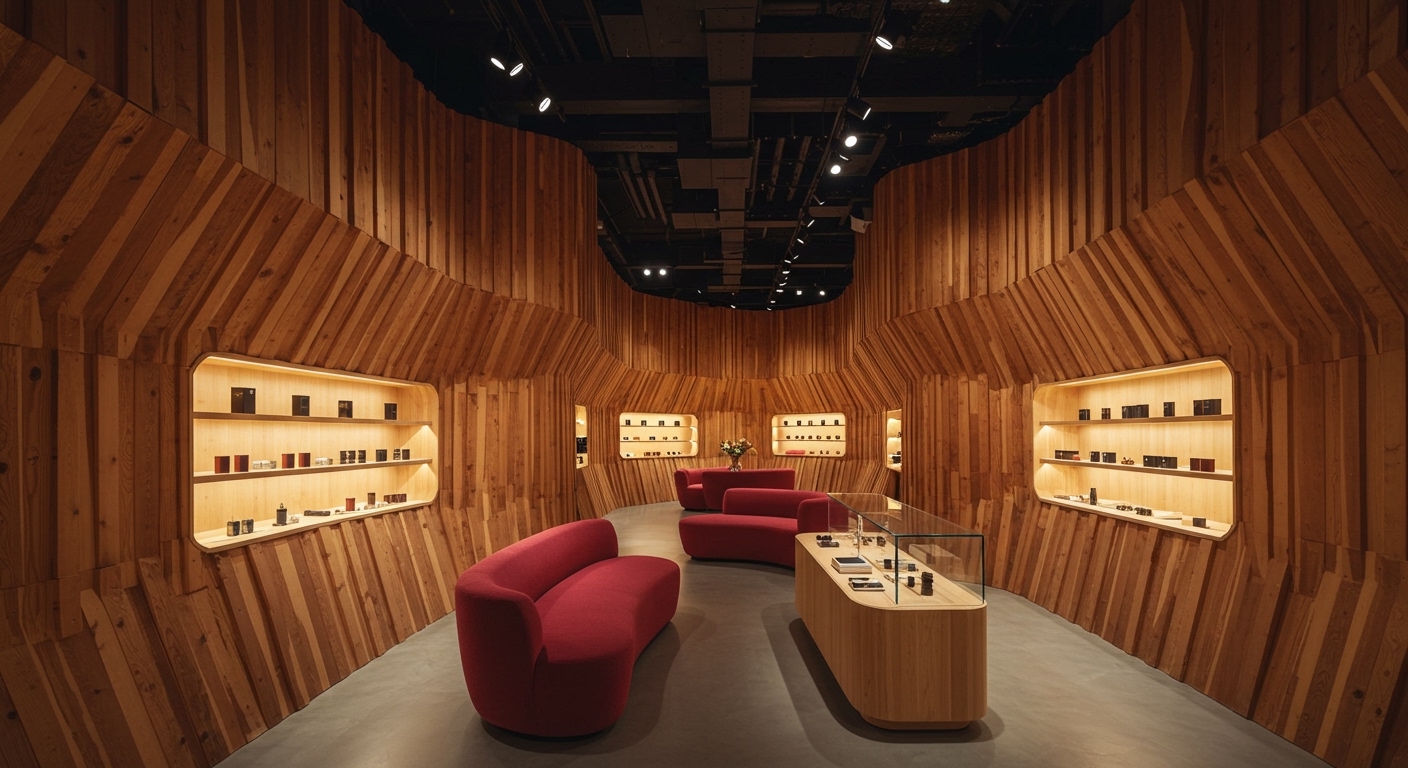
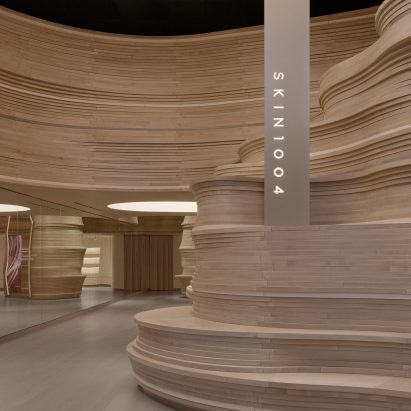
LMTLS Architecture’s wooden “gorge” for SKIN1004 in Soho carves a distinct narrative into retail space.
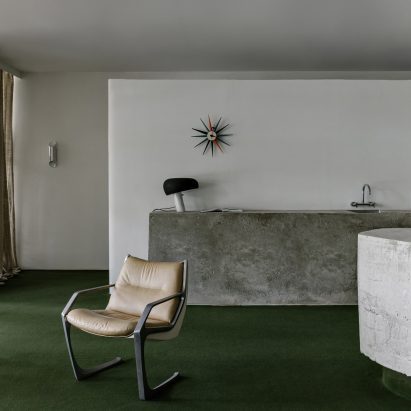
These projects share a deliberate move away from adaptable, neutral envelopes towards highly specific, internally focused spatial narratives. Whether through Jasmine Fisher’s atmospheric London office or Keiji Ashizawa’s Tomi Ginza hotel, designers are engineering contained worlds. Each space acts as a singular, immersive environment, distinct from its urban or architectural context, often leveraging a dominant material or conceptual gesture to define its boundaries and purpose.
Consider LMTLS Architecture’s approach with the wooden “gorge.” The studio does not merely decorate a skincare store; it sculpts a journey. The steep canyon of wooden layers creates a clear path, directing human flow and evoking a primal, almost geological tactile quality. This contrasts sharply with the mainstream retail design focus on seamless, easily navigable zones that prioritize product display above all else. Conventional wisdom suggests a highly themed or intensely material-specific space might alienate some customers or limit brand messaging. However, LMTLS demonstrates that such spatial tension can enhance brand identity by creating a memorable, almost sacred, interaction with the product environment. The deliberate use of a singular material, wood, in such an aggressive, sculptural manner forces a tactile engagement and an awareness of gravity and texture. This approach generates a sense of arrival and discovery. Within two years, more luxury retail and hospitality projects will abandon overt product promotion in favor of a dominant, singular material-driven spatial narrative that prioritizes emotional and tactile immersion.
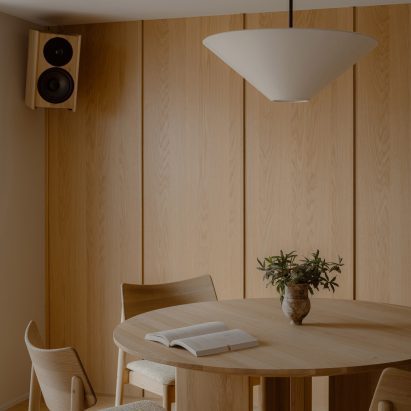
This commitment to the singular experience, often at the expense of overt flexibility, defines the emerging spatial grammar. Debaixo do Bloco Arquitetura, in distilling the “Experience of Brasília” within Oscar Niemeyer’s pavilion, similarly rejects generic interpretation. Clay Rodrigues uses pilotis, curved surfaces, and continuous planes not to recreate Brasília literally, but to evoke its spirit through abstracted forms that guide the visitor’s perception and movement. This contradicts the prevailing industry emphasis on multi-functional, adaptable spaces. While flexibility is often lauded as a virtue, these examples suggest that a strong, singular intention—even an uncompromising one—creates more powerful and memorable human flows and tactile engagements. Designing a space for one specific emotional journey, like the feeling of “staying at the home of a tasteful friend” as Keiji Ashizawa achieved with Tomi Ginza, offers a richer, more profound interaction than a space attempting to be everything for everyone. By late 2027, the demand for deeply personalized, narrative-driven spatial experiences will shift commissions away from multi-purpose blandness towards highly curated, singular material palettes that define distinct emotional terrains.
The persistent opposing force remains the economic pressure for cost-efficient, replicable design templates that prioritize quick turnaround and broad appeal over distinct spatial identity. These templates, often driven by value engineering and the perceived need for maximal operational flexibility, result in generic, interchangeable environments across sectors, from commercial offices to boutique hotels. This approach seeks to flatten individual character in favor of scalable, predictable outcomes.
Interior professionals should begin each new project by identifying a singular, dominant material or a single compelling spatial gesture that can define the core emotional and tactile experience. Instead of assembling a diverse material board, professionals should explore the depth and versatility of one or two key materials, challenging themselves to derive all necessary spatial functions and aesthetic expressions from this limited palette. This practice encourages a more sculptural, less decorative, approach to interior architecture, focusing on how materials interact with light, form, and human movement to create an undeniable sense of place.
TL;DR
Designers are crafting intensely specific, contained spatial experiences using dominant materials and singular narratives, resisting generic flexibility.
Curated References

About this editorial — This piece was developed using AI-assisted research and curation across multiple industry sources. All analysis, opinions, and predictions represent the editorial perspective of JHDD. Sources are linked in the references section above.