
JHDD UI UX Report — 2026.07.22
Durgesh Pawar’s analysis of the React Flight Protocol details a CVSS 10.0 vulnerability, dubbed “React2Shell,” highlighting critical security flaws in novel interaction patterns.
These seemingly disparate reports—from new technical protocols to behavioral design models and the role of AI in design—collectively point to a growing tension between the rapid adoption of powerful new tools and frameworks, and the inherent fragility, ethical challenges, and human oversight required to wield them responsibly. The emphasis on speed and “experiments as bets” often sidelines the deeper implications of interaction design on user agency, system security, and the preservation of human “taste.”

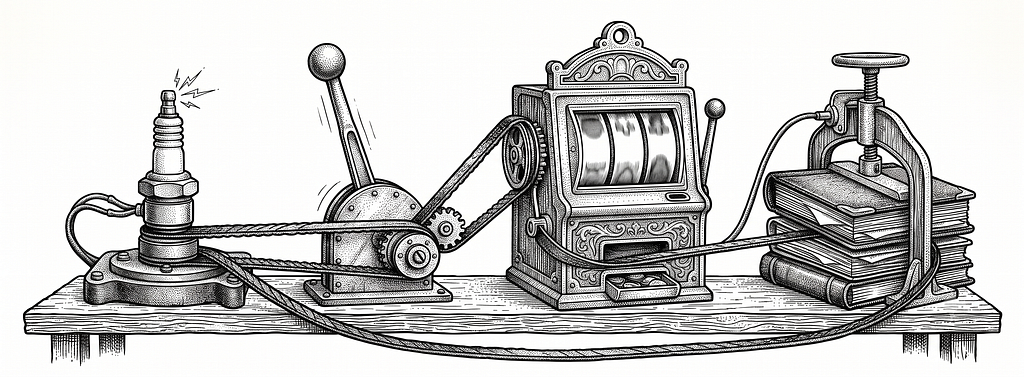
Nir Eyal’s Hook Model, explored in the context of AI products, has become an industry standard for driving user engagement, teaching a generation of designers and product managers a predictable cycle of triggers, actions, variable rewards, and investments. While its proponents argue for its utility in habit formation, the model’s pervasive application has paradoxically led to a homogenization of interaction patterns across platforms, creating a landscape of experiences engineered for addiction rather than genuine utility or delight. The conventional wisdom that this framework, even when applied “safely,” enhances usability overlooks how deeply these manipulative patterns erode user autonomy, making interfaces feel less like tools and more like coercive systems.
Instead of fostering deep engagement, relying on the Hook Model often cultivates a shallow, conditioned response, leading to user fatigue and a hidden accessibility cost for those who struggle with impulse control or cognitive load. The industry’s obsession with optimizing for “sticky” interfaces often bypasses the need for genuine user research that uncovers unarticulated needs, prioritizing a synthetic engagement loop over truly meaningful interaction. By mid-2027, the industry will see a noticeable backlash against products overtly employing the Hook Model, driven by increased regulatory scrutiny on AI product ethics and a user base increasingly aware of being “hooked.”
The primary force resisting this shift is the entrenched product development culture, which continues to prioritize short-term engagement metrics and conversion funnels, often driven by venture capital demands, over the long-term health of user relationships and the ethical design of interaction patterns. This culture frequently sees design experiments as “bets” to accelerate growth, rather than as meticulous explorations of user well-being and system integrity, as implicitly highlighted by the UX Collective.
A working UI UX professional should this week audit a core interaction flow in their product for instances where Nir Eyal’s Hook Model or similar behavioral design patterns are used, then explicitly identify how that interaction could be redesigned to offer greater user agency, transparency, and control, even if it might slightly reduce a “variable reward” frequency.
TL;DR
The rapid adoption of new design tools and models without sufficient ethical and security scrutiny risks creating fragile, manipulative, and homogenized user experiences.
Curated References


About this editorial — This piece was developed using AI-assisted research and curation across multiple industry sources. All analysis, opinions, and predictions represent the editorial perspective of JHDD. Sources are linked in the references section above.