JHDD UI UX Report — 2026.07.19
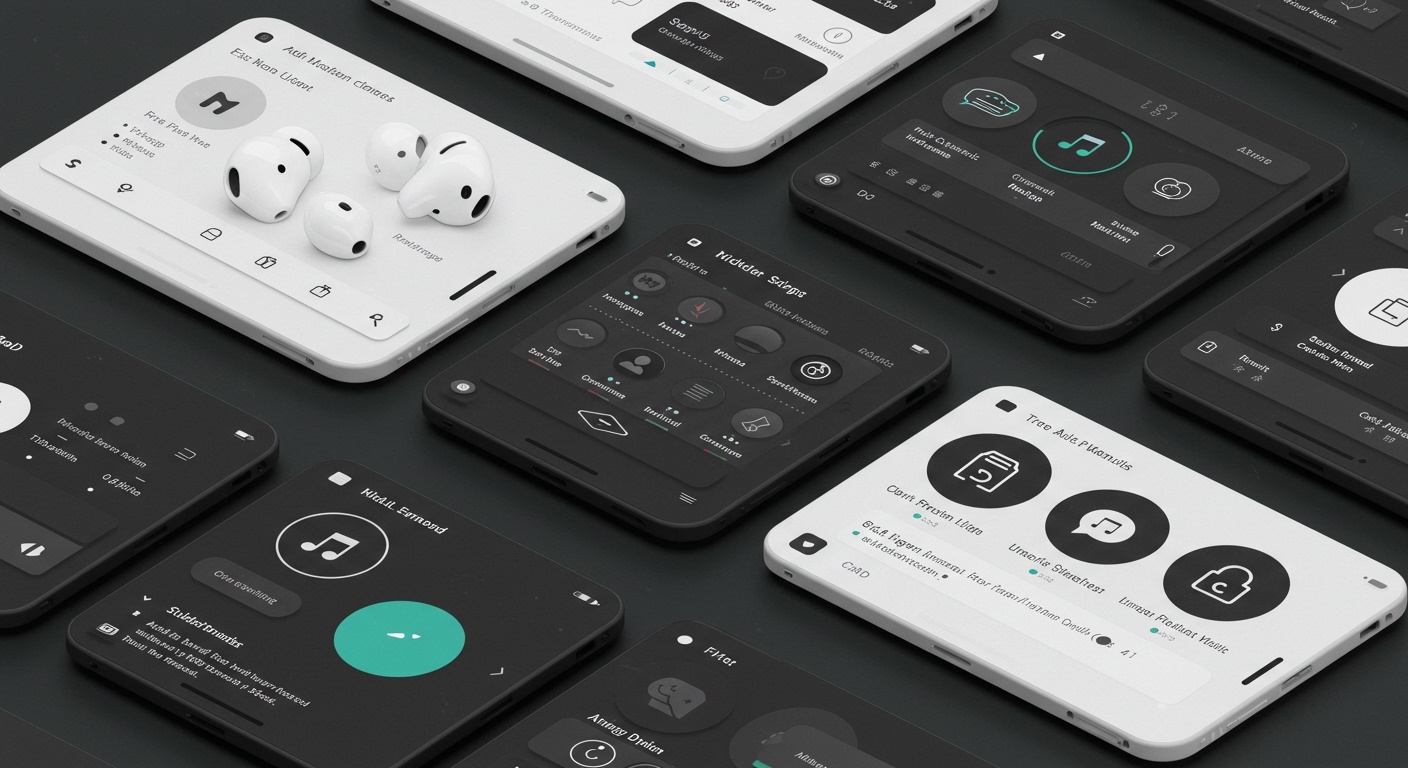
Apple’s reported consideration of placing cameras into AirPods stems once again highlights the industry’s struggle with design that challenges immediate user comfort.
A common thread across recent industry discussions reveals a pervasive tension between established best practices and emergent realities. Whether it is the re-evaluation of fundamental interaction patterns like dropdown lists, the challenge to engineering maxims like avoiding main thread blocking, or the redefinition of design’s value proposition in the age of AI, professionals are grappling with the limitations of dogmatic adherence. The implicit assumption that established rules universally apply or that initial user reaction dictates ultimate success is increasingly proving insufficient for complex product development.

The initial reception to Apple’s AirPods in 2016, where critics openly mocked their appearance and functionality, stands as a stark reminder of the industry’s frequent misjudgment of novel design. Despite comparisons to “a tampon without a string” or “toothbrush tops,” these devices are now a common sight, illustrating a significant gap between immediate user comfort and long-term design adoption. This history offers a crucial lesson for designers: designs that are initially perceived as awkward or strange are not inherently flawed. Instead, they often represent a necessary, uncomfortable step towards new interaction paradigms, where user habituation and the full scope of a product’s value proposition gradually become clear. Conventional wisdom frequently conflates immediate ease-of-use with long-term design success, failing to account for the human capacity to adapt and learn new interaction vocabularies. The current reaction to Apple’s reported plan to integrate cameras into AirPods stems mirrors this historical pattern, suggesting a continued industry-wide reflex to dismiss innovative interactions before their practical use cases fully mature or before users have had a chance to habituate.
Design teams must therefore shift their focus from simply adhering to static “best practices” to understanding the adaptive capacity of users and the evolving nature of interaction patterns. This means recognizing that what is initially perceived as difficult or odd can, through repeated engagement and clear value delivery, become intuitive and deeply integrated into daily routines. For design systems, this implies building frameworks that can accommodate, test, and integrate emergent interaction types, rather than rigidly enforcing a fixed set of components based solely on existing conventions. Such systems must support the experimentation required to discover future dominant patterns. This approach acknowledges that not all usability is immediate, and that some innovations require an initial learning curve. By mid-2027, the most effective design systems will distinguish themselves not by their comprehensive adherence to established norms, but by their inherent flexibility to prototype, integrate, and scale novel interaction patterns that initially challenge user expectations, but ultimately deliver enhanced utility.
This evolution is directly resisted by the pervasive “screen factory” mentality, which the Head of Design at a global restaurant technology platform described as an organizational tendency to view design as merely producing artifacts. This mindset prioritizes the rapid output of immediately understandable interfaces, often without deeper inquiry into user adaptation, long-term learning, or the strategic value of design beyond visual execution. Such an approach inherently devalues the nuanced human understanding derived from methods like human-led user research, reducing design to an output rather than a strategic input. This perspective will continue to push back, favoring quick, AI-generated “average” solutions over designs that might demand initial user effort but offer significant future benefits in usability or functionality.
A working UI UX professional should, for every significant interaction pattern choice, explicitly document the specific user context, the problem being solved, and the detailed justification for its selection, especially when it deviates from a widely accepted “best practice” such as avoiding dropdown lists or blocking the main thread. This practice moves design decisions beyond mere rule-following, compelling designers to articulate the nuanced human insights, user adaptations required, and trade-offs that an AI cannot yet replicate. This reinforces the unique value of human design intelligence and user research expertise over automated or template-driven solutions.
TL;DR
The design industry must move beyond dogmatic adherence to established norms and immediate user comfort, embracing the adaptive capacity of users and justifying interaction choices with specific human insights.
Curated References


About this editorial — This piece was developed using AI-assisted research and curation across multiple industry sources. All analysis, opinions, and predictions represent the editorial perspective of JHDD. Sources are linked in the references section above.