JHDD Interior Report — 2026.10.13
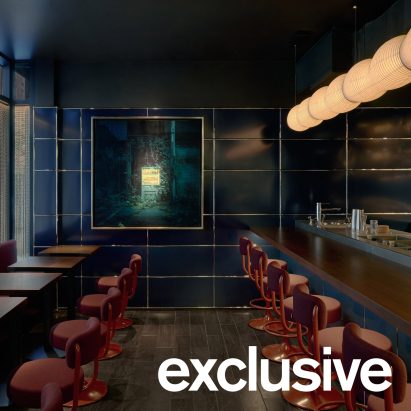
VV’s Cocktail Room in Manhattan utilizes Steel Blue USM Haller modules to form almost its entire interior structure.
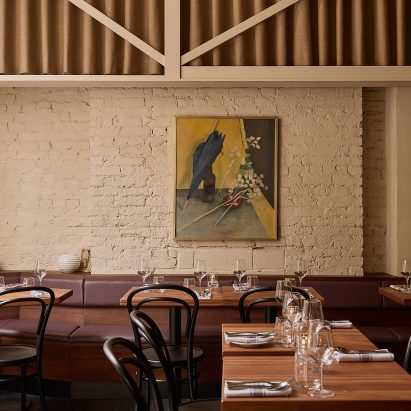
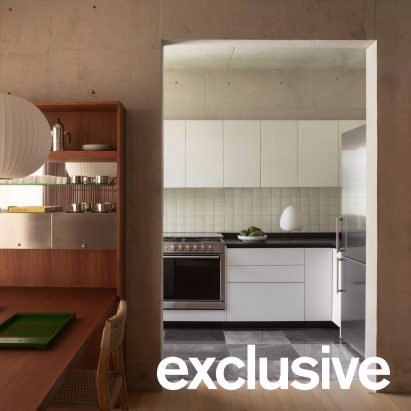
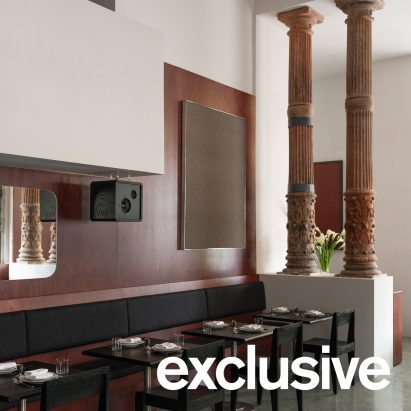
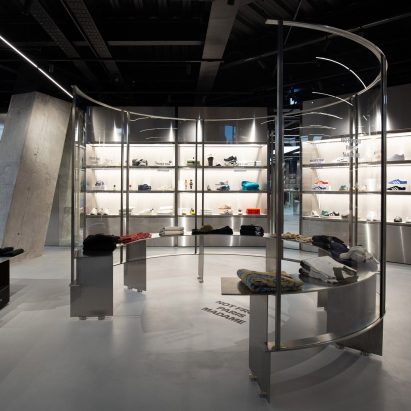
This approach to interior definition—using either precise, adaptable systems or highly customized components within existing spatial constraints—appears consistently. Mariel Lozano Studio designed bespoke furniture to “optimise compact layout” for San Luis, while Didea implemented a flexible, modular grid for the Super F store within ZHA’s Mercury Tower. Formant Studio also created custom furniture and fixtures for Nota Tavern, reinterpreting a classic aesthetic within a former residence. The common thread is not simply renovation, but a strategic deployment of defined, often repeatable, elements to sculpt specific atmospheres and functions out of varied and often challenging envelopes.
Josh Greenspan’s collaboration with USM for VV’s Cocktail Room exemplifies this direction. The decision to wrap a small, 18-seat lounge almost entirely in a single modular system is often misconstrued in high-end design as a compromise on bespoke luxury. The prevailing industry assumption suggests that true luxury demands unique, one-off fabrications from the ground up, with every detail conceived without reference to existing systems. This view overlooks the sophisticated intelligence embedded in precise modularity. The careful selection of a specific module, its color, and its exact configuration, far from being a limitation, provides a coherent spatial framework. It manages visual clutter, offers inherent adaptability, and fosters a sense of composed permanence. The tactile quality comes from the consistency of the material and the seamless junctions, creating a unified experience that is both deliberate and serene.
The real challenge for the luxury market now lies in mastering the art of configuration and material specificity within these systems, rather than solely pursuing endless bespoke forms. This is where a distinct spatial tension emerges: between the known, reliable structure of a modular system and its infinite possibilities for unique arrangement and tactile expression. The focus shifts from the ostentatious display of unique craft to the subtle perfection of intelligent design. This allows for a superior human flow and a curated sensory experience even in compact footprints, as seen with Mariel Lozano Studio’s work achieving “tranquillity” in tight quarters. By mid-2028, a significant portion of new high-end hospitality and retail fit-outs will demonstrably prioritize elegant modular systems or pre-fabricated custom components for their core spatial definition, valuing their inherent adaptability and material integrity over solely ground-up, fixed bespoke joinery.
The primary resistance to this spatial evolution originates from segments of the design market entrenched in the traditional artisan-led custom millwork and fabrication industries. Their business models often thrive on the perception that luxury is inherently tied to unique, irreplicable, and entirely novel constructions. This economic structure, alongside client expectations molded by decades of “bespoke” as the ultimate status symbol, can overshadow the subtle sophistication and long-term value offered by intelligent modular or pre-fabricated systems. This includes clients who mistakenly equate system-based design with a lack of prestige or individual identity.
Interior professionals should dedicate time this week to reverse-engineer an existing high-end modular system like USM Haller or similar architectural panel systems. Identify its core components, then brainstorm at least five unconventional applications that move beyond its marketed use, focusing on how its inherent material and structural properties could define zones, integrate lighting, manage acoustics, or control human flow in a challenging space. This involves treating the system as fundamental architectural vocabulary, rather than merely decorative furniture.
TL;DR
Intelligent use of adaptable systems and precise modularity is redefining luxury in spatial design, valuing strategic configuration over solely unique fabrication.
Curated References
About this editorial — This piece was developed using AI-assisted research and curation across multiple industry sources. All analysis, opinions, and predictions represent the editorial perspective of JHDD. Sources are linked in the references section above.