JHDD Interior Report — 2026.10.10
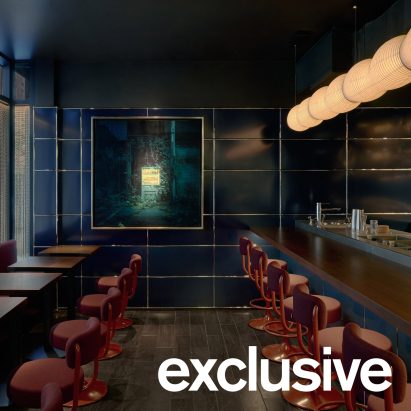
VV’s Cocktail Room in Manhattan uses Steel Blue USM Haller modules for almost its entire interior, a deliberate choice in a space of only 18 seats.
These recent projects reveal a consistent pattern: a deliberate manipulation of surface and volume within often constrained footprints. This trend is not about maximizing perceived space, but rather about intensifying the sensory and tactile experience within clearly defined boundaries. The focus shifts from open-plan versatility to creating specific atmospheric density and moments of concentrated materiality.
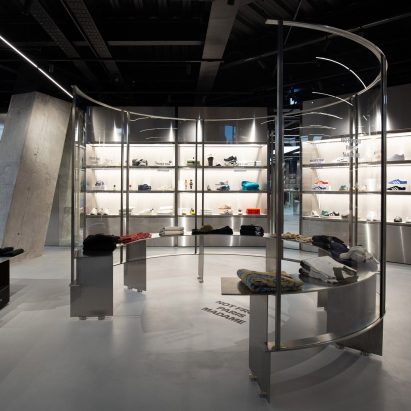
Didea’s design for the Super F streetwear store inside ZHA’s Mercury Tower exemplifies a critical shift in spatial methodology. The studio implemented a distinct steel-clad, modular grid as an internal environment, directly engaging with the host building’s iconic curvature. This approach, rather than attempting to harmonize with ZHA’s sweeping, fluid forms, creates a deliberate spatial tension. It rejects the conventional wisdom that new interventions within architecturally significant structures must defer to the original narrative. Instead, Didea constructed an interior world that stands in stark, yet productive, contrast, using the cool precision of steel to define a contained human flow that forces a different interaction with the merchandise and the space itself. This explicit visual and tactile friction provides an energy often diluted in spaces prioritizing homogeneity.
This tension is not accidental; it forms the core of an experiential strategy. While mainstream design often champions fluid transitions and technologically “invisible” elements, Didea embraces the explicit presence of its chosen material and form, drawing attention to the intervention itself. The steel’s precise lines confront the organic lines of the building, challenging the occupant to register a clear boundary and a defined moment within the larger structure. Such deliberate material contrast provides a tangible anchor, grounding the user in a distinct tactile zone. The prevailing industry trend has leaned towards broad, unadorned surfaces, but projects like Super F and VV’s Cocktail Room, with its full embrace of Steel Blue USM Haller modules, demonstrate the power of specific, even confrontational, materiality to shape human flow and interaction. By late 2027, more high-end retail and hospitality projects will integrate overtly contrasting material palettes and internal ‘pocket’ architectures to create visceral spatial experiences that actively defy external architectural context, prioritizing interior identity over contextual subservience.
The resistance to this intensified specificity and material honesty often originates with budget-driven project managers and developers who prioritize scalable, cost-effective solutions. They typically shy away from unique material requirements or bespoke joinery, seeing them as high-risk. The perceived complexity of detailed craft, such as the intricate marquetry at Arcane 17 by Bétyle Studio, or the tailored acoustic panels of Bar Shrimp, often deters those focused on rapid, repeatable deployments. Their emphasis remains on broad market appeal and ease of maintenance, which often conflicts with the unique tactile engagement and deliberate spatial friction these projects foster.
Interior professionals should critically re-evaluate material specifications this week, moving beyond merely aesthetic or functional attributes. Instead of selecting finishes primarily based on durability or cost, consider their inherent haptic qualities and their potential for creating deliberate friction or intimacy in a space. For example, explore small-batch patinated timber from local artisans for a specific seating area, or specify bespoke acoustic panels like those from Autex Acoustics used in Bar Shrimp, integrating both high performance and a distinctive tactile surface, even if the primary budget line item is for sound control. Focus on how a material choice dictates human proximity, comfort, and the precise velocity of movement within a specific zone.
TL;DR
Intensified materiality and controlled spatial friction define luxurious interior experiences, moving beyond seamless integration.
Curated References


About this editorial — This piece was developed using AI-assisted research and curation across multiple industry sources. All analysis, opinions, and predictions represent the editorial perspective of JHDD. Sources are linked in the references section above.