JHDD Interior Report — 2026.09.28
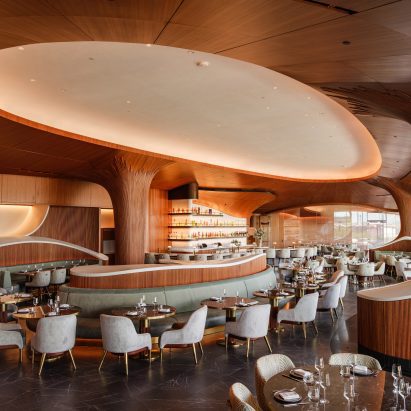
Rockwell Group’s Skywalker Grill at the Lucas Museum features a design completely devoid of 90-degree angles.
This design decision, alongside several other recent projects, signals a deliberate erosion of traditional spatial boundaries and programmatic separations. Architects and designers are now orchestrating complex, layered experiences where human flow is guided by material and form, fostering unexpected tactile and visual engagements across previously distinct distinct zones. This is not mere multifunctionality; it is a calculated blurring that redefines how users perceive and interact with commercial and cultural environments, moving beyond simple adjacencies.
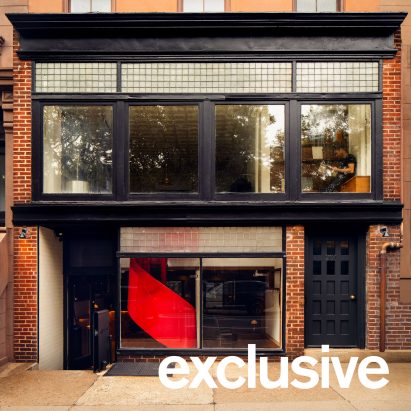
Consider Gjergji Shkurti’s work at Million Goods in Brooklyn. The integration of a bar, retail, and hi-fi listening station is not simply about optimizing square footage for diverse revenue streams, which is a common industry justification. Instead, Shkurti employs marble, custom millwork, and a glossy red spiral staircase to create a specific sequence of discovery, making the transition from a hospitality setting to a retail encounter inherently experiential. Mainstream industry thought often prioritizes clear programmatic segmentation for perceived efficiency and ease of branding. This approach, however, suggests that carefully controlled ambiguity and interruption of expected flow can cultivate a more profound and memorable user journey, even if it introduces a momentary friction. The staircase does not merely connect floors; it acts as a visual and physical punctuation, drawing attention and slowing down the user.
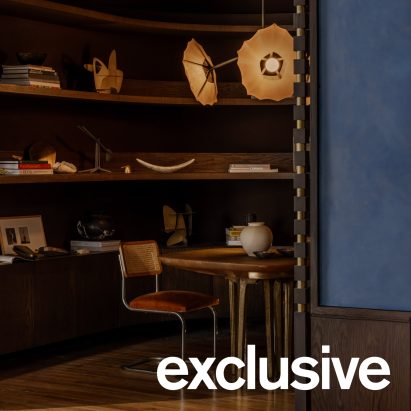
The intention behind these integrated spaces leans heavily into creating a distinct spatial tension, where material choices play a critical role in mediating the interplay of functions. Federico Stefanovich’s decision to revamp his studio in Mexico City’s historic Edificio Humboldt highlights this as well. His expressive metal lighting is not just displayed; it interacts directly with the patina of a 1920s building, creating a dialogue between industrial contemporary materiality and historical context. This suggests a departure from mere background display, moving towards active material storytelling that elevates the product through spatial choreography. By mid-2027, projects that embed primary display or functional elements directly into the structural and material fabric of a building, rather than as discrete installations, will dominate award shortlists.
This nuanced approach to spatial integration and material dialogue faces resistance from conservative client expectations for clear, easily measurable functional outcomes. Many briefs still prioritize immediate transactional efficiency or maximum visual separation between revenue-generating zones, rather than investing in the less quantifiable value of experiential complexity or sustained spatial tension. The pressure for quick returns and predictable use cases often discourages the exploration of these more subtle, integrated designs.
When presented with a multi-program brief, identify a single tactile element or material and explore its potential to subtly bridge two otherwise distinct functions. Use its inherent quality—its sheen, its texture, its acoustic properties—to create an unexpected connection or a moment of pause that recontextualizes the adjacent space, guiding human flow non-verbally. This fosters a layered experience.
TL;DR
Contemporary spatial design intentionally blurs functional boundaries through material and form to create cohesive, layered experiences.
Curated References


About this editorial — This piece was developed using AI-assisted research and curation across multiple industry sources. All analysis, opinions, and predictions represent the editorial perspective of JHDD. Sources are linked in the references section above.