JHDD Architecture Report — 2026.09.28
DinellJohansson’s meticulous restoration of Folkets Hus in Gothenburg exemplifies a nuanced approach to urban renewal.
A shared thread connects seemingly disparate projects, from SODA’s high-density capsule hotel Otherwander Soho in central London to Plastique Fantastique’s temporary urban organism auruBOROS moving through New York City. This thread reveals a re-evaluation of architectural permanence, pushing practitioners towards adaptive responses to existing urban fabric, material longevity, and the intrinsic transience of human settlement patterns, as seen historically in Qatar’s al-barr movements.
DinellJohansson’s approach to Folkets Hus, meticulously restoring Sven Markelius’ original design, stands in stark contrast to the prevalent industry impulse for total demolition and new construction. While many urban redevelopment schemes prioritize novel forms or maximize floor area through replacement, DinellJohansson’s work demonstrates that deep respect for an existing building of historical and design merit represents the most impactful form of urban intervention. This is not about sentimental preservation; it is about recognizing the embedded energy, the material history, and the social memory within existing structures. This ‘treading lightly’ philosophy is a structural approach: it preserves both embedded structural carbon and the material narrative of the city.
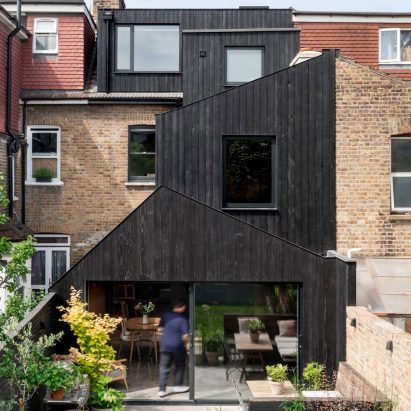
Mainstream industry often praises projects for their rapid deployment or dramatic visual impact achieved through entirely new material palettes, such as the numerous buildings featuring charred-timber facades for their tactile exterior. This perspective frequently overlooks the profound environmental and social cost of discarding perfectly viable structures for the sake of novelty. The true innovation, as demonstrated by DinellJohansson, lies in revealing and enhancing the inherent qualities of an existing building, rather than erasing them. The value of an architect’s intervention is not always measured in square meters of new construction. Instead, it is increasingly found in the intelligence applied to existing conditions. Within two years, this shift will see a measurable decrease in bids for large-scale demolition projects in favor of adaptive reuse proposals, driven by tightening embodied carbon regulations across major European cities.
This nuanced approach faces resistance from the powerful financial mechanisms of speculative real estate development, which frequently undervalues existing urban fabric in pursuit of maximized short-term returns through ground-up construction and rapid lease cycles. Building material manufacturers also benefit from a constant demand for new products rather than the careful stewardship of existing ones.
An architecture professional, this week, should undertake a detailed material audit of one ongoing project, specifically identifying opportunities to reuse or adapt existing site elements or structural components rather than specifying new materials. This means looking beyond surface aesthetics to understand material lifecycles and embedded carbon.
TL;DR
Respect for existing structures and their embedded material history defines responsible architecture in a changing urban landscape.
Curated References

About this editorial — This piece was developed using AI-assisted research and curation across multiple industry sources. All analysis, opinions, and predictions represent the editorial perspective of JHDD. Sources are linked in the references section above.