JHDD Interior Report — 2026.09.01
The renovation of Casa Plató by H3O architects in Barcelona specifically introduced quirky details like hidden windows, demonstrating a precise tension between inherited forms and contemporary intervention. This approach, echoed across recent high-profile projects, reveals a deeper pattern than mere preservation or stylistic updates. It signals a sophisticated, almost surgical recalibration of spatial identities within existing envelopes, where the emphasis shifts from overt narrative to nuanced sensory and functional experience.
Aethos London Shoreditch, with interiors by Astet Studio in a Ron Arad Associates building, explicitly adopted an “East meets East” methodology, blending industrial heritage with a softer, Japanese-inspired aesthetic. Mainstream commentary often applauds such fusions as innovative, but this perspective overlooks a crucial distinction. The true value does not lie in the mere juxtaposition of styles, but in how deeply new materials and forms integrate with the existing structure’s tactile qualities and inherent human flow, rather than simply being applied to it. The material choices, if not deeply considered for their interaction with the building’s original skeleton, risk creating surfaces that are visually rich but spatially shallow. By mid-2027, the market will increasingly demand verifiable metrics of material integration and embodied carbon in these “blended” projects, pushing beyond purely aesthetic interpretations.
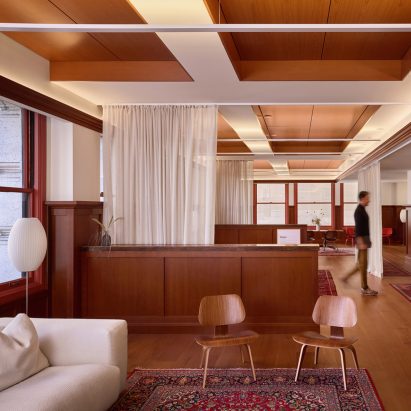
Similarly, IA’s design for AI company Notion in the 1907 Monadnock Building merges Craftsman-style detailing with a minimalist technical look. While lauded for bridging historical context with modern corporate function, this often produces a managed spatial tension rather than a resolved one. The danger lies in treating heritage details as decorative motifs rather than understanding their foundational role in the building’s original flow and light. A common industry view celebrates such projects for their aesthetic harmony. However, true spatial intelligence requires that new interventions enhance, rather than merely accessorize, the existing tactile qualities and the potential for varied human movement. Predictions suggest that within two years, clients seeking high-performance spaces will prioritize authentic, biophilic material performance over superficial stylistic heritage cues in corporate renovations.
The primary resistance to this deeper level of spatial recalibration comes from the persistent drive for rapid, visually impactful transformations, often guided by social media aesthetics. This impulse prioritizes immediate visual gratification and perceived novelty over the enduring qualities of materiality, the subtle language of spatial tension, and the long-term impact on human experience and well-being. It promotes surface-level “facelifts” that bypass the complex, often unseen, work required to truly harmonize old and new.
An interior professional should, for every adaptive reuse or renovation project, initiate a comprehensive “material biography” study. This involves not only researching the original construction’s material palette but also analyzing how those materials were intended to interact with light, sound, and human touch over time. This approach, focused on the tactile history of the space, informs interventions that genuinely enhance human flow and spatial tension, rather than merely imposing a new aesthetic layer.
TL;DR
Contemporary renovations must move beyond aesthetic blending to deeply integrate materiality and spatial qualities for authentic human experience.
Curated References


About this editorial — This piece was developed using AI-assisted research and curation across multiple industry sources. All analysis, opinions, and predictions represent the editorial perspective of JHDD. Sources are linked in the references section above.