JHDD Interior Report — 2026.08.28
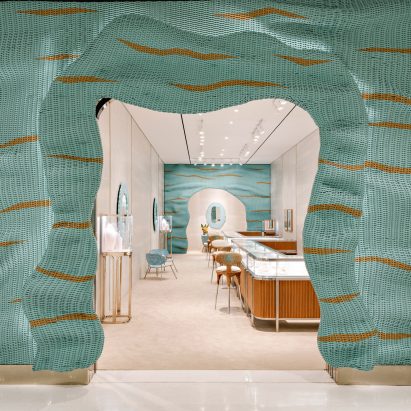
Estúdio Campana’s collaboration with Tiffany & Co for a São Paulo pop-up, cloaked in an undulating woven wicker skin, exemplifies a growing drive toward complex, tactile materiality in luxury spatial design.
The distinct common thread among recent luxury design projects involves a sophisticated layering of existing historical or industrial contexts with contemporary material interventions. This goes beyond simple renovation or mimicry; it is a careful orchestration of spatial tension, where disparate textures and provenances are brought into considered dialogue. Designers are increasingly challenged to articulate a site’s specific character through materiality, rather than impose a universal aesthetic.
Astet Studio’s approach for Aethos London Shoreditch, described as “East meets East,” concretely illustrates this design intelligence. The project blends the industrial design language of the original Ron Arad Associates building with a softer, Japanese-inspired aesthetic. Mainstream luxury design often prioritizes a clean, universal aesthetic, aiming for a streamlined experience that can be replicated globally. However, Astet Studio deliberately leans into the inherent friction between a building’s robust industrial past and the desire for serene, culturally inflected comfort. This contradicts the conventional wisdom that high-end spaces should always strive for a seamless, singular visual narrative. The true luxury here lies in the nuanced discovery of these contrasting elements, inviting closer engagement and a richer human flow through the space.
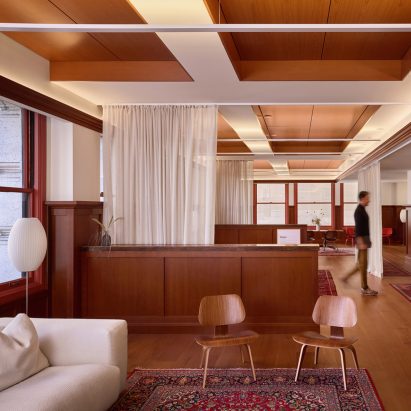
This trend signals a move away from purely visual impact towards a deeper, multi-sensory experience that anchors occupants. The inclusion of Craftsman-style detailing by IA for an AI company’s headquarters in San Francisco’s 1907 Monadnock Building further supports this. It grounds an abstract, futuristic industry in a tangible, historical craft. By mid-2027, luxury hospitality and high-end residential projects will increasingly commission studios to embed distinct regional craft traditions and specific historical material languages into primary structural and surface applications, moving beyond their typical role as mere decorative accents.
This intentional layering faces resistance from the pervasive industry pressure for rapid, cost-optimized deployment of generic, scalable design solutions for commercial and multi-unit residential projects. These forces often prioritize ease of installation and maintenance over bespoke material integration or a deep historical conversation, thereby flattening spatial distinctiveness.
Interior professionals should actively seek out and catalogue local material traditions, artisans, and construction methods relevant to a project’s geography or architectural history, integrating this research into conceptual development rather than as an afterthought for finishes. This practice can reveal unique spatial vocabularies and tactile opportunities.
TL;DR
Contemporary luxury design reinterprets existing material histories to create tactilely rich, layered spaces.
Curated References



About this editorial — This piece was developed using AI-assisted research and curation across multiple industry sources. All analysis, opinions, and predictions represent the editorial perspective of JHDD. Sources are linked in the references section above.