JHDD Branding Report — 2026.07.08
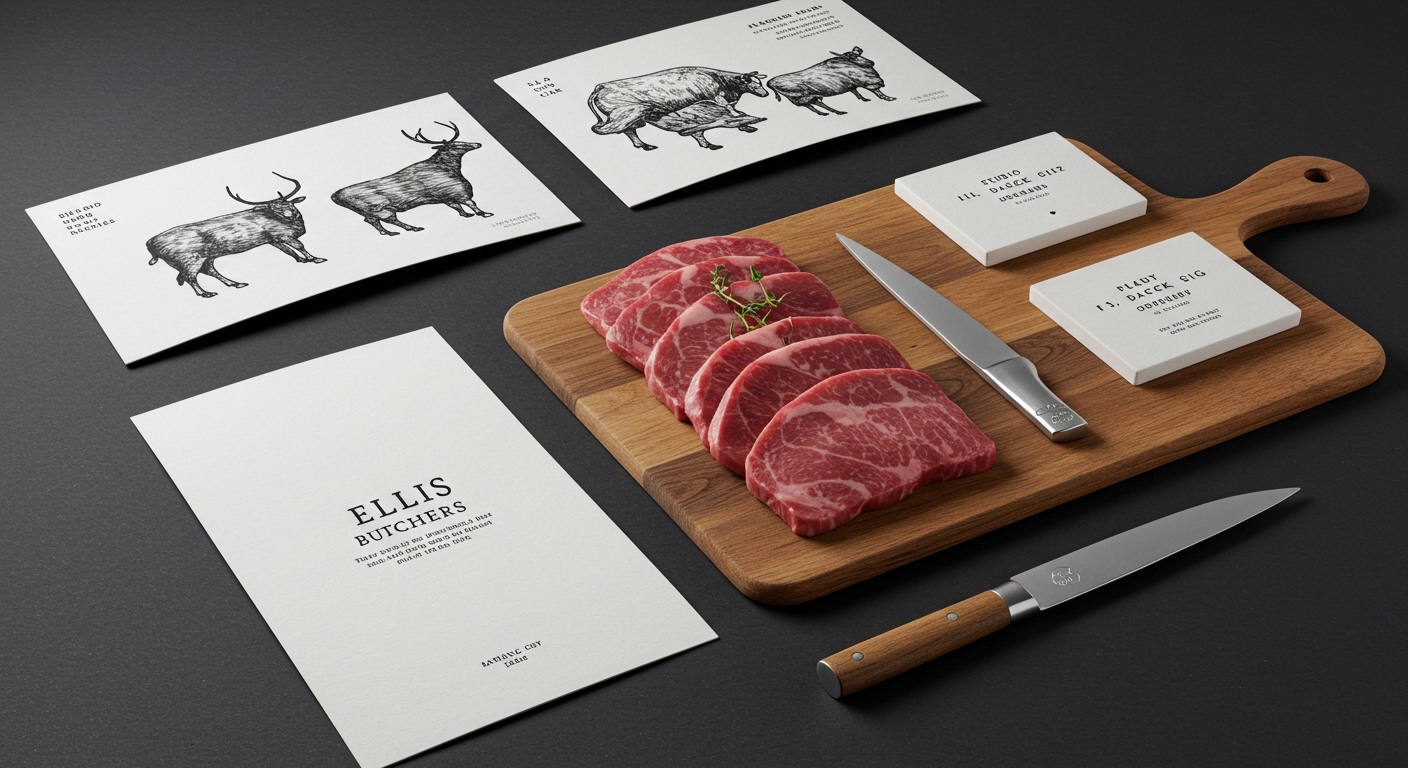
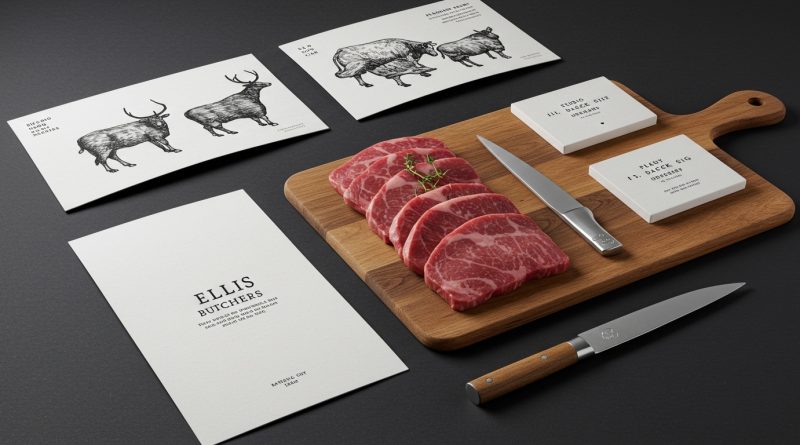
Studio Blackburn’s branding for Ellis Butchers is explicitly carcass-centric, yet the design evokes warmth for a “whole-carcass butcher business.”
This detailed honesty, also seen in SMLXL’s joyful designs for Midnight Hotdog’s “dog fur mist” with a logo depicting a dog sniffing another’s rear, points to a broader, emergent pattern in brand strategy. Across various sectors, from consumables to services, brands are achieving cultural resonance and building robust brand equity by leaning into the most specific, sometimes unvarnished, aspects of their product or service. This trend moves beyond simple transparency; it represents an active embrace of a distinct and often challenging reality, whether that reality is visceral in its depiction, playfully provocative in its subject matter, or intensely utilitarian in its function, as implied by discussions around tube keys in “The Extraction Economy.” This specificity is becoming a primary driver for memorable market positioning.
Consider Lebara, a brand that many consumers encountered through off-licence visibility, achieving sonic familiarity without establishing clear semantic understanding. Verve’s recent work, aimed at making the brand “make sense,” highlights a critical deficiency in market positioning built solely on ubiquitous presence. Brand equity today demands more than recognition; it requires genuine comprehension of what a brand is and what it offers. The mainstream industry opinion often prioritizes abstraction and homogenization, believing that broad appeal requires sanitizing anything that might be perceived as niche or confronting. This translates into visual identity systems and messaging platforms that aim for universal resonance by avoiding specifics.
However, this traditional approach, focused on distilling an essence into a blandly aspirational message, is becoming increasingly ineffective for building resilient brand equity. Brands are failing to differentiate when they shy away from their own unique truths. The contradictory view holds that precisely the opposite strategy fosters stronger connections: identifying the most particular, undeniable aspect of a brand’s existence and amplifying it without compromise. Studio Blackburn’s project for Ellis Butchers exemplifies this, directly confronting the “whole-carcass” reality with warmth in its visual identity, rather than obscuring it. This creates a powerful cultural signal of confidence and authenticity that generic, feel-good messaging cannot replicate, turning a potential point of discomfort into a foundation for trust and distinctiveness. Brands are finding that specificity is not a barrier to engagement, but the very mechanism for it. This embrace of granular reality directly informs market positioning, allowing brands to carve out highly defined spaces. When a brand’s visual identity system unequivocally communicates its core truth, as with SMLXL’s playful yet explicit logo for Midnight Hotdog’s “dog fur mist,” it builds a memorable association that generic competitors struggle to match. This precision strengthens brand equity by fostering deeper consumer understanding and loyalty, moving beyond superficial awareness. Brands that commit to this unflinching, specific honesty will, within two years, observe significantly higher levels of customer advocacy and sustained market relevance, prompting a fundamental re-evaluation of traditional brand scaling models.
The primary opposing force to this trend of brand specificity remains the deeply entrenched marketing impulse to generalize and pursue the lowest common denominator for mass appeal. This impulse, ingrained in decades of mass media advertising, often prioritizes the avoidance of any potential negative perception over the cultivation of a truly unique and memorable brand identity. It manifests in bland visual identity systems and safe messaging, aiming for broad palatability. Corporate governance structures, highly risk-averse legal departments, and a pervasive fear of perceived niche positioning actively resist concrete, unfiltered brand expressions. These internal gatekeepers often prevent brands from embracing the very specificities that could differentiate them, preferring instead to dilute distinctiveness in pursuit of a hypothetical wider acceptance that rarely translates into deep engagement or loyalty.
Branding professionals should spend less time on broad demographic targeting and more time identifying the one undeniable, often idiosyncratic, truth about their client’s offering that would be impossible for any competitor to claim. This involves deep dives into manufacturing processes, product use cases, or even the founder’s personal quirks, then deliberately elevating that singular detail within the brand’s visual identity and messaging.
TL;DR
Brands build equity by embracing their specific, unvarnished realities, not by abstracting them.
Curated References
About this editorial — This piece was developed using AI-assisted research and curation across multiple industry sources. All analysis, opinions, and predictions represent the editorial perspective of JHDD. Sources are linked in the references section above.