JHDD Architecture Report — 2026.09.21
The mandala-shaped bamboo truss crowning the Mahamudra Meditation Centre in Nepal embodies a structural philosophy beyond mere load-bearing.
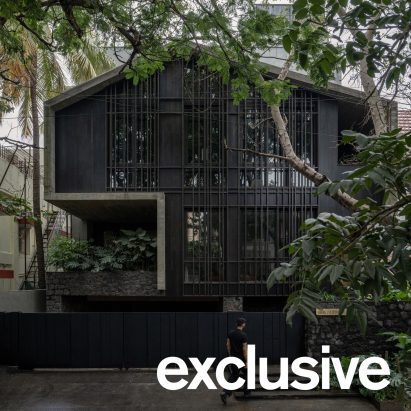
This design, along with NAHE ARCHITECTS’ recalibration of Casa Atelier Brasilia and Cadence Architects’ House of Shadows in Bengaluru, reveals an emerging focus on architecture as a deep, specific response to place, material, and human activity. These projects demonstrate a collective shift towards an architecture that seeks sensory resonance and embedded functionality, rather than external grandeur. They prioritize the intimate experience of light, sound, texture, and proportion, using materials not just for their appearance but for their inherent qualities and their capacity to shape daily rituals.
Abari’s innovative use of a three-storey bamboo truss in the Mahamudra Meditation Centre challenges prevailing industry narratives by demonstrating high structural integrity and expressive form through a rapidly renewable local material, specifically a mandala shape. This is not about exoticism or a niche experiment, but about an intelligent re-engagement with material knowledge that existed long before industrialized building became standard. The mainstream architectural dialogue often positions innovation at the frontier of complex, often carbon-intensive, technological systems or globally traded, mass-produced materials certified for sustainability. This overlooks the immediate, regenerative potential of locally abundant resources and the deep structural wisdom embedded in traditional forms and materials. The true frontier of urban responsibility and material innovation lies in understanding and adapting these locally specific solutions, rather than always seeking universal, high-tech fixes.
The idea of designing for a “conducive to reading” environment, as seen in Cadence Architects’ House of Shadows with its cosy nooks and dedicated study, further underscores this re-prioritization of specific human experiences over generic flexibility. This contrasts with the pervasive trend of maximizing open-plan, undifferentiated spaces driven by real estate valuation and generalized market appeal. Such generic layouts, while seemingly adaptable, often fail to support the nuanced psychological structures and daily rituals highlighted by discussions around the act of coming home. By mid-2027, the demand for residential architecture that integrates distinct, purpose-specific sensory zones – spaces explicitly designed for quiet contemplation, specific crafts, or focused interaction, much like the quiet, connected spaces of Casa Atelier Brasilia – will significantly increase. This will move beyond mere aesthetic preference to a functional necessity for mental well-being and productivity, necessitating a deeper engagement with architectural psychology and local ethnography, rather than relying solely on abstract spatial programming or market trends.
This deeply rooted architectural approach faces resistance from the prevailing forces of speculative urban development, which prioritizes standardized construction methods and materials for rapid scalability and cost efficiency. The globalized supply chains and often superficial aesthetic trends promoted by property developers frequently disincentivize the slower, more deliberate process required for local material sourcing and bespoke craft, pushing for a homogenization of the built environment.
Architecture professionals should, starting this week, conduct a detailed material audit of their current projects, identifying opportunities to substitute at least one globally sourced, high-carbon material with a regionally available, low-embodied carbon alternative. This requires exploring new fabrication methods or local craft partnerships, moving beyond abstract sustainability goals to concrete, traceable material responsibility.
TL;DR
Architecture must return to material honesty and specific human experience within local contexts, resisting generic globalized trends.
Curated References

About this editorial — This piece was developed using AI-assisted research and curation across multiple industry sources. All analysis, opinions, and predictions represent the editorial perspective of JHDD. Sources are linked in the references section above.