JHDD Architecture Report — 2026.09.06
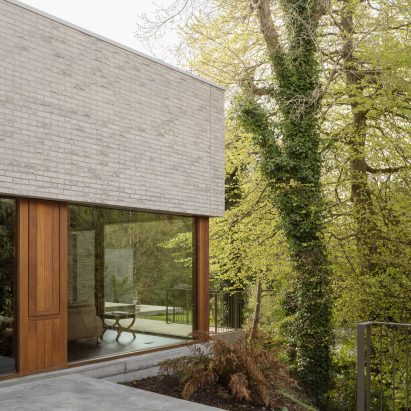
McGonigle McGrath’s Tollymore house in Northern Ireland, with its grey brick volumes built into a steep bank, exemplifies an architectural engagement with site that defies contemporary trends.
These recent reports highlight a quiet but persistent recalibration within the design community. From protracted, client-driven residential projects to urban planning emphasizing pedestrian health, and even a conscious pushback against algorithmic design, the collective attention is shifting away from generic scalability towards deeply specific, embodied, and context-dependent solutions. This pattern represents a recognition of architecture’s fundamental responsibility to place and human experience.
The design approach seen in Tollymore, where six rectangular forms are set at different levels to accommodate a steep site, stands in direct contrast to the industry’s widespread pursuit of design efficiency through standardization. While many firms leverage computational tools to generate optimized, repeatable modules for various sites, McGonigle McGrath prioritizes the unique topographical conditions, allowing them to dictate the structural philosophy. This commitment to understanding the specificities of the landscape, rather than imposing a pre-conceived solution, generates an architecture that feels inherently stable and true to its location. This is where a mainstream architectural perspective, often enamored with speed and replicability, misses the enduring value of site-specific material intelligence.
The current emphasis on design processes that generate universal solutions overlooks the tactile, haptic intelligence embedded in traditional building crafts and materials. Material innovation, in this context, is not about novel composites engineered for abstract performance metrics, but rather the artful and precise deployment of familiar materials like grey brick in new structural configurations that respond to unique environmental forces. Within two years, more architectural practices will begin to publicly critique the limitations of design tools that abstract too much from physical reality, seeking instead to re-engage with the direct, embodied knowledge of materials and site.
The primary resistance to this human- and site-centric approach comes from the economic models driving large-scale development and the venture capital funding structures that promote rapid, repeatable, and scalable solutions. These forces often view extended client relationships, bespoke site analysis, and the unique craftsmanship of projects like the 730-square-foot cottage by Schwartz and Architecture in Bodega Bay as inefficiencies rather than essential value propositions. The drive for market velocity prioritizes speculative returns over the nuanced, long-term health of urban fabrics and the environment.
Architecture professionals should dedicate specific time this week to performing a detailed, hand-drawn site analysis for a current or upcoming project, focusing on non-quantifiable elements like light quality, microclimates, and existing material textures, before engaging any digital modeling tools. This deliberate act fosters a deeper material intuition and pushes back against the default automation of initial design phases.
TL;DR
Architecture must resist generic solutions and embrace specific, human-centric engagement with materials and site.
Curated References

About this editorial — This piece was developed using AI-assisted research and curation across multiple industry sources. All analysis, opinions, and predictions represent the editorial perspective of JHDD. Sources are linked in the references section above.