JHDD Interior Report — 2026.10.08
INC designed each guest room at the Kimpton Era hotel in New York to emulate a stateroom on an ocean liner, leaning into a specific historical narrative.
A subtle yet persistent shift is apparent across recent projects: a deep, specific contextual embedding that prioritizes an immersive, layered experience over generic aspirational aesthetics. This is not about mimicry, but about extracting and reinterpreting the tactile qualities and human flows of a particular inspiration, whether cultural, historical, or geographic, to create distinct spatial tension. The projects collectively demonstrate a move towards environments that tell a story through their very fabric, encouraging a more engaged inhabitancy.
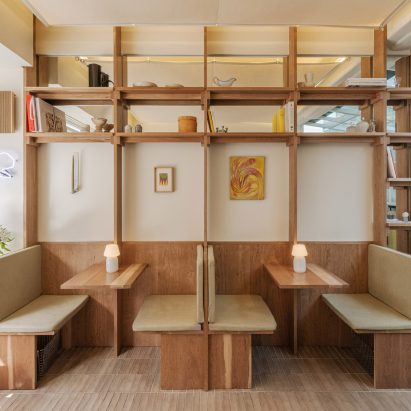
Consider the approach taken by INC for the Kimpton Era, or even Bétyle Studio’s use of patinated timber and distinctive marquetry for Arcane 17. These designs are not aiming for the universal, frictionless appeal often championed by mainstream luxury developments. Industry consensus frequently conflates “luxury” with “novelty” or “sleek neutrality.” This view is limited. True luxury in design often lies in the authenticity of its narrative, the tactile depth of its materials, and the enduring quality of its spatial experience. The deliberate embrace of character-rich elements, even those suggesting age or previous use, creates a profound sense of place and comfort that an unblemished, purely modern surface cannot replicate. By mid-2027, designs that articulate such specific, deep historical or cultural narratives through their materiality will command significantly higher valuation and client demand than those following generalized contemporary trends.
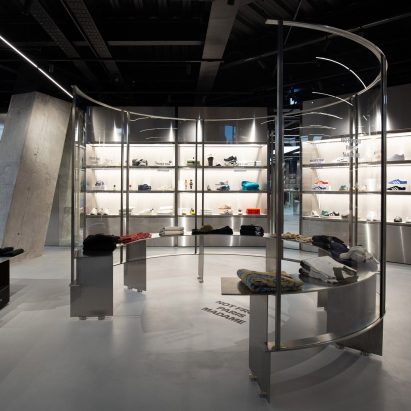
The counter-movement to this specificity comes from the continued pressure for standardized, globally recognizable brand aesthetics and rapid, scalable fit-outs. These forces often push designers towards easily sourced, homogenous materials and simplified spatial configurations that prioritize efficiency over distinctiveness. The modular grid Didea created for the Super F streetwear store inside ZHA’s Mercury Tower, while elegant, illustrates a pragmatic response to existing architectural constraints, a design strategy driven by adaptability rather than the imposition of an entirely new, deeply contextual narrative. This approach, while commercially sound for certain applications, risks diluting the unique tactile and spatial tension possibilities inherent in a less constrained brief.
Working interior professionals should dedicate more upfront project time to researching the unique historical, cultural, or even geological context of a site or client’s story. This week, identify a project currently in concept development and challenge conventional material choices by proposing at least one material that explicitly carries a narrative of aging, patina, or historical reference, detailing how its tactile quality will evolve over time and contribute to spatial tension.
TL;DR
Specific historical and cultural immersion through materiality creates more valuable and enduring luxury spaces than generic contemporary design.
Curated References



About this editorial — This piece was developed using AI-assisted research and curation across multiple industry sources. All analysis, opinions, and predictions represent the editorial perspective of JHDD. Sources are linked in the references section above.