JHDD Architecture Report — 2026.08.22
Iterare Arquitectos’ Casa Nido in Valencia demonstrates a deliberate, almost surgical, insertion of new construction within the old brick shell of an existing building. This project, alongside the media library and music school in Sarlat-la-Canéda, reveals a growing tension in design practice: the pursuit of structural innovation and material responsibility within tightly constrained or historically significant urban contexts. These examples stand in contrast to the extensive, often less context-dependent, ambitions of other recent projects.
The current industry often celebrates projects for their scale or novelty, such as the Ciel Dubai Marina by NORR, which now holds the title of the world’s tallest hotel. While an undeniable feat of engineering, this singular focus on maximum verticality and global records often overlooks a deeper urban responsibility concerning material provenance and ongoing operational impact. The construction of supertall structures necessitates vast quantities of globally sourced, high-embodied-carbon materials, often flown or shipped across continents, perpetuating a model that prioritizes symbolic height over localized material intelligence.
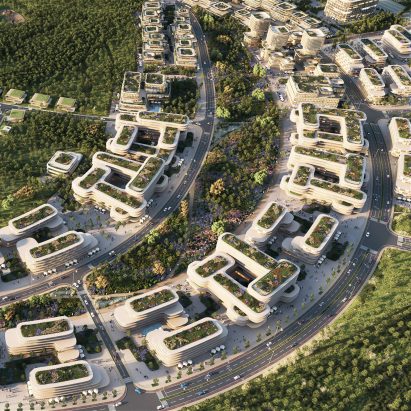
Consider ZHA’s masterplan for Baku Expo City, with its proposed interconnected forest neighborhoods and green roofs. The visual appeal of such a scheme is clear, suggesting a harmonious integration with nature. However, a masterplan of 198 hectares inherently presents significant material and logistical challenges. The underlying structural philosophy for such large-scale developments typically relies on standardized, often material-intensive systems that can struggle to truly integrate local material economies, even with a veneer of green landscaping. A contradictory view asserts that genuine sustainability for a development of this size demands more than surface-level greenery; it requires a radical re-evaluation of the core structural material choices, prioritizing low-carbon, regionally available resources. By early 2029, a more robust standard for embodied carbon disclosure will be widely adopted, making it harder for large-scale masterplans to claim sustainability without verifiable material transparency.
The primary opposing force to more responsible material and structural philosophy is the ingrained inertia of globalized commodity markets for building materials. This includes the ready availability of steel, concrete, and processed timber from consolidated industrial supply chains, which often outcompetes local, artisanal, or smaller-scale material producers on cost and speed, even when considering long-term environmental costs.
An architecture professional should, within their next project kickoff meeting, insist on a preliminary material supply chain audit that identifies the top three potential structural material systems, detailing their estimated embodied carbon impact, including transportation distances from extraction to site. This should occur before any final structural system is specified, driving early design decisions towards material honesty and local sourcing potential.
TL;DR
Material responsibility demands prioritizing local sourcing and embodied carbon analysis over symbolic gestures or global supply chain convenience.
Curated References


About this editorial — This piece was developed using AI-assisted research and curation across multiple industry sources. All analysis, opinions, and predictions represent the editorial perspective of JHDD. Sources are linked in the references section above.